“He has become like a man, so that men should be like him.” Dietrich Bonhoeffer, The Cost of Discipleship
Here are several quotes that you can use to reflect on the meaning of the Incarnation.
For Anselm, sin is the reason for the season. He believes that if humanity had not sinned, if we had continued to enjoy the rectitude and right relationship Adam and Eve are said to have enjoyed with God before the Fall, the eternal Logos would never have needed to become human. The Incarnation is, for Anselm, a sign of God’s benevolence, but it is also entirely predicated on our disobedience, pride, sin and need for reconciliation. BY DANIEL P. HORAN National Catholic Reporter/ Opinio
“Franciscan John Duns Scotus (c. 1266-1308) said the plan from the beginning was to reveal Godself as Christ. Jesus didn’t come as a remedy for sin—as if God would need blood before God could love what God created. The idea that God, who is love, would demand the sacrifice of his beloved Son in order to be able to love what God created is the conundrum that reveals how unsatisfying that quid pro quo logic really is.” Richard Rohr, osf,Franciscan Mysticism: I AM That Which I Am Seeking,
“Christ took upon himself this human form of ours. He became Man even as we are men. In his humanity and his lowliness we recognize our own form. He has become like a man, so that men should be like him. And in the Incarnation the whole human race recovers the dignity of the image of God. Henceforth, any attack on the least of men is an attack on Christ, who took the form of man, and in his own Person restored the image of God in all that bears a human form. Through fellowship and communion with the incarnate Lord, we recover our true humanity, and at the same time we are delivered from that individualism which is the consequence of sin, and retrieve our solidarity with the whole human race. By being partakers of Christ incarnate, we are partakers in the whole humanity which he bore. We now know that we have been taken up and borne in the humanity of Jesus, and therefore that new nature we now enjoy means that we too must bear the sins and sorrows of others. The incarnate Lord makes his followers the brothers of all mankind. The “philanthropy” of God (Titus 3:4) revealed in the Incarnation is the ground of Christian love towards all on earth that bears the name of man. The form of Christ incarnate makes the Church into the Body of Christ. All the sorrows of mankind fall upon that form, and only through that form can they be borne.” ― Dietrich Bonhoeffer, The Cost of Discipleship
“For our lives, incarnation means being focused on the spiritual and the eternal but bringing that focus deep into our life. … This is really the heart of the Christmas theological message: Live in two worlds that overlap but are distinct. Don’t be materialistic, but don’t sacrifice our ordinary physical life for any spiritual ideal. Be lowly and lofty.” ― Thomas Moore, The Soul of Christmas
“God travels wonderful ways with human beings, but he does not comply with the views and opinions of people. God does not go the way that people want to prescribe for him; rather, his way is beyond all comprehension, free and self-determined beyond all proof. Where reason is indignant, where our nature rebels, where our piety anxiously keeps us away: that is precisely where God loves to be. There he confounds the reason of the reasonable; there he aggravates our nature, our piety—that is where he wants to be, and no one can keep him from it. Only the humble believe him and rejoice that God is so free and so marvelous that he does wonders where people despair, that he takes what is little and lowly and makes it marvelous. And that is the wonder of all wonders, that God loves the lowly…. God is not ashamed of the lowliness of human beings. God marches right in. He chooses people as his instruments and performs his wonders where one would least expect them. God is near to lowliness; he loves the lost, the neglected, the unseemly, the excluded, the weak and broken.” ― Dietrich Bonhoeffer, God is in the Manger: Reflections on Advent and Christmas
“When spirituality becomes spiritualization, life in the body becomes carnality. When ministers and priests live their ministry mostly in their heads and relate to the Gospel as a set of valuable ideas to be announced, the body quickly takes revenge by screaming loudly for affection and intimacy. Christian leaders are called to live the Incarnation, that is, to live in the body, not only in their own bodies but also in the corporate body of the community, and to discover there the presence of the Holy Spirit.” ― Henri J.M. Nouwen, In the Name of Jesus: Reflections on Christian Leadership
“All true friendliness begins with fire and food and drink and the recognition of rain or frost. …Each human soul has in a sense to enact for itself the gigantic humility of the Incarnation. Every man must descend into the flesh to meet mankind.” ― G.K. Chesterton, What’s Wrong with the World
“Christ is, then, the perfect art work in the sense of that reality in whom is realised those goals that all artistic making has as its explicit or implicit ends. Because he is infinite meaning, life and being perfectly synthesised with finite form, the cave painters at Lascaux, or Hesiod penning his hymns, or Beethoven working on his last quartets, were all gesturing towards him though they realised it not.” ― Aidan Nichols O.P., Redeeming Beauty: Soundings in Sacral Aesthetics
Disguise is central to God’s way of dealing with us human beings. Not because God is playing games with us but because the God who is beyond our knowing makes himself known in the disguise of what we can know. The Christian word for this is revelation, and the ultimate revelation came by incarnation. … God is the master of disguises, in order that we might see. Richard John Neuhaus
But when finally the scrolls of history are complete, down to the last word of time, the saddest line of all will be: “There was no room in the inn.”…The inn was the gathering place of public opinion, the focal point of the world’s moods, the rendezvous of the worldly, the rallying place of the popular and the successful. But there’s no room in the place where the world gathers. The stable is a place for outcasts, the ignored and the forgotten. The world might have expected the Son of God to be born in an inn; a stable would certainly be the last place in the world where one would look for him. The lesson is: divinity is always where you least expect to find it. So the Son of God made man is invited to enter into his own world through a back door. Archbishop Fulton Sheen
Jesus said, “Repent and believe in the Good NewsThat the Kingdom of God has begun!”Mk 1:15
The Greek word used in the Scriptures of Mark and Matthew for “repent” is metanoia and it is commonly understood as “a transformative change of heart and mind. This might be interpreted subjectively requiring discernment and reflection about what the individual believes is necessary to become a better disciple of Jesus or in some cases to become a better Catholic, Methodist, or a better member of any denomination or group calling itself “Christian.”
According to the USCCB (United States Conference of Bishops: “Lent is a 40 day season of prayer, fasting, and almsgiving that begins on Ash Wednesday and ends at sundown on Holy Thursday. It’s a period of preparation to celebrate the Lord’s Resurrection at Easter. During Lent, we seek the Lord in prayer by reading Sacred Scripture; we serve by giving alms; and we practice self-control through fasting. We are called not only to abstain from luxuries during Lent, but to a true inner conversion of heart as we seek to follow Christ’s will more faithfully. We recall the waters of baptism in which we were also baptized into Christ’s death, died to sin and evil, and began new life in Christ.”
The English word Lent is a shortened form of the Old English word lencten, meaning “spring season. Early Christianity records the tradition of fasting before Easter baptisms. The Apostolic Constitutions permit the consumption of “bread, vegetables, salt and water, in Lent” with “flesh and wine being forbidden”. The Canons of Hippolytus authorize only bread and salt to be consumed during Holy Week. The practice of fasting and abstaining from alcohol, meat and lacticinia (any parts of an animal) during Lent thus the tradition of eating only fish, vegetables, oats and the like in some cultures.
Lent, as a liturgical season, was created at the Council of Nicea in 325 due to periods of fasting prior to baptisms which were then celebrated at the Easter celebration.
Lenten practices were expanded as time went on to include those activities mentioned above. The ritual of wearing sackcloth and ashes and putting ashes on the forehead became popular as an indication or notice that the person was repentant and honoring the Lenten fast.
“The liturgical use of ashes originated in the Old Testament times. Ashes symbolized mourning, mortality, and penance.
For instance, in the Book of Esther, Mordecai put on sackcloth and ashes when he heard of the decree of King Ahasuerus (or Xerxes, 485-464 B.C.) of Persia to kill all of the Jewish people in the Persian Empire (Esther 4:1).
Job (whose story was written between the 7th and 5th centuries B.C.) repented in sackcloth and ashes (Job 42:6).
Prophesying the Babylonian captivity of Jerusalem, Daniel (c. 550 B.C.) wrote, “I turned to the Lord God, pleading in earnest prayer, with fasting, sackcloth, and ashes” (Daniel 9:3).
In the 5th century B.C., after Jonah’s preaching of conversion and repentance, the town of Nineveh proclaimed a fast and put on sackcloth, and the king covered himself with sackcloth and sat in the ashes (Jonah 3:5-6).
The emphasis on repentance always seems so negative. “Do without this or that as a penance.” Fast, abstain, and even self imposed mortification or subduing one’s bodily desires.
The positive elements focused on repetition prayer like the rosary, novenas, and the Stations of the Cross. Such prayers and rituals would indicate to ones self and others that one is upright and adheres to the Laws of God and the Church which are required to be a “good Catholic.”
Yet what does Jesus say to the Pharisees and other Jewish leaders who asked:”Why does your Teacher eat with tax collectors and sinners?” In other words, why doesn’t he obey the prescriptions for being a “good Jew”? “On hearing this, Jesus said, “It is not the healthy who need a doctor, but the sick. But go and learn what this means: ‘I desire mercy, not sacrifice.’ For I have not come to call the righteous, but sinners.” Mt 9:12-13 It seems that Jesus wanted positive rather than negative behavior.
Eating with tax collectors and sinners
Jesus was a Jew who knew what the prophets had preached: “For I desire steadfast love and not sacrifice, the knowledge of God rather than burnt offerings.” Hosea 6:6
So when Jesus told his disciples to “repent” he meant more than do without or do some penance! He meant change your heart and mind by changing your attitude toward religion and the Law. “The Sabbath was made for man, not man for the Sabbath.” Mk 2:27
Many denominations of Christianity interpreted metanoia differently.
Lutherans consider metanoia as a change of one’s character or even lifestyle if either are not in keeping with Christian virtue and conduct.
Calvin thought of metanoia as involving denying oneself, turning to God, laying aside the old ways, and putting on Christ.
The Greek Orthodox Church teaches a reorientation of one’s outlook on life, a fundamental transformation of one’s vision of the world, and finding new ways of loving and serving fellow humans.
Some ancient texts like the Shepherd of Hermas implied a “great understanding” of discernment inimportant matters. Some even suggested various activities, devotions, and practices that would increase one’s ability to be a more dedicated disciple of Jesus.
Most would agree that whatever the definition, “metanoia” means changes in the way one understands the Word of God or the world. It may involve a change in the way one treats family andfriends. Metanoia may mean treating the planet with care and concern by refraining from fossil fuels, cleaning up highways or areas polluted by trash and so much more.
Ultimately, it boils down to a change in attitude toward self and others, which may be a way of “Loving God, and your neighbor as yourself.”
One way that Catholics would begin Lent was to purge oneself of such “sins” as the Capital Sins listed in the image at the left.
The intent of such purging was to open oneself to the Grace of God.
The Fruits of the Spirit are usually considered the result of God’s grace or gifts. “the fruit of the Spirit is love, joy, peace, forbearance, kindness, goodness, faithfulness, gentleness and self-control. Against such things there is no law.” (Galatians 5:22-23)
“The Greek word translated “fruit” refers to the natural product of a living thing. Paul used “fruit” to help us understand the product of the Holy Spirit, who lives inside every believer. The fruit of the Spirit is produced by the Spirit, not by the Christian. The Greek word is singular, showing that “fruit” is a unified whole, not independent characteristics. As we grow, all the characteristics of Christ will be manifested in our lives.
Yet, like physical fruit, this “fruit” needs time to grow, the fruit of the Spirit will not ripen in our lives overnight. Like a successful gardener must battle against weeds to enjoy the sweet fruit they desire, we must constantly work to rid our lives of the “weeds” of our old sin natures that want to choke out the work of the Spirit.”
For the Catholic, this means participating in the sacraments of Reconciliation and Eucharist as well as various devotions like novenas, the Stations of the Cross, and the Rosary. Also recommended is spiritual reading, acts of service, and alms giving.
However, what is overlooked by many is the transformation that results from psychological and physicaltherapy which helps one become aware of their personal behaviors that affect the health and well-being of their mind, body, and soul.
That being the case, I offer some practices that can be used to change one’s mental and spiritual understanding about the self and the world. There are many ways to change our attitudes and behavior. Two such ways that can shed light on one’s personality involve the use of personality inventories.
The Enneagram
The Enneagram is a system of personality typing that describes patterns in how people interpret the world and manage their emotions. The Enneagram describes nine personality types and maps each of these types on a nine-pointed diagram which helps to illustrate how the types relate to one another.
Infographic vectors about The Enneagram, complete with directions, traits and names by Riso-Hudson. For more information go to the official website to The Enneagram Institute. All credit for the text goes to them.
“The Spiritual Exercises of St. Ignatius Loyola are a means of opening oneself to the work of God in one’s life. Ignatius, a Basque nobleman of the late 15th and early 16th centuries underwent a powerful spiritual conversion in his late twenties. Recovering from a battle wound over the course of many months, Ignatius spent hours contemplating his life’s purpose and the compelling examples set by saints such as Dominic and Francis. He determined to leave the life of privilege to which he had become accustomed, and commended himself and all of his energies to serving God. Ignatius’ desire was to “help souls” and he engaged in spiritual conversation with almost anyone he met. The experience of his own conversion led Ignatius to share what he learned with others and, eventually, refine his personal prayer journal into what we now call the Spiritual Exercises.
The Benefits of Self Knowledge become the Building Blocks of Self: Your VITALS
“The capital letters in “VITAL Signs” form an acronym for the six building blocks of the self, or VITALS, for short. The letters stand for Values, Interests, Temperament, Around-the-Clock, Life Mission and Goals, and Strengths/Skills.” Psychology Today March 9, 2016 Meg Selig For more go to:
The Bible features a variety of women who play significant roles in the narrative, from matriarchs and leaders to prophetesses and devoted followers. These women exhibit diverse qualities, including courage, faith, wisdom, and even flaws, making them relatable and inspiring figures for readers across different times.
Prominent Women in the Old Testament:
Eve: The first woman, wife of Adam, and central to the story of the Fall.
Sarah: Wife of Abraham, known for her beauty and later, for her faith in God’s promise of a son.
Miriam: Sister of Moses and Aaron, a prophetess and leader in her own right.
Deborah: A judge and prophetess who led the Israelites to victory over the Canaanites.
Ruth: A Moabite woman who showed great loyalty to her mother-in-law, Naomi, and became an ancestor of King David.
Esther: Queen of Persia who risked her life to save the Jewish people from genocide.
Jael: Heroine who killed Sisera, the Canaanite general, to deliver Israel.
Rahab: A Canaanite woman who helped the Israelite spies and was spared when Jericho was conquered.
Hagar: The Egyptian handmaiden of Sarah, who bore Abraham’s son, Ishmael.
Prominent Women in the New Testament:
Mary of Nazareth: The mother of Jesus, chosen by God to bear the Messiah.
Mary Magdalene: A close follower of Jesus, present at his crucifixion and resurrection, and the first to witness the risen Christ.
Martha and Mary of Bethany: Sisters who were close friends of Jesus, with Martha known for her service and Mary for her devotion.
Lydia: A businesswoman who became one of the first Christians in Europe.
Priscilla: A woman who, along with her husband Aquila, was a prominent figure in the early church.
Roles and societal context
Women in biblical times were primarily expected to fulfill domestic roles, such as wives and mothers, according to TJ Wray.
However, the Bible also portrays women in various other roles, including prophets, judges, merchants, and even queens.
While ancient Near Eastern societies were generally patriarchal, scholarship suggests the presence of “hierarchy” in the Bible, acknowledging different power structures and spheres of influence for women.
The Bible, while written by men in a patriarchal context, does not inherently portray women as inferior or deserving of less.
Instead, it often presents women as examples of faith, courage, and resourcefulness, who sometimes challenged societal norms or subverted power structures to achieve more just outcomes.
Controversies and debates
Some biblical passages have been interpreted as promoting sexism or restricting women’s roles, such as those related to submission to husbands or silence in church.
However, scholars offer various interpretations, suggesting that some passages may be contextual or aimed at maintaining order within specific communities.
Jesus, in his interactions with women, often challenged the prevailing societal norms, showing respect and valuing their participation in his ministry and teachings.
Lessons from women in the Bible
The stories of women in the Bible offer valuable lessons on faith, trust, courage, humility, service, and redemption, says Mission Save Montana.
They serve as role models, inspiring individuals to embrace their God-given purpose and live lives of faithfulness and service.
In conclusion, the Bible provides a rich tapestry of stories featuring women who played crucial roles in the unfolding of God’s plan. While acknowledging the historical context and patriarchal societal structures, a closer look reveals that women in the Bible were often portrayed with strength, wisdom, and faith, offering enduring lessons for believers today.
Self/self Sustenance in an Era of Trump: From MAGA to Manna
This article is from: The Jungian Center for the Spiritual Sciences (see link below)
“Transitions between the aeons always seem to have been melancholy and despairing times, as for instance the collapse of the Old Kingdom in Egypt between Taurus and Aries, or the melancholy of the Augustinian age between Aries and Pisces. And now we are moving into Aquarius…. And we are only at the beginning of this apocalyptic development!”
“There is only one certainty–nothing can put out the light within.” Carl Jung
Many of us in our Jungian Center community took a double hit recently: shock coupled with dashed hopes. After seeing so many women become heads of their governments, we were hoping we would have the same; instead, we now face the prospect of years likely to be worse than what we endured in 2016-2020.
Several people have asked me “How can I cope?” A more energizing question might be “How to thrive–how to turn what now seems like a doleful time into an interval of growth, insight, learning and personal enrichment?
This essay addresses this second question, beginning with an overview of what’s really going on, beneath all the hubbub of the election bluster and prognostications, to provide some perspective on current reality. Then some tips on coping follow–getting through the mundane features of daily life–and after that, a deeper discussion follows on how we can turn frustration into fulfillment.
What’s Really Going On?
One of the reasons for the rise of Trump and the MAGA movement (beyond the obvious political causes, like the Democrats’ desertion of their working-class base to indulge the greed of global capitalists) is the simultaneity of multiple transitions occurring now. Jung was aware of the nature of our time and how these transitions, subtle though they may be, can profoundly color our lives. Some examples illustrate this.
The quotation at the beginning of this essay is from Jung’s letter to his friend Adolf Keller, alerting him to the nature of our time–how we as global citizens are living in the shift from the old Piscean aeon, with its glyph of two fishes, one streaming upstream (symbolizing the first half of the aeon, ruled by Christ, with a vertical orientation) and the other fish swimming downstream (symbolizing the second half, ruled by the Anti-Christ, aka “Satan,” the devil, with its horizontal focus on the things and sins of this world).
Around the year 1000 CE, the orientation changed, and history reflected this in the Investiture Controversy, which was the first time secular authority (the Emperor) challenged the prerogatives of the Church. The next 900+ years saw many more similar challenges: the Protestant Reformation, wars galore,fiendish technological developments (none more so than the invention of nuclear weapons), and the widespread plundering of the Earth, to the point now where many areas of the planet are becoming uninhabitable. Satan stalks the globe indeed!
Meanwhile, the coming aeon of Aquarius has been emerging, the beginning of which we might date to 1776, when a clear enunciation of independence was articulated, leading to the creation of the United States. We might think of the USA as a product of Aquarian energy, given our originality, inventiveness, technological developments and ostensible interest in equality. But the aeon is not limited to America: it has a global influence, and for some 250 years its spirit has been pervading and melding with that of Pisces.
Jung knew what this meant: melancholy. A dying aeon colors the unconsciousness of humanity, while the slow emergence of the new begins to suggest changes–changes which are often hard to describe or articulate–hence an anxiety which grows more common and widespread over generations. Ten generations on, we are living in an “age of anxiety,” made more pronounced because of another transition which Jung recognized: the shift from Age of the Son to the Age of the Holy Spirit, in what is called the “Holy Ghost movement.”
“The Christian ideal has not been tried and found wanting; it has been found difficult and left untried.” G.K. Chesterton
“Not everyone who says to Me, ‘Lord, Lord,’ will enter the kingdom of heaven, but the one who does the will of My Father who is in heaven will enter. Many will say to Me on that day, ‘Lord, Lord, did we not prophesy in Your name, and in Your name cast out demons, and in Your name perform many miracles?’ And then I will declare to them, ‘I never knew you; leave Me, you who practice lawlessness.’ Mt 7:21-23
How do we come to know the Will of God? Many would say by reading the Word of God or the Bible. Carrying that further than just reading, some would encourage those who desire to be Christ-like should practice Lectio Divina which is Sacred Reading of the Word of God.
Lectio Divina is a traditional monastic practice of scriptural reading, meditation and prayer intended to promote communion with God and to increase the knowledge of God’s word.
LectioDivinahas four separate steps: read; meditate; pray; contemplate. This is something that Jesus would most likely do. “And Jesus, full of the Holy Spirit, returned from the Jordan and was led by the Spirit in the wildernessfor forty days. Lk 4:1-2 “Jesus often withdrew to the wilderness (desert) for prayer. Lk 5:16
Like many of his Biblical ancestors, Jesus would have spent time trying to do the Will of God. He would have been interested in the work and words of John the Baptist, a man that was attracting a huge following since he spoke of the Messiah, the one who would bring God’s salvation to Israel and establish the Kingdom of God on earth.
SO Jesus came to John and was baptized and then something happened that would change his life forever.
After he was baptized a voice came from heaven (God),“You are my beloved Son; with you I am well pleased.” Lk 3:22
N.B Although Jesus is called the “Son of God” we also find this term applied to other humans and angels. Indeed, from a study of Scripture we find that the term “son of God” is applied to the angels,[Job 2:1] Israel, [Hosea 11:1] to David, [2 Sam 7:13-16], Solomon [1 Chronicles 28:6] and to those who make peace, and Christians. [Mt 5:9]
SO, Jesus must have been surprised and maybe even confused. “Why me? What am I to do? Is this the Will of God?”
(Remember, Jesus was a human) “He emptied himself, by taking the form of a servant, being born in the likeness of men. And being found in human form, he humbled himself…” Philippians 2:5–8
Let’s reflect on Luke’s description of the Temptation of Jesus.
The Temptation of Jesus
“And Jesus, full of the Holy Spirit, returned from the Jordan and was led by the Spirit in the wilderness for forty days, being tempted by the devil. And he ate nothing during those days. And when they were ended, he was hungry.
The devil said to him, “If you are the Son of God, command this stone to become bread.” (POWER)
And Jesus answered him,
“It is written, ‘Man shall not live by bread alone.’”
And the devil took him up and showed him all the kingdoms of the world in a moment of time, and said to him, “To you I will give all this authority and their glory, for it has been delivered to me, and I give it to whom I will. If you, then, will worship me, it will all be yours.” (FORTUNE)
And Jesus answered him, “It is written,
“‘You shall worship the Lord your God, and him only shall you serve.’”
And he took him to Jerusalem and set him on the pinnacle of the temple and said to him, “If you are the Son of God, throw yourself down from here, for it is written, ‘He will command his angels concerning you, to guard you,’and ‘On their hands they will bear you up, lest you strike your foot against a stone.’” (FAME)
And Jesus answered him, “It is said, ‘You shall not put the Lord your God to the test.’”
And when the devil had ended every temptation, he departed from him until an opportune time.
SO really, Jesus was tempted to accept POWER, FAME and FORTUNE and use them to do the will of God since he was designated as a “Son of God“, someone who was designated to act as God’s representative and spokesperson in this world.
Let’s speculate.
Most scripture scholars and many theologians claim that”Satan” or the”devil” was a personification of evil. We could say that today, given what we theorize about the human psyche, the human ego might be tempted to consider itself greater than it is.
If Jesus was “human”, then as such, he had an ego-a sense of self, or a sense of self-esteem or self-importance which could mean that Jesus was tempted to become somewhat egotistical,which is a characteristic of those having an inflated idea of their own importance. Could this have happened to David and Solomon as well?
Obviously, all this is not adhering to the “Christian” or Catholic interpretation of these events but we can speculate can’t we. After all, Jesus never referred to himself as God. Son of God was a term applied to certain humans and angels as I mentioned above.
More speculation.
Did Jesus intend to start another religion? If he did, what would it look like? Since he rejected Power, Fame, and Fortune at the Great Temptation, the “new” religion would have been simple, humble and more like a servant then like a king.
When sent his disciples to do the work of the Will of God “he told them: “Take nothing for the journey–no staff, no bag, no bread, no money, no extra tunic. Whatever house you enter, stay there until you leave that town.” Lk 9:3-4
It certainly wouldn’t be a religion of Power, Fame, and Fortune! But thanks to Constantine (313 AD) and the other Catholic emperors of Europe, the “Good News” became creeds, councils, persecutions and even crusades against infidels and more. The simplicity of “the Way”, as Christianity was first called, became housed in the great cathedrals, castles, and monasteries, and eventually spread through preaching that was interpreted by mostly men who never knew Jesus personally, and are now referred to as “Fathers” of the Church. When you research their writings you will discover little about Jesus’s teachings and more about who he was as a person of the Trinity.
Was “The Way” of Jesus replaced for the security of the Roman Empire? The Power, Fame, and Fortune that Jesus rebuked, replaced the persecutions and witness of the early followers of Jesus. Read Acts 2 to grasp the life and beliefs of the early Church.
The structure of the Roman Catholic Church was modeled after that of the Roman Empire which was “baptized” by the elders ((πρεσβυτέρους- presbyters) and overseers(ἐπισκόπους- bishops) of the early communities (gatherings- Ekklisía or Churches.
The Roman senators were replaced by the hierarchy of bishops and cardinals now known as the Curia which comprises the administrative institutions of the Roman Catholic Church.
The head priest of the Roman state religion was the Pontifex Maximus, or the greatest of the college of pontifices. While an obviously important and prominent position within the ranks of the Roman system, the Pontifex Maximus was not considered a magistrate comparable to a Consul, Praetor, etc.
A distinctly religious office under the early Roman Republic, it gradually became politicized until, beginning with Augustus, it was subsumed into the position of emperor in the Roman imperial period. Subsequent emperors were styled pontifex maximus
The wordpontifex and its derivative “pontiff” became terms used for Christian bishops, including the Bishop of Rome, and the title ofpontifex maximuswas applied to the Roman Catholic Church for the pope as its chief bishop and appears on buildings, monuments and coins of popes of Renaissance and modern times.
SO, once the Roman Catholic Church became a powerful entity, Kings and Queens of the various Catholic countries were appointed and/or approved by the Pope or Pontiff, who as God’s authority, anointed those rulers which made them God’s rulers on earth.
A far cry from the simplicity of Jesus’ expectations of and instructions to his disciples. To further support this conclusion, we must refer to the Sermon on the mount in Matthew 5 and the warning against hypocrisy in Matthew 23.
One must also refer to other denominations of Christianity, some of which, also appear to ignore the teachings and instructions of Jesus.
The Eastern Orthodox Church, also called the Orthodox Church, is another denomination of Christianity which seems to ignore the lifestyle and instruction of Jesus.
Many evangelical Churches in America are an antithesis to Jesus’ “Way”.
“The prosperity gospel is an umbrella term for a group of ideas — popular among charismatic preachers in the evangelical tradition — that equate Christian faith with material, and particularly financial, success. It has a long history in American culture, with figures like Osteen and Jim and Tammy Faye Bakker, glamorous, flashily-dressed televangelists whose Disneyland-meets-Bethlehem Christian theme park, Heritage USA, was once the third-most-visited site in America.”
For the love of money is a root of all kinds of evil. Some people, eager for money, have wandered from the faith and pierced themselves with many griefs. 1 Tm 6:10
“The origins of the American prosperity gospel to the tradition of New Thought, a nineteenth-century spiritual movement popular with decidedly unorthodox thinkers like Ralph Waldo Emerson and William James. Practitioners of New Thought, not all of whom identified as Christian, generally held the divinity of the individual human being and the priority of mind over matter. In other words, if you could correctly channel your mental energy, you could harness its material results. New Thought, also known as the “mind cure,” took many forms: from interest in the occult to splinter-Christian denominations like Christian Science to the development of the “talking cure” at the root of psychotherapy.” For more go to: The prosperity gospel, explained: Why Joel Osteen believes that prayer can make you rich – Vox
Finally, we could ask, “which denomination would meet Jesus’ expectations?” Actually, none would since Jesus was Jewish,and was a “son of the Law, “bar mitzvah”, as every Jew is traditionally. Jesus never intended to start another religion. He never ordained disciples or the apostles. Rather he commissioned or “sent” them.
There are many ministries or functions referred to in the New Testament. Paul mentions them in the first letter to the Corinthians, and in the letters to the Romans, the Ephesians, and the Galatians.
As Wills points out in his book, “None knew better what Jesus meant than St. Paul when he wrote”:
“If I speak in the tongues of men and of angels, but have not love, I am a noisy gong or a clanging cymbal. And if I have prophetic powers, and understand all mysteries and all knowledge, and if I have all faith, so as to remove mountains, but have not love, I am nothing. If I give away all I have, and if I deliver up my body to be burned, but have not love, I gain nothing.
Love is patient and kind; love does not envy or boast; it is not arrogant or rude. It does not insist on its own way; it is not irritable or resentful; it does not rejoice at wrongdoing, but rejoices with the truth. Love bears all things, believes all things, hopes all things, endures all things.
Love never ends. As for prophecies, they will pass away; as for tongues, they will cease; as for knowledge, it will pass away. For we know in part and we prophesy in part, but when the perfect comes, the partial will pass away. When I was a child, I spoke like a child, I thought like a child, I reasoned like a child. When I became a man, I gave up childish ways. For now we see in a mirror dimly, but then face to face. Now I know in part; then I shall know fully, even as I have been fully known.
So now faith, hope, and love abide, these three; but the greatest of these is love.” 1 Cor 13:1-13
I want to provide a menu of articles, books, websites and podcasts that might increase our appetites for different perspectives about religion, Christianity, and Catholicism.
Each week I will offer such posts as this.
We Are All Images of God
Joan Chittister, Murshid Saadi Shakur Chishti, and Rabbi Arthur Waskow, writing from their traditions of Christianity, Islam, and Judaism, believe we all share equally in God’s image, even amid our joint history of violence.
All our traditions—Jewish, Christian, and Muslim—teach that the human race and every human being are created in the image of God. Rabbinic midrash says that when Caesar puts his image on a coin, each coin comes out identical—but that when the One who is beyond all rulers puts the divine image on the coin of every human being, each “coin” comes out unique.… Richard Rohr, osa For the complete daily reflection go to: https://cac.org/daily-meditations/we-are-all-images-of-god/
Black Elk & Meister Eckhart on the Power of Round
The Native American Medicine Wheel can have many meanings: 4 directions, 4 seasons, 4 elements, and other aspects of life.
Black Elk celebrates the holiness of round when he talks of the “sacred hoop” that constitutes the universe and all its many communities.
Everything an Indian does is in a circle, and that is because the Power of the World always works in circles, and everything tries to be round….The sky is round, and…the earth is round like a ball, and so are all the stars….Birds make their nests in circles, for theirs is the same religion as ours….Even the seasons form a great circle.” Matthew Fox for more of this Daily Meditation go to: https://dailymeditationswithmatthewfox.org/2023/12/05/black-elk-meister-eckhart-on-the-power-of-round/
Americans are becoming less spiritual as well as less religious
“Last week, Pew released a new survey describing the state of spirituality in America. It contains a lot of interesting information about Americans’ spiritual beliefs as well as new demographic data on our self-identification as “spiritual” and/or “religious.”
What the survey does not do is indicate how the self-identification numbers have changed over time. Instead it contents itself with the following:
While Pew Research Center surveys have documented a decline since 2007 in the percentage of Americans who identify as Christian, the evidence that “religion” is being replaced by “spirituality” is much weaker, partly because of the difficulty of defining and separating those concepts” Mark Silk for more of this article go to: Americans are becoming less spiritual as well as less religious
Preaching to polarized congregations: A responsibility and a challenge, clergy say
“Fueled by their work in comedy, psychology and theology, some clergy say reducing polarization is both a spiritual necessity for them and an ever-increasing part of their job description.” Adelle M. Banks for more on this article go to: Religion News Service
Maybe it’s time we rethink Christmas music
My favorite Christmas song isn’t a Christmas song. You won’t hear it on the radio after “Jingle Bells.” You won’t sing it at Mass along with “O Holy Night.” But if you rummage through the back corner of your closet, dig out that crinkled cardboard box with your first crush’s name on it, and charge up the Microsoft Zune you can’t quite bring yourself to throw away, you just might find it. Jonathan Tomick for more of this article go to: Maybe it’s time we rethink Christmas music | National Catholic Reporter
“… “prayer,” that is, a wish addressed to God, a concentration of libido on the God-image.” Jung (1956),[1]
“… “prayer” is conceived as “the upward-striving will of man towards the holy, the divine.” Jung (1971)[2]
“…it is the most universal form of religious or philosophical concentration of the mind and thus not only one of the most original but also the most frequent means to change the condition of mind.” Jung (1950)[3]
“My nightly prayer did, of course, grant me a ritual protection since it concluded the day properly and just as properly ushered in night and sleep.” Jung (1965), [4]
“I have thought much about prayer. It – prayer – is very necessary because it makes the Beyond we conjecture and think about an immediate reality, and transposes us into the duality of the ego and the dark Other. One hears oneself speaking and can no longer deny that one has addressed ‘That”.” Jung (1943)[5]
“… prayer is not only of great importance but has also a great effect upon human psychology. If this psychological method had been inefficient, it would have been extinguished long ago, but nobody with a certain amount of human experience could deny its efficacy.” Jung (1950)[6]
“It only needs an emergency, a serious emergency, and then these religious utterances burst out again. Thus, when one is greatly astonished or surprised, everyone, even if he doesn’t believe in God, says ‘Oh God’ or ‘By God,’ and these are involuntary exclamations of a religious nature, because they use the name of God.” Jung (1960)[7]
As has been the process with multiple essays on this blog space, the topic for this essay arose from a question a student posed. What did Jung think of prayer? I knew he surely had some background in relation to this word, as the son of a Swiss parson, and I was sure he had occasion (especially after the brouhaha raised by his Answer to Job)[8] to explain his stance on prayer. In this essay I will examine Jung’s definitions of “prayer,” the features and functions that prayer exhibited in his psychology, his personal experience of prayer, and his opinion of prayer in the context of modern times.
Definitions of Prayer
The dictionary defines “prayer” as “the act of praying,” “the thing prayed for,” “a form of words to be used in praying,” “a form of worship,” and “an earnest or humble request.”[9] Jung also had multiple definitions, from regarding prayer as a “symbol”[10] to considering it as a “wish,”[11] the act of “upward striving,”[12] and a “psychological method.”[13] Jung also recognized that we pray more than we perhaps realize, e.g. when we stub our toe on the bedpost and hurl an imprecation (e.g. “God damn it!”), or when we are surprised or astonished (e.g. “Oh God!).[14]
To designate prayer as a “symbol” was not to minimize or lessen its value: to Jung symbols were extremely powerful in their mystery[15] and “over-determined”[16] in their nature. Since symbols can be interpreted on multiple levels, Jung knew the meaning of prayer would depend on the individual doing it, but also could be investigated on the scientific, collective and archetypal levels (more on these below).
As wishes, prayers reflect our desires, what we hope will happen, or not happen, as the case may be. Often in forming and expressing our request, we are not consciously aware of the energy we are putting into the process, but Jung recognized how, by addressing God, we are investing psychic energy (aka “libido”)[17] in our “God-image,”[18] i.e. our inner conception of the Divine. Hence, Jung could define “prayer” as “a wish…a concentration on the God-image.”[19]
Jung often got ideas from the etymology of a word,[20] and in his definition of “prayer,” he noted that “The word derives from barh (cf. Latin farcire), “to swell,” and from this root, Jung saw prayer as “the upward-striving will of man towards the holy, the divine.”[21] Jung regarded the praying person as being in “a particular psychological state,”[22] in which there is a “specific concentration of libido, which through overflowing innervations produces a general state of tension associated with the feeling of swelling.”[23] Such prayerful moments may seem to the praying person as overflowing with feeling.By calling prayer a “psychological method,”[24]
Jung drew on his many decades as a psychiatrist dealing with people whose mental health was fraught. In his medical practice he saw how helpful prayer could be as “one of the most original but also the most frequent means to change the condition of mind.,”[25] and in creating the “frame” within which Jung worked with his patients, he regarded their meeting space as a temenos, a sacred space similar to the protected grounds around temples in the ancient world.[26] As “the most universal form of religious or philosophical concentration of the mind,”[27] prayer was as efficient as it was effective, which is why it has had a role in all cultures for thousands of years.
The Features, Functions and Purposes of Prayer
The above definitions speak of prayer production and changes, reflecting a key feature of prayers that many overlook. The act of praying is a two-part process: we speak or think, but then we need to wait and listen, pay attention and observe, much as we do in a conversation with a friend. Filling your mind with imprecations or appeals and then failing to listen is like mailing a letter with no return address. Jung knew that prayers come with responses.[28]
Efficacy–the effectiveness of prayer “to produce a desired effect or result”[29]–is a feature of these responses. Jung was not alone in his awareness of the power of prayer: the scientist Charles Tart and the physician Larry Dossey both recognize the positive impact of the “psychic component to healing,”[30] encourage the “prayer part,”[31] have evaluated the efficacy of prayer,[32] and offer numerous examples of healing via prayer.[33]
As a type of spiritual exercise, prayer may “evoke visualizations of conscious contents,”[34] when images spontaneously appear in our mind’s eye, as if to focus our attention on some aspect of our life, or what/who was the concern in our prayer. Jung felt that “most spiritual exercises have this effect,”[35] as does “prescribed meditation.”[36]
Images that come to us in response to prayers might be symbols, and these are another feature of some prayers. Jung had a lot to say about symbols– seven columns worth of citations in the Index to his Collected Works,[37]–and he taught his patients to value symbols and handle them thoroughly. “Thorough,” in this context, means considering all four levels on which the symbol can be interpreted. As always, Jung would start with the individual, asking his patient what the image or word meant personally, as the symbol came as a response to his/her prayer. In this step all sorts of associations the patient had would be discussed.
In the second step of the amplification,[38] Jung would inquire about the “natural” meanings, i.e. what science knows about the image or what etymologists know about the root of the word. In our own work with prayers and dreams, this step might send us to the library (or now, the internet) to find out what modern research can tell us that might help with filling out the meaning of the image or word. The final level of symbol work is the archetypal, and here Jung often had to teach his patient, as few people then and now are familiar with archetypes. This is unfortunate, as archetypes have transformative power,[39] and part of the efficacy of prayer might lie in the archetypes that come to us during prayer.
Jung also recognized that prayer can have a “creative significance.”[40] I have often experienced this when, during prayer, a helpful idea, a spontaneous solution to a problem, or a useful insight or image comes to mind. How does this happen? Jung hypothesized that prayer might be regarded as an “attempt to conjure up or reawaken those deeper layers of the psyche which the light of reason and the power of the will can never reach,”[41] and the act of praying serves “to bring them [these layers] back to memory.”[42] The “deeper layers of the psyche” contain “archetypal ideas which express the unconscious,”[43] and the prayer, by touching into the limitless storehouse of creativity in the psyche, sometimes functions as a creative resource we can draw upon.
Then there are those times–when we are bereft, confused, in mental and emotional turmoil–when we can use prayer for the purpose of help and relief. Jung would prescribe prayer in such moments for its ability to direct the libido inwards.[44] Steps: express an explicit expectation “that God will speak”[45] by making an invocation (e.g. “Help me, please!”). Then note how this plea serves to empty “the conscious mind of activity and transfers it to the divine being constellated by the invocation.”[46] Jung regarded this “divine being” as an archetype,[47] and, as such, it has “a certain autonomy, since they [archetypes] appear spontaneously and can often exercise an overwhelming compulsion.”[48] This being so, Jung felt there was “nothing intrinsically absurd about the expectation that ‘God’ will take over the activity and spontaneity of the conscious mind, for the primordial images are quite capable of doing precisely this.”[49]
I have had some amazing miracles illustrating this power of the invocation of the Divine archetype. One example occurred during the process of cleaning out my mother’s house to sell it after her death. I had moving men get a large refrigerator out of her basement and set on the county line for the sanitation men to haul away. But after the movers had left I noticed the refrig was a few inches on the sidewalk. Foolishly I tried to move it, realized it was going to fall on me, and I cried out to God for help. Instantaneously a huge man appeared, grabbed the machine, set it on the grass off the sidewalk and, when I went to thank him, he had disappeared! Invocations really work!
Jung’s Personal Experience of Prayer
In his Memories, Dreams, Reflections, Jung related how his mother taught him to pray every evening. Jung was a sensitive child, and needed “a sense of comfort in face of the vague uncertainties of the night.”[50] His prayer was:
Jung adds that “My nightly prayer did, of course, grant me a ritual protection since it concluded the day properly and just as properly ushered in night and sleep.”[52]
As he got older, around age 11, Jung outgrew his prayer from childhood and instead began to take an interest in God, to the point of “praying to God, and this somehow satisfied me because it was a prayer without contradictions. God was not complicated by my distrust…. he was a unique being of whom, so I heard, it was impossible to form any correct conception.”[53]
Over time, of course, Jung’s attitudes matured, as he came to differentiate “God” from his “image of God.” He still recognized that no human could correctly conceive of “God” as an absolute: the most we can attempt is to formulate an image of God, as influenced by our personal development and life experience.[54]
Jung’s Opinions around Prayer
In a letter to an anonymous correspondent, written during World War II, Jung stated that
“… I have thought much about prayer. It – prayer – is very necessary because it makes the Beyond we conjecture and think about an immediate reality, and transposes us into the duality of the ego and the dark Other. One hears oneself speaking and can no longer deny that one has addressed “That.”[55]
and Jung then added how important our role is in the cosmic order, with prayer being a vital activity: “Then only, so I feel, is God’s will made perfect.”[56]
Jung also valued prayer for its capacity to put us humans in the proper frame of mind: ”
“Since according to the Pauline view we do not rightly know what we should pray for, the prayer is no more than a “groaning in travail” (Romans 8:22) which expresses our impotence. This enjoins on us an attitude that compensates the superstitious belief in man’s will and ability.”[57]
The “compensation” here refers to the arrogance we have in thinking, for example, that we can control Nature. Perhaps, if prayers do not change our arrogant attitude, global warming will remind us of our impotence.
To Philip Magor, who wrote to Jung in 1950 for his views on prayer, Jung admitted that a full answer would require “a whole treatise,” which he had no time to create. So he replied with a pithy paragraph:
“I have thought a long time over your request, because I don’t know exactly what I could tell you. You were sure to know the home-truth that prayer is not only of great importance but has also a great effect upon human psychology. If you take the concept of prayer in its widest sense and if you include also Buddhist contemplation and Hindu meditation (as being equivalent to prayer), one can say that it is the most universal form of religious or philosophical concentration of the mind and thus not only one of the most original but also the most frequent means to change the condition of mind. If this psychological method had been inefficient, it would have been extinguished long ago, but nobody with a certain amount of human experience could deny its efficacy.”[58]
Jung knew that labels–Christian, Buddhist, Hindu–mean nothing in the context of prayer. All the world’s spiritual traditions recognize prayer in its various forms as an effective and efficient way to change “the condition of mind,” and–ever the student of history–Jung could point to the thousands of years of human experience with prayer’s efficacy.
Sue Mehrtens is the author of this essay and is the founder of the Jungian Center for Spiritual Sciences where you can find more of her essays and resources. Posted with permission from the Jungian Center for Spiritual Sciences
Bibliography
Dossey, Larry (1993), Healing Words: The Power of Prayer and the Practice of Medicine. San Francisco: HarperCollins.
Jung, C.G. (1960), “The Psychogenesis of Mental Disease,” Collected Works, 3. Princeton: Princeton University Press.
________ (1956) “Symbols of Transformation,” Collected Works, 5, 2nd ed. Princeton: Princeton University Press.
Brief introductions to some unusual articles, book reviews, and websites.
THE DARK BOX: A SECRET HISTORY OF CONFESSION By John Cornwell
“John Cornwell may be our most gifted and persistent chronicler of Catholicism in the context of the modern world. In Hitler’s Pope: The Secret History of Pius XII, he raised essential questions about the Vatican’s response to the greatest evil of the 20th century. In Newman’s Unquiet Grave: The Reluctant Saint, he presents the great English cardinal as a flesh-and-blood person. Now, in The Dark Box: A Secret History of Confession, Cornwell uses his formidable talents to reveal the sacrament in a complete, compelling and original way.”
“Beginning with childhood recollections that are at once particular and universal, Cornwell recalls the ritual he was required to perform before first Communion, and the rote practice that followed through the rest of his childhood. He describes with real poignancy the boy who felt true sorrow over the idea that a 7-year-old could offend God and the distrust that arose when a priest propositioned him during a confession.” For the complate review go to: History of confession is a tale of sexual obsession, exploitation | National Catholic Reporter
Be What You Hope For
In the face of global challenges, Augustine offers a way between the despair of pessimism and the presumption of optimism
“Elisting Augustine as a teacher of hope might seem surprising. An influential African bishop, theologian and philosopher who lived in the Roman Empire at the turn of the 5th century, Augustine is often described as one of the West’s great ‘pessimists’. John Rawls called him one of ‘two dark minds in Western thought’, and countless others – from Hannah Arendt to Martha Nussbaum – have deemed his thought too pessimistic for contemporary politics.”
“One reason for Augustine’s reputation reflects his vigorous critique of evil and domination. Throughout his writings, Augustine is alert to the ways that pride and excessive self-love can motivate a ‘lust for glory’, which in turn fuels a ‘lust for domination’, a desire to dominate others to prove one’s superiority and sustain one’s power. Ultimately, the lust for domination can itself become dominating, consuming a person’s character, and motivating malicious acts of violence and vice.” For more of this very interesting article go to: What can Augustine of Hippo’s philosophy teach us about hope? | Aeon Essays
Warfare as mercy and love
“Crusaders, a term derived from crux, the Latin word for cross, were men who ‘took the cross’ or, rather, received the sign of the cross. In public view, and drawing on far older precedents, they voluntarily accepted a cloth cross, which they wore to publicise their vow to fight the armed enemies of the Christian faithful. Their acceptance of the cross also testified to their recognition of its spiritual power and their own sanctification. The symbol evoked the 4th-century Roman ruler and first Christian emperor, Constantine the Great. His biographer, Eusebius of Caesarea, claimed that Constantine had looked into the heavens before his decisive victory in the Battle of the Milvian Bridge (28 October 312), which guaranteed the commander’s political ascendancy, and saw a shining cross accompanied by words, which Latin sources, incorporating versions of the story, rendered as ‘In hoc signo vinces’, ‘In this sign you will conquer.’ Crusaders, men signed with the cross, crucesignati, drew courage from their trust in God’s aid For the complete essay go to: What crusaders’ daggers reveal about medieval love and violence | Aeon Essays
GOD CREATED ME TO BE A TRANSGENDER MAN BY TAJ M. SMITH
“Speech is a powerful act. We encounter speech early in scripture when God creates the cosmos. Speech makes life possible; speech declares and bestows, categorizes and separates. In many cases, an act of speech is a declaration of truth, be it personal or universal.”
“Speech opens a door to previously unknown experiences. In a way, speech — or language — makes and unmakes the world as we know it. When I speak about myself, I tell you the truth of who I am.” For the complete article go to: Sojourners
Cardenal on Prayer, Body, and Gratitude BY MATTHEW FOX JUNE 24, 2023 BODY, ERNESTO CARDENAL, GRATITUDE, PRAYER
“About prayer, he writes: Prayer is nothing more than getting into intimate contact with God. It is communication with God, and as such it need not be expressed in words, nor even articulated mentally.“
“One can communicate with a glance of the eyes, with a smile, with a sigh, as well as by a human act. Even…the painting of a picture, or a look toward heaven on the taking of a drink of water [can be prayer].“
Richard Gault presents a book which urges us to radically rethink our relationship with the natural world
“With this book aimed at a general audience, subtitled How We Can Recover Our Bond with the Natural World, Karen Armstrong offers another approach. Her plea is for us to properly relate to nature. To summarise (and necessarily over-simplify), the position Armstrong takes is that relationship trumps knowledge.”
“So how are we to know what our relationship with nature should be? According to Armstrong, we can learn from our own poets and the wisdoms that the sages and religions of the world have long been transmitting to us. These wisdoms are conveyed in myths.” For more go to: Book Review: Sacred Nature by Karen Armstrong
Spiritual Science why science needs spirituality to make sense of the world’ by Steve Taylor
“Can science and spirituality be reconciled? Is there a way of looking at things that brings them into alignment? Of course, the answer is ‘yes’. In his book Spiritual Science, published 2018, Steve Taylor gives a convincing answer. His subtitle is ‘why science needs spirituality to make sense of the world’. Steve gives the reasons and, from my perspective, comprehensively demolishes the arguments for the recently dominant paradigms of materialism and scientism.”
“Steve then goes on to ask the simple question ‘What if the primary reality of the universe is not matter? What if there is another quality, which is so fundamental that it actually pervades matter, and matter is actually a manifestation of it? What if this othe quality also pervades living beings, and all non-living things, so that they are always interconnected?’” For more go to: Spiritual science
God’s Ongoing Story: On John Haught’s “God After Einstein” August 28, 2022 • By Paul Allen “Building on his earlier books, such as God After Darwin: A Theology of Evolution, Haught focuses his sights on an even larger spatiotemporal horizon by asking in his new volume what the word “God” means after Albert Einstein: “I want to ask what the God of Jesus means to us if we think in depth about the [Einsteinian] Big Bang universe.” For more go to: God’s Ongoing Story: On John Haught’s “God After Einstein”
“Matter is Spirit Moving Slowly”: The Incarnation of Spirit-Energy into Matter by Bryce Haymond,
Is matter the incarnation of spirit? Is this what makes spirit visible, and even makes ourselves?
“What we think of as matter is in its essential nature massless energy which has been bound together in various ways so that it exhibits mass. As Einstein showed, E=mc² means that mass has an incredible amount of energy in it, because c is equal to the speed of light, so take any mass in kilograms and multiply it by 299,792,458 (meters per second) and then again by another 299,792,458 and you get its energy content in Joules.”
“We are energetic beings, running off the fuel of this energy, energy being that which gives us life and consciousness, which allows us to move and do. The Divine Spirit of the cosmos has metaphorically breathed into us this breath of Life, this energy which makes us living souls. The Spirit of Life is this energy from the sun cycling through the Earth’s biosphere.” For more go to: “Matter is Spirit Moving Slowly”: The Incarnation of Spirit-Energy into Matter
“God glows and burns with all the divine wealth and all the divine bliss in the spark of the soul” and is never extinguished there. Hidden in this spark is something like the original outbreak of all goodness, something like a brilliant light that glows incessantly and something like a burning fire which burns incessantly. This fire is nothing other than the Holy Spirit.” Meister Eckhart
The presence of the Sacred is heard on the lips of humans all around the world: “Oh my God”, “Dio mio” “oh mein Gott” “Oh Dios Mios”.
Exclamations like, “For God’s sake!”, “God bless you!”, My God, you scared me!, Oh my God, are you all right?, “Thank God!” are heard every day in many different circumstances.
God’s name even appears in movie titles on the Margees of theaters and on the cover of books and in the titles of songs: “Oh God”, “Mad God”, “God’s Own Country”, “Children of a lesser God”, “Let Go, Let God”, :God Bless America,, The Beach Boy’s song “That’s Why God Made the Radio”, “God, If I Saw Her Now” by Anthony Phillips
“God has in fact been portrayed in movies ever since the days of silent cinema, in biblical epics, experimental films, everyday dramas, and comedies. A cantankerous animated God instructs King Arthur and his knights with their mission in the 1975 comedy Monty Python and the Holy Grail.[10]Robert Mitchum portrayed a cigar-smoking, American, God in Frédéric Fonteyne’s 1992 comedy Les Sept péchés capitaux.[2] A suicidal supreme being identified as “God Killing Himself” expires in an act of self-immolation in E. Elias Merhige‘s 1991 avant-garde feature Begotten.[11] In Carlos Diegues‘ 2003 movie Deus é Brasileiro, God is a down-to-Earth character, exhausted from his labours, who is taking a rest in the north east of Brazil.[2]
God as a character is often mentioned or intervenes in the plot of the CW show Supernatural, and eventually served as the ultimate villain of the series. He seems as a loving, smart, serious, strategic, all-seeing, father, who observes events play out, but ignores them unless he absolutely needs to fix something. God has also been portrayed by actor Dennis Haysbert in the DC comics based show Lucifer (TV series) starting in 2020 and 2021. One of the more recent movies, The Shack (2017) was an American Christian drama in which God was portrayed by an African-American woman, Octavia Spencer, who was called Papa.
“Perhaps the human tendency to use these kinds of characters and images of God is why the first Commandment of the Decalogue forbids idols and images. There is always the danger of confining God to a persona, character, picture, statue, and an idea.” Peter Malone in Traces of God: Understanding Gods Presence in the World Today
Malone suggests that we look around NOT up for God. He claims that, we can experience God’s presence in music, nature, our lives including relationships and events and much more.
Perhaps the most influential depiction of God is the work of art known as the Creation of Adam, a fresco painting by Italian artist Michelangelo, which forms part of the Sistine Chapel’s ceiling, painted c. 1508–1512.
In it, God is depicted as an elderly white-bearded man, wrapped in a swirling cloak. God’s right arm is outstretched to impart the spark of life from his own finger into that of Adam, whose left arm is extended in a pose mirroring God’s, a reminder that man is created in the image and likeness of God (Gen. 1:26).
The image of God as a person is one of the most common descriptions of God, the Creator of our world and of the universe. This is no surprise for members of Judaism and most denominations of Christianity since humans are made in God’s image and likeness. Could we infer from this that God is a person like us? We Catholics and many Christians must believe that since we refer to God as, “he” and “father” which also implies that God is a male.
In Hector Garcia’s book Alpha God (2015), he claims that each of the three major monotheistic traditions focuses on a male figure, one who strongly resembles an alpha male at the head of a social group, according to David P Barash, writing in Aeon Magazine. According to Barash, Garcia “suggests that the monotheistic God could be modeled on a harem-keeping alpha male. “
However, “Sophisticated theologians typically emphasize that their deity lacks a physical body, somehow transcending physicality. More rarely, God might be conceived as non-gendered. Nonetheless, there is little doubt that the great majority of believers imagine a personal god who can be spoken to, who answers prayers, who has strong opinions and often discernible emotions, too: sad, angry, pleased, displeased, vengeful, jealous, forgiving, loving, and so forth.” David Barash. How monotheists modelled god on a harem-keeping alpha male | Aeon Essays
Many claim that Jesus refers to God as Abba(father) despite the many Jewish names found in the Old Testament: Yahweh (YHVH) – (Jehovah)- Elohim- Adonai-El Shaddai, Jewish Concepts: The Name of God
However, “No Jew ever called God abba, yet the evangelists record that Jesus always called God abba, ‘my Father’ (except for the cry from the cross, Mark 15.34).”Joachim Jeremias The Prayers of Jesus (trans. C. Burchard and J. Reumann; London: SCM, 1967
“Some have claimed that calling God “Abba” would have been considered offensive, and perhaps blasphemous, to Jesus’ Jewish contemporaries.” Jeremias, New Testament Theology, 67
“The term “abba” is only found in the New Testament three times—in Mark 14:36, Romans 8:15, and Galatians 4:6—and is used only by Jesus and Paul. In each instance, abba is transliterated into Greek and accompanied by the Greek translation of “father,” ho patēr ” John D. Barry, et al. Lexham Bible Dictionary, “Abba.” (Bellingham, WA), 2016.
However, Elohim is used to refer to both genders and is plural; it has been used to refer to both Goddess (in 1 Kings 11:33), and God (1 Kings 11:31;[2]). The masculine gender in Hebrew can be used for objects with no inherent gender, as well as objects with masculine natural gender, and so it is widely used, attributing the masculine gender to most things.[citation needed]
However, the noun used for the Spirit of God in Genesis—”Ruach”—is distinctly feminine, as is the verb used to describe the Spirit’s activity during creation—”rachaph”—translated as “fluttereth”. This verb is used only one other place in the Bible (Deuteronomy 32:11) where it describes the action of a mother eagle towards her nest. The consistent use of feminine nouns and verbs to refer to the Spirit of God in the Torah, as well as the rest of the Jewish Scriptures, indicates that at least this aspect of Elohim was consistently perceived as feminine.[3] Genesis 1:26-27 says that humans were made male and female in the image of elohim.[4][5]
Two of the most common phrases in the Tanakh are vayomer Elohim and vayomer YHWH—”and God said”. Again, the verb vayomer (he said) is masculine; it is never vatomer, the feminine of the same verb form. The personal name of God, YHWH, is presented in Exodus 3 as if the Y (Hebrew yod) is the masculine subjective prefix to the verb to be.[citation needed]
In Psalm 89:26 God is referred to as Father. “He shall cry unto me, Thou art my Father, My God, and the rock of my salvation.”[6]
In the book of Isaiah, the prophet himself brings up feminine imagery for God, comparing God to a woman in labor in multiple verses throughout the book.[7] The book also refers to God as a nursing mother.[8]” Gender of God in Christianity – Wikipedia
It’s obvious to me that Jewish and Christian patriarchs were the dominant influence when it came to describing or referring to God as masculine. The father of a family was seen as the ultimate authority in most cultures and religions even in some societies today. It is only natural, then, that in the ancient world, any transcendent power would be considered masculine.
However, such references to God as “father” or he and him have been and still are used in the prayers and liturgies of the Catholic Church and in most Protestant Churches as well. This despite the admittance that “God transcends the human distinction between sexes.”
“The Catechism of the Catholic Church (CCC) #239 states, in reference to the Father: “God transcends the human distinction between the sexes. He is neither man nor woman: He is God.”[14][15] The CCC discusses the traditional imagery and language of God as Father.[15] It notes, however, that God is not limited to this role alone—maternal imagery are also used in the Bible.[15] It also notes that human fatherhood only imperfectly reflects God’s archetypal fatherhood.[15] God is referred to as masculine in Catholic teaching and practice.[16]
Though Church teaching, in line with its Doctors, holds that God has no literal sex because God possesses no body (a prerequisite of sex),[17][18] classical and scriptural understanding states that God should be referred to (in most contexts) as masculine by analogy. It justifies this by pointing to God’s relationship with the world as begetter of the world and revelation.[19]” Gender of God in Christianity – Wikipedia
In the 21st century, “God’s relationship with the worldas “begetter of the world and revelation” is a patriarchal and sexist justification for using “Father” or “he” and him” in any ecclesiastical language and worship.
Is it Time for Another Divine Persona?
In his book, Reimaging God: The Faith Journey of a Modern Heretic, Lloyd Geering writes that ” God is an idea in the human mind, a concept first created by our human ancestors in the distant cultural past and then transmitted in culture from generation to generation.”
Geering then says that “we have reached a crucial point in our cultural evolution because the idea of God has now become problematic.” That is why, by the middle of the twentieth century, theologians began to speak of the ‘death of God’.”
Richard Dawkins in his book, God is a Delusion, and Christopher Hitchens in, God is Not Great have claimed that the notion of God was and is the greatest elusive danger that faces humanity. It’s hard to disagree with them as there’s little doubt that most wars and terrorist violence have been initiated in the name of God.
Geering recommends several additional books and authors which influenced his theological update. One book was the three volume Systematic Theology of Paul Tillich. Such authors a Rudolf Bultmann, Dietrich Bonhoeffer, and Pierre Teilhard de Chardin whose book, The Phenomenon of Man which combined the new knowledge of the cosmos provided by physics, chemistry, biology, and theology also provides new insights about redefining God.
Geering found that “Tillich’s enigmatic phrase ‘being itself’: God was not so much the maker of the world or the cause of the evolutionary process; rather, the mysterious process of an evolving universe was God.”
Some of the chapters in Geering’s book that may provide new insights about a new persona for God are:
Chapter 3. Friedrich Schleiremacher: God is Experienced
Chapter 4. Ludwig Feuerbach: God is Humanity Projected
Chapter 5. Carl Jung: God in the Unconscious
Chapter 6. Pierre Teilhard de Chardin: God is Evolving
Chapter 7 John Robinson: Honest to God
In his book, God After Einstein: What’s Really Going on in the Universe, John F. Haught writes, “I seek an understanding of God commensurate with the new understanding of nature and time that recent cosmology-the scientific study of the universe as a whole- has introduced into the world of thought…. How, for example, can I reconcile my belief in God with evolutionary biology, especially since the latter has led so many other science-lovers to atheism.”
There is no doubt in the mind of most reasonable Christians, and Catholics in particular, that the God of our ancestors can no longer relate to our 21st century minds and beliefs. We must realize that finite beings, such as we humans, cannot possibly comprehend the infinite mystery we call God. The best we can do is seek to redefine the meaning of God and in the process come to admit, that no matter what we think or believe, God is a mystery that penetrates the entire universe.
“Queer theology takes the “revolution” generated by Jesus very seriously. Christ overturns the life/death dualism, by dying and rising again. He transgresses the rule. This transgression of social and gender differences can be found in the Pauline writings according to which “there is no longer slave or free, male or female” (Gal 3, 28).
Remember, Jesus never intended to start another religion. Christianity was originally called “The Way” which was referring to Jesus saying that he was “the Way, the Truth, and the Life.” “Early Jewish Christians referred to themselves as “The Way” (ἡ ὁδός), probably coming from Isaiah 40:3, “prepare the way of the LORD”.[web 2][8][9][note 1] Other Jews also called them “the Nazarenes“.[8] According to Acts 11:26, the term Christian (Greek: Χριστιανός), meaning “follower of Christ”, was first used in reference to Jesus’s disciples in the city of Antioch.[11] The earliest recorded use of the term “Christianity” (Greek: Χριστιανισμός) was by Ignatius of Antioch, in around 100 AD.[12] For more go to: Christianity in the 1st century – Wikipedia.
If Christianity is to survive in the 21st century, it needs to adapt to the younger generation of people who expand the nomenclature, “Gentile” to include people of different sexual identities.
“What do Christianity and queerness have to do with each other? Can Christianity be queered? Queer Theology offers a readable introduction to a difficult debate. Summarizing the various apologetic arguments for the inclusion of queer people in Christianity, Tonstad moves beyond inclusion to argue for a queer theology that builds on the interconnection of theology with sex and money. Thoroughly grounded in queer theory as well as in Christian theology, Queer Theology grapples with the fundamental challenges of the body, sex, and death, as these are where queerness and Christianity find (and, maybe, lose) each other.”
“Linn Tonstad is the best queer theologian of her generation, and she has written a superb introduction to the field. Tonstad lucidly explicates, and she judges, pointing to the limitations of queer theological projects that are insufficiently intersectional in their analysis as well as the possibilities being unleashed by a younger generation of queer theologians who adamantly refuse heteropatriarchy, racism, colonialism, and capitalism–all the while taking Christian traditions seriously.” –Vincent Lloyd, Associate Professor, Villanova University
Reviewed by: Jamin Andreas Hübner
“The various subdisciplines of theology continue to bloom. One of the most recent developments is queer theology, of which Linn Marie Tonstad (Yale Divinity School) is a pioneer. Her book Queer Theology: Beyond Apologetics, part of the Cascade Companion series, is a popular-level gateway into this field. As the subtitle indicates, however, the book is more than a mere introduction. It goes beyond the various apologetic arguments that have been developed to explore the discipline’s future prospects and directions.”
“The first half of the book looks at basic definitions to the discussion (of which there are many) and offers key clarifications. Queer theology is not simply “about apologetics for the inclusion of sexual and gender minorities in Christianity, but about visions of sociopolitical transformation that alter practices of distinction harming gender and sexual minorities as well as many other minoritized populations” (3). Tonstad spends time deconstructing a host of assumptions and ideas about the book’s subject matter.” Project MUSE – Queer Theology: Beyond Apologetics by Linn Marie Tonstad (review)
Queer theology
“Queer theology is a theological method that has developed out of the philosophical approach of queer theory, built upon scholars such as Marcella Althaus-Reid, Michel Foucault, Gayle Rubin, Eve Kosofsky Sedgwick, and Judith Butler. Queer theology begins with the assumption that gender variance and queer desire have always been present in human history, including faith traditions and their sacred texts such as the Jewish Scriptures and the Bible. It was at one time separated into two separate theologies; gay theology and lesbian theology. Later, the two would merge and expand to become the more inclusive term of queer theology.” Queer theology – Wikipedia
More Thoughts about Queer Theology
“Put simply; Queer Theology has a wrong understanding of what Christian theology is and how it works. The queer theologian Marcella Althaus-Reid labels classical Christian theology as ‘Heterosexual Theology.’She believes that classical Christian theology has been shaped by heterosexual experiences and thinking. This has occurred to such an extent that God has been theologically closeted by traditional theologians. Thus, she can state ‘queering theology is the path of God’s own liberation.’ What Is Queer Theology? | Articles | Living Out
“For me, Queer Theology requires going to the text with imagination- not to make stuff up, but rather to see what is already hidden right in front of our eyes. We have been trained to look away from gender and sexual minorities in the world and in the text. The job of the theologian is to look deeper.” Queer Theology – A Brief Overview | Student Christian Movement
Queer Theology’s Weekly Bible Podcast gives you an LGBTQ perspective on a different Bible passage … every single week
Queer Theology is the longest running LGBTQ+ Christian podcast! After 7 years of following the lectionary, we’re switching it up! From interviews with incredible guests like Amy-Jill Levine, Namoli Brennet, Joy Ladin, Emmy Kegler, Trey Pearson, Dr. Pamela Lightsey (and so many others!) and series on books from the Bible, Sunday School Sex Ed, Scary Things You Might Have Been Taught In Church, and so much more!
Every week you’ll hear a queer and trans take on issues that matter to LGTBQIA+ Christians and our spiritual lives. Queer Theology Podcast
“So in Christ Jesus you are all children of God through faith, for all of you who were baptized into Christ have clothed yourselves with Christ. There is neither Jew nor Gentile, neither slave nor free, nor is there male and female, for you are all one in Christ Jesus. If you belong to Christ, then you are Abraham’s seed, and heirs according to the promise.” Gal 3
In the Catholic tradition, the followers of Jesus are referred to as The Body of Christ, The People of God, The Faithful, The Flock, and the Church(ecclesia). In some cases,these nomenclatures have been around as long as or before those called The Way, and Christian.
As used by Saint Paul in his letter to the Ephesians, The Body of Christ refers to all individuals who “heard the word of truth, the gospel of your salvation, believed in him, were sealed with the promised Holy Spirit” “are being built together into a dwelling place for God by the Spirit” are “joined and held together by every joint with which it is equipped, when each part is working properly, makes the body grow so that it builds itself up in love”.
And in his first letter to the Corinthians he writes rather extensively about the unity and diversity in the Body:
“Just as a body, though one, has many parts, but all its many parts form one body, so it is with Christ. For we were all baptized by one Spirit so as to form one body—whether Jews or Gentiles, slave or free—and we were all given the one Spirit to drink. Even so the body is not made up of one part but of many.
Now if the foot should say, “Because I am not a hand, I do not belong to the body,” it would not for that reason stop being part of the body. And if the ear should say, “Because I am not an eye, I do not belong to the body,” it would not for that reason stop being part of the body. If the whole body were an eye, where would the sense of hearing be? If the whole body were an ear, where would the sense of smell be? But in fact God has placed the parts in the body, every one of them, just as he wanted them to be. If they were all one part, where would the body be? As it is, there are many parts, but one body.
The eye cannot say to the hand, “I don’t need you!” And the head cannot say to the feet, “I don’t need you!” On the contrary, those parts of the body that seem to be weaker are indispensable, and the parts that we think are less honorable we treat with special honor. And the parts that are unpresentable are treated with special modesty, while our presentable parts need no special treatment. But God has put the body together, giving greater honor to the parts that lacked it, so that there should be no division in the body, but that its parts should have equal concern for each other. If one part suffers, every part suffers with it; if one part is honored, every part rejoices with it.
Now you are the body of Christ, and each one of you is a part of it. And God has placed in the church first of all apostles, second prophets, third teachers, then miracles, then gifts of healing, of helping, of guidance, and of different kinds of tongues. Are all apostles? Are all prophets? Are all teachers? Do all work miracles? Do all have gifts of healing? Do all speak in tongues? Do all interpret? Now eagerly desire the greater gifts”
It wasn’t until much later that the Roman Catholic theologians use the term “Mystical Body of Christ”to stress the powerful manifestation of the divine authority of certain parts of the Body of Christ first made popular from Pius XII’s letter: Mystici Corporis Christi, in 1943.
“The encyclical builds on a theological development in the 1920s and 1930s in Italy, France, Germany and England, which all re-discovered the Pauline concept of the Mystical Body of Christ. In 1936, Emile Mersch had warned of some false mysticism’s being advanced with regard to the mystical body, and his history of this topic was seen as influencing the encyclical On 18 January 1943, five months before the promulgation of Mystici corporis, Archbishop Conrad Gröber of Fribourg promulgated a letter in which he addressed the docetic tendencies of some mystical body theology (to separate the spiritual and the material elements in man). Timothy Gabrielli saw Pius’ emphasis on the church as a perfect society on earth as an attempt to save the mystical body theology, with its many theological, pastoral, and spiritual benefits, from the danger of docetism, broadly taken as the belief that Jesus only seemed to be human, and that his human form was an illusion.”
(So, a simple analogy used by Paul to express the unity of all who follow Jesus and how each is important becomes a theological Church doctrine that gives more power to the clergy and especially the Pope.)
“Yet the encyclical teaches that both laypeople and the leadership have a role to play in the Church. “Lay people are at the forefront of the Church, and have to be aware of ‘being the Church’, not just ‘belonging to the Church’.” (In other words, the laity are the workers and bear the burden of “being the Light to the World while at the same time, the Pope and bishops are responsible for providing leadership for all the faithful but don’t always practice what they preach since they lived an opulent life style for most of the Catholic Church’s history even up to the present. Pope Francis has tried to set an example of downsizing residences and other accouterments that reflect opulence and entitlement. Together, the letter states, “they are the Church and work for the good of the Church.”
In 1947, Pius XII later (threw a bone to the laity” issued the Apostolic Constitution Provida Mater Ecclesia, which allowed lay people to form their own secular communities, and establish them within a newly established Canon Law framework which incorporated the following as well.
NOW we get to the designation of Power: the Apostles and bishops
“The encyclical states that Christ, while still on earth, instructed by precept, counsel and warnings “in words that shall never pass away, and will be spirit and life” to all men of all times. He conferred a triple power on His Apostles and their successors, to teach, to govern, to lead men to holiness, making this power, defined by special ordinances, rights, and obligations, the fundamental law of the whole Church. God governs directly and guides personally the Church which He founded.” ( Really? As far as I can surmise, apostles [from apostolos ‘messenger’, from apostellein ‘send forth’] were those SENT to evangelize. They were NOT ordained by Jesus!)
Pius XII tried to justify his statement or proclamation by “quoting Proverbs 21:1 noting that God reigns within the minds and hearts of men, and bends and subjects their wills to His good pleasure, even when rebellious”. (What happened to Free Will and conscience?)
“Mystici corporis requests the faithful to love their Church and to always see Christ in her, especially in the old and sick members. They must accustom themselves to see Christ Himself in the Church. For it is Christ who lives in His Church, and through her, teaches, governs, and sanctifies; it is Christ also who manifests Himself differently in different members of His society.” (Finally a reference to Paul’s analogy!) It goes on:
“If the faithful strive to live in a spirit of lively faith, they will not only pay due honor and reverence “to the more exalted members“ (thus the justification of the use of such titles as “Monsignor”; “Excellency”, “Eminence” and “Holiness” when addressing the various ranks of hierarchy.) of this Mystical Body, especially those who according to Christ’s mandate will have to render an account of our souls, (Thus justifying the power of censure, ex-communication, and determining who is worthy of receiving the “Sacred Species” or “Holy Communion”, and in my opinion, misnamed as the “Eucharist”, a term that means “thanksgiving”. used as a tile for celebrating the Word of God in the Liturgy or work of the People of God.) but they will take to their hearts those members who are the object of our Savior’s special love: the weak, the wounded, and the sick who are in need of material or spiritual assistance; children whose innocence is so easily exposed to danger in these days; and finally the poor, of whom is recognized as the very person of Jesus Himself as a perfect model of love for the Church”
(Two extremes are highlighted yet Pius ignores Jesus teaching: For those who exalt themselves will be humbled, and those who humble themselves will be exalted. Mt 23:12 It’s ironic that this line introduces Jesus’ condemnation of the haughty leaders of Judaism, the Pharisees, and Sadducees as hypocrites.)
“Finally, the encyclical is principally remembered for its statement that the Mystical Body is identical with the Roman Catholic Church, repeated by Pius XII in Humani Generis (1950) in response to dissension. According to Mystici Corporis, to be truly a member of the Mystical Body one must be a member of the Roman Catholic Church. Other Christians who erred in good faith could be unsuspectingly united to the Mystical Body by an unconscious desire and longing (inscio quodam desiderio ac voto). In 1947, Pius XII wrote the encyclical Mediator Dei which acknowledged that baptized Christians were members of the Mystical Body and participated in Christ’s priestly office.”
“During the Second Vatican Council, Yves Congar argued that the term ecclesia (‘church’) concerned the people “called forth”, the People of God, those over whom God reigns. “Body of Christ” then would emphasize the special union with the risen Christ that came with the new covenant. Congar was later denounced by the Holy Office for describing the Church as essentially a community in the Spirit, a gathering of the faithful and NOT the holy Roman Catholic Church.”
“The Second Vatican Council would later define in Lumen Gentium that the Church subsists in the Catholic Church. Avery Dulles argues this to be “an expression deliberately chosen to allow for the ecclesial reality of other Christian communities”, implying that non-Catholic Christians are members of the Body of Christ, and thus of the Church.”
While the Holy Office or the Vatican wanted to hold onto its power, fame, and fortune, for me, the guidance and discernment lie within my CONSCIENCE informed by the Word of God or Sacred Scriptures. And while the Holy Office interprets “the Body of Christ” as a two-part entity with the head being more important than the rest of the body parts, I prefer to maintain Paul’s analogy of equal parts and Jesus’ exhortation that “the exalted shall be humbled”!
This post is about our potential for gathering messages, insights, lessons from our life experience that can lead us to serenity, satisfaction, discernment and even wisdom.
I use the name “Angel” because the word means “mesenger”and as such this messenger is energized consciousness whose source is the core of the universe and as such acts as a “messenger” between all that is good, honest, genuine, and sacred and us.
These Pan-spiritual experiences, a term coined by Steve Taylor in his book Spiritual Science are essentially communication forces similar to gravity and electromagnetism.
The messengers or guardians are traditionally associated with many of the world’s religions but under different names such as Tutelary beings, or guardians, spirits, angels, oracles, and even signs akin to intuition, telepathy, perception.
In ancient Greek belief, a divinity or supernatural being of a nature between gods and humans is known as a daemon or demon. Not evil as the modern word “demon” implies but go-betweens. They mediated forces and intuitions between different realms, particularly the realms of mortals and gods.
“Socrates had a daemon, according to several different sources, a bit like a guardian angel. It was partly this access to seemingly otherworldly wisdom that caused him so much trouble at his trial, when he was condemned to death for “introducing new gods to the city”, a treasonous offence during times of civic unrest and war.” Socrates and the angels | Idler
“Though he was often critical of the gods of the Greek mythology– especially of all their lying stealing, fighting, and cheating– Socrates was a deeply religious man. Ever since his boyhood, he tells us, he had a special guardian spirit watching over him. The spirit would never tell him what to do (he had to think that through for himself), but he claimed it would warn him with a divine sign when he was about to do or encounter something bad.” Socrates and His Guardian Angel? – The Wine-Dark Sea
Socrates spoke of hearing the voice of his personal spirit or daimonion:
You have often heard me speak of an oracle or sign which comes to me … . This sign I have had ever since I was a child. The sign is a voice which comes to me and always forbids me to do something which I am going to do, but never commands me to do anything, and this is what stands in the way of my being a politician. Plato. Apology of Socrates. 40 b.
“How might we experience the angels today? Music is one way, To sink into these tunes, allowing them to lift and saturate you, is to experience the shifts of the divine in nature, also known as the daemons or angels, Plato suggests. It’s to let go of the distractions of the visible realm, and feel the tugs and pulls of the invisible.” Socrates and the angels | Idler
From Wikipedia
Tutelary deities who guard and preserve a place or a person are fundamental to ancient Roman religion. The tutelary deity of a man was his Genius, that of a woman her Juno. The view that Juno was the feminine counterpart to Genius, i.e. that as men possess a tutelary entity or double named genius, so women have their own one named juno, has been maintained by many scholars,
Chinese folk religion, both past and present, includes myriad tutelary deities. Exceptional individuals, highly cultivated sages, and prominent ancestors can be deified and honored after death. Lord Guan is the patron of military personnel and police, while Mazu is the patron of fishermen and sailors.
Tu Di Gong (Earth Deity) is the tutelary deity of a locality, and each individual locality has its own Earth Deity.
Cheng Huang Gong (City God) is the guardian deity of individual city, worshipped by local officials and locals since imperial times.
A similar concept in Christianity would be the patron saint example of archangels “Michael, Gabriel, Raphael, etc.” or to a lesser extent, the guardian angel. A guardian angel is a type of angel that is assigned to protect and guide a particular person, group or nation. Belief in tutelary beings can be traced throughout all antiquity. The idea of angels that guard over people played a major role in Ancient Judaism. In Christianity, the hierarchy of angels was extensively developed in the 5th century by Pseudo-Dionysius the Areopagite. The theology of angels and tutelary spirits has undergone many changes since the 5th century. The belief is that guardian angels serve to protect whichever person God assigns them to.
In Hinduism, personal tutelary deities are known as ishta-devata, while family tutelary deities are known as Kuladevata. Gramadevata are guardian deities of villages. Devas can also be seen as tutelary. Shiva is patron of yogis and renunciants.
A guardian angel is a type of angel that is assigned to protect and guide a particular person, group or nation. Belief in tutelary beings can be traced throughout all antiquity. The idea of angels that guard over people played a major role in Ancient Judaism.
In Christianity, the hierarchy of angels was extensively developed in the 5th century by Pseudo-Dionysius the Areopagite. The theology of angels and tutelary spirits has undergone many changes since the 5th century. The belief is that guardian angels serve to protect whichever person God assigns them to.
oracle; plural noun: oraclesa priest or priestess acting as a medium through whom advice or prophecy was sought from the gods in classical antiquity. from Latin oraculum, from orare ‘speak’.
intuition-the ability to understand something immediately, without the need for conscious reasoning.a thing that one knows or considers likely from instinctive feeling rather than conscious reasoning.
Heu·ris·tic /hyo͝oˈristik/ enabling someone to discover or learn something for themselves.
Telepathy (from Ancient Greekτῆλε (têle) ‘distant’, and πάθος/-πάθεια (páthos/-pátheia) ‘feeling, perception, passion, affliction, experience‘) is the purported vicarious transmission of information from one person’s mind to another’s without using any known human sensory channels or physical interaction. A variety of tests have been performed to demonstrate telepathy, but there is no scientific evidence that the power exists.
Thermodynamics“[T]he principles of thermodynamics have been in existence since the creation of the universe”
The term comes from two Greek words: therme, meaning “heat,” and dunamis, meaning “force” or “power” (American Heritage…, 2000, pp. 558,1795).
“Thermodynamics can be summarized essentially as the science of energy, including heat, work (defined as the energy required to move a force a certain distance), potential energy, internal energy, and kinetic energy.” Jeff Miller Archives – Apologetics Press
God and the Laws of Thermodynamics: A Mechanical Engineer’s Perspective
There are only three possible explanations for the existence of matter in the Universe. Either it spontaneously generated, it is eternal, or it was created. Atheists use the theory of evolution in an attempt to explain the existence and state of the Universe today. In order for the theory of evolution to be true, thereby accounting for the existence of mankind, either all of the mass/matter/energy of the Universe spontaneously generated (i.e., it popped into existence out of nothing), or it has always existed (i.e., it is eternal.). Without an outside force (a Transcendent, omnipotent, eternal, superior Being), no other options for the existence of the Universe are available. However, as the Laws of Thermodynamics prove, the spontaneous generation and the eternality of matter are logically and scientifically impossible. One possible option remains: the Universe was created by the Creator.God and the Laws of Thermodynamics: A Mechanical Engineer’s Perspective – Apologetics Press
Related Scripture passages
Paul writes, “By faith we understand that the worlds were framed by the word of God, so that the things which are seen were not made of things which are visible.” Hebrews 11:3
Paul declared , “Nevertheless He did not leave Himself without witness, in that He did good, gave us rain from heaven and fruitful seasons, filling our hearts with food and gladness.” Acts 14:17
The psalmist affirmed, “The heavens declare the glory of God; and the firmament shows His handiwork.” Psalms 19:1
Paul assured the Romans, “For since the creation of the world His invisible attributes are clearly seen, being understood by the things that are made, even His eternal power and Godhead, so that they are without excuse.” Rm 1:20
Lord Kelvin, the Father of Thermodynamics said:
“I cannot admit that, with regard to the origin of life, science neither affirms nor denies Creative Power. Science positively affirms Creative Power.
It is not in dead matter that we live and move and have our being [Acts 17:28—JM], but in the creating and directing Power which science compels us to accept as an article of belief….
There is nothing between absolute scientific belief in a Creative Power, and the acceptance of the theory of a fortuitous concourse of atoms…. Forty years ago I asked Liebig, walking somewhere in the country if he believed that the grass and flowers that we saw around us grew by mere chemical forces.
He answered, “No, no more than I could believe that a book of botany describing them could grow by mere chemical forces”….
Do not be afraid of being free thinkers! If you think strongly enough you will be forced by science to the belief in God, which is the foundation of all religion. You will find science not antagonistic but helpful to religion. Smith, Wilbur M. (1981), Therefore Stand (New Canaan, CT: Keats Publishing).
Angels of God in the Bible: (Luke 12:8), “sons of God” (Job 1:6), “sons of the mighty” (Psalm 89:6), “heavenly host” (Psalm 148:2; 1 Kings 22:19), “holy ones” (Psalm 89:5), “holy watchers” (Daniel 4:13), “rulers” (Daniel 10:13), and “heavenly beings” (Psalm 29:1).








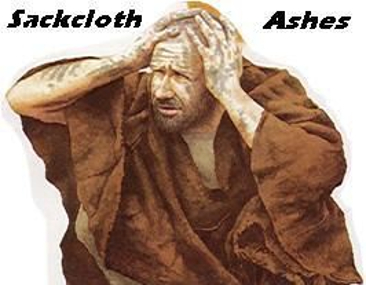


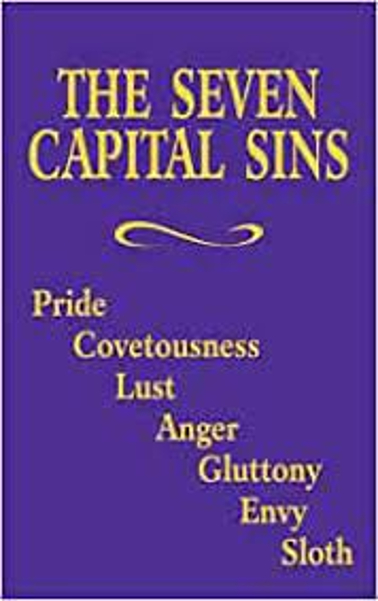


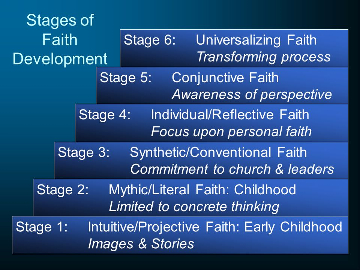

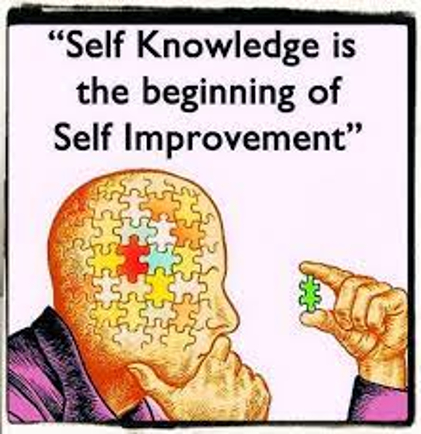




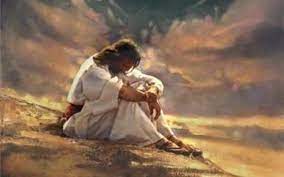



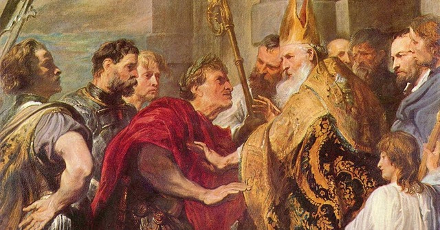

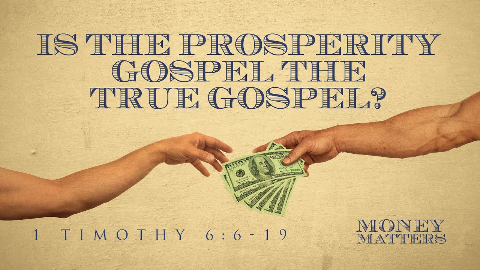
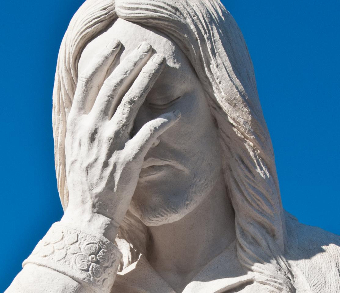



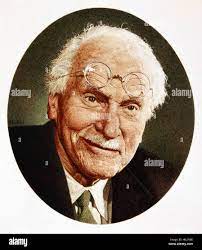







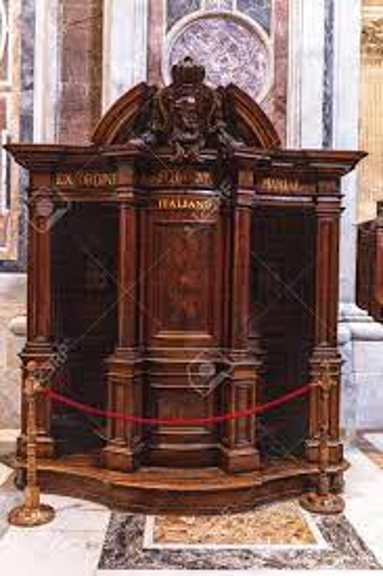





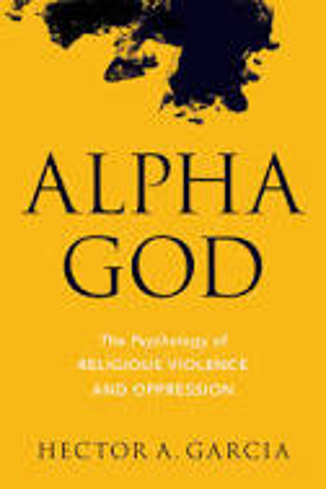




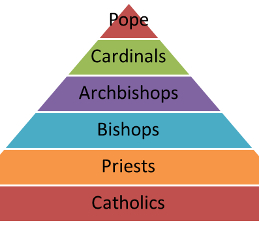




 Faith Seeking Understanding