

I’m a Faith Voyager
It wasn’t until much later in my life when I discovered one of Walt Whitman’s more famous quotes: “The untold want by life and land ne’er granted,/ Now voyager sail thou forth to seek and find”.
I realized that this quote described my vocation as a member of the Catholic Church. Ever since I was a child, I was fascinated by Catholicism. It’s rituals, music, stories, and devotion captured my attention for quite a while, like 77 years!
This website is my attempt to share what I have read, learned, and experienced as a Catholic.
Religion as we know it is dying because technology and science are changing the world dramatically. Traditional religions no longer meet the spiritual needs of many people. Humans desire to have a purpose and meaning for living. A healthy spirituality nurtures the mind, heart, and soul and creates a life that is open to the Spirit and is full of wonder, awe, and passion. Every aspect of life can touch the Sacred and satiate a hunger for affirmation and love. There are many paths to spiritual well-being and psychological health that can transform every aspect of your life.
I follow Jesus Christ as my mentor and one who found the path to unity with pure Goodness, Love, Justice, Inclusion, and Spirituality. The well known paleontologist and mystic, Teilhard de Chardin said that “We are not human beings having a spiritual experience but spiritual beings having a human experience”.
Even Jesus said, “And no one puts new wine into old wineskins. For the old skins would burst from the pressure, spilling the wine and ruining the skins. New wine is stored in new wineskins so that both are preserved.” Mt 9:17
For Jesus, the Good News about the new covenant of Love could not be contained in the old testament covenant of the Law.” Jesus never intended to start another religion but desired to show us the Way, the Truth, and the Life of the Sacred or that which is pure Goodness, Love, Justice, Inclusion, and Spirituality.
So it should be with the “Good News” of Jesus and his message proclaimed by the Christian churches today, especially Catholicism. It is obvious that the “old wine skins” of Christianity and Catholicism are no longer adequate for announcing this Good News in today’s world. In fact, Catholicism has declined at least ten percent in the last ten years and much more since the 1960s. The percentage of Catholics who say they are a “member” of a church has dropped by nearly 20 points since the year 2000, according to a new report by Gallup released in March of 2021. The decrease in the number of Protestants is very similar.
What caused the Good News of Jesus to be replaced by another religion: Christianity?
Christianity became the state religion of the Roman Empire in 380. “The Way” of Jesus was replaced for the security of the Roman Empire. The Power, Fame, and Fortune that Jesus rebuked, replaced the persecutions and witness of the early followers of Jesus. Read Acts 2 to grasp the life and beliefs of the early Church.
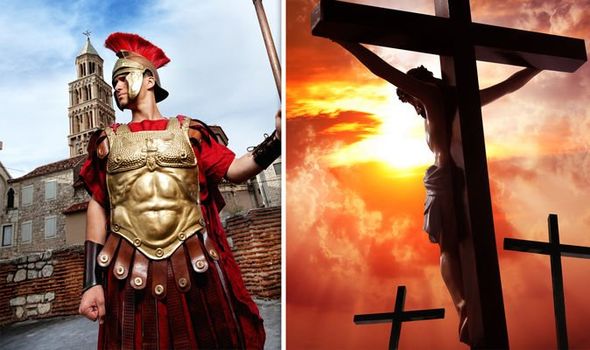
Thanks to Constantine (313 AD) and the other Catholic emperors of Europe, the “Good News” became creeds, councils, persecutions and even crusades against infidels and more. The simplicity of “the Way”, as Christianity was first called, became housed in the great cathedrals, castles, and monasteries, and eventually spread through preaching that was interpreted by mostly men and a few women, who never knew Jesus personally, and are now referred to as saints of the Church. When you research their writings you will discover unusual interpretations of the Good News of Jesus and his message.
For instance, Anselm of Canterbury, is responsible for the Atonement theology which stated that Jesus was sent as a sacrifice to remit the sins of us horrible humans. He interpreted the writings of Paul one way and the Franciscan philosopher and theologian John Duns Scotus (1266-1308) was instead inspired by the cosmic hymns in the first chapters of Colossians and Ephesians and the first chapter of John’s Gospel. “For Duns Scotus”, Richard Rohr ofm writes, “the incarnation of God and the redemption of the world could never be a mere mop-up exercise in response to human sinfulness, but the proactive work of God from the very beginning. We were “chosen in Christ before the world was made” (Ephesians 1:4). Our sin could not possibly be the motive for the divine incarnation; rather, God’s motivation was infinite divine love and full self-revelation! For Duns Scotus, God never merely reacts, but always freely acts out of free and unmerited love.”
The crucifix became the center of attention rather than the risen Lord. For the first thousand years the crucifix does not appear anywhere in art or architecture. What one does find is a few wall paintings or mosaics of the risen Jesus with nail marked hands outstretched.
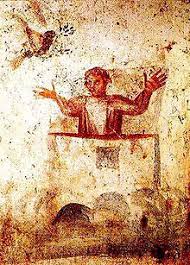
Over the course of the first fourteen hundred years after Jesus, it is safe to say that a plethora of doctrines, devotions, and practices that came to be were not explicitly taught by Him. Rather, they were devised by fervent followers trying to explain the divinity and power of Jesus.
The old skins of the first fourteen hundred years were and still are patriarchal, authoritarian, clerical, full of pomp and circumstance, clothed in crimson robes with mitres and titles like monsignor (my Lord), excellency, bishop, eminence, cardinal and even holiness. Hardly what Jesus had in mind. Read chapter 23 of Matthew to understand what Jesus thought.
One of the straws that broke the camel’s back of Catholicism for many was the sale of indulgences in the Middle Ages which was the remission of punishment for sin for those who made a pilgrimage to a holy site, donated money for the sick or poor or participated in the crusades. The Reformation, initiated by Martin Luther, an Augustinian monk, focused on this and on the authority of the pope to grant such indulgences or remission of sin and its punishment. Eventually, the authority of the Church as well as other doctrines and practices were challenged. The result of this upheaval was the founding of many new denominations of Christianity now called Protestantism- those who protested.
The Catholic reaction to all of this resulted in the Council of Trent which basically defended the Church’s position and sparked the initiation of many religious orders of men and women to educate the faithful in the doctrines, devotions and the hierarchical authority that was threatened and to establish missions to convert heathens all around the globe.
New wine skins were anathema! So, “the Good News” got embroiled in intellectual, moral, and theological debates and eventually explanations like the catechism, canon law, and tomes of dissertations by Thomas Aquinas and other noted men and women, many of whom are referred to as “doctors” of the Church.
One must remember that Jesus challenged the traditions, teachings and laws of Judaism in His day because they were far from what God wanted. The 10 commandments given to Moses grew to 613 laws or mitzvahs, more negative than positive. Jesus condensed them to 3: Love God, your neighbor, and yourself. His sermon on the mount contained 9 beatitudes or true but not easy, ways to the happiness of eternity with God. The elders, ,rabbis, Pharisees and Sadducees, called Him a heretic. His teachings of love, humility, peace, distributive justice, forgiveness, mercy and compassion for all women and men were central to Judaism but ignored by many of its leaders.
Forward to the 21st century, the age of the worldwide internet and media where information about everything abounds. There is still a need for spiritual well-being
“There is neither Jew nor Greek, there is neither slave nor free man, there is neither male nor female; for you are all one in Christ Jesus,” (Gal. 3:28).
The challenge for Catholicism, especially for the leaders: Use new wineskins that will hold and deliver the wonderful Good News of Jesus to a modern world in desperate need of witness more than preaching.
Do not take gold or silver or copper for your belts; no sack for the journey, or a second tunic, or sandals, or walking stick. The laborer deserves his keep. Mt 10:9
There have been and are many good men and women who were and are laborers in the vineyard, in parishes, missions, shelters for the homeless and more. Many have already started using new wine skins like women and men of all ages and backgrounds. They don’t need titles or renown. Dorothy Day once said: ”Don’t call me a saint. I don’t want to be dismissed so easily”.
The Catholic and Protestant Churches’ leadership must abandon the old wine skins of clericalism, sexism, patriarchal authoritarianism, pomp and circumstance, robes, and titles that reflect the middle ages. It seems that this will not happen in my lifetime and maybe never. My Catholic roots will not leave me. I redefined Catholicism as my personal religion and incorporated many other spiritual traditions and concepts which have increased my spiritual well-being to live the Good News of Jesus and his Way, Truth, and Life.
It is up to each individual to find his or her own way to become fully human and thus unite oneself to the Sacred. Thus, I believe that we are responsible for our own religion which can nourish our Spiritual well-being.
In either case, our goal as believers in the Good News requires our attention, education, persistence, and discernment in order to raise our human consciousness to its fullest, in union with the Sacred which cannot be limited to any particular definition or name other than that which is Sacred and which is the source of and is existence. I believe that Jesus, as a Jew, believed that ” I am” is the name of the Sacred given to Moses and is one way of referring to that which Sacred.

Pierre Teilhard de Chardin
 Faith Seeking Understanding