“13th century byzantine mosaic of the Jesus Christ (known as Christ Pantocrator) in the Hagia Sophia temple in Istanbul, Turkey”
The resurrection completes the inauguration of God’s kingdom. . . . It is the decisive event demonstrating that God’s kingdom really has been launched on earth as it is in heaven. The message of Easter is that God’s new world has been unveiled in Jesus Christ and that you’re now invited to belong to it.” – N.T. Wright
“It costs God nothing, so far as we know, to create nice things: but to convert rebellious wills cost Him crucifixion.” C. S. Lewis
A further explanation for the crucifixion.
The atonement or satisfaction theory of redemption was further articulated and explained by Anselm of Canterbury in the 10th century. According to this theory, which was based on the feudal structure of society, an offender was required to make recompense to the one offended but according to that person’s status.
Thus, a crime against a king would require more satisfaction than a crime against those of lesser status. According to this way of thinking, humans could never to anything to appease an almighty God. Only death would suffice. Thus redemption was only accomplished by someone who was equal to God but in human form. (The idea of the “scapegoat” come to mind. It is believed that the “scapegoat” was first coined in the 16th century to describe the ritual animals that the Jewish community placed their sins onto in preparation for Yom Kippur.) Satisfaction theory of atonement – Wikipedia
Another interpretation of the crucifixion
“In the thirteenth century, the Franciscans and the Dominicans invariably took opposing positions in the great debates in the universities of Paris, Cologne, Bologna, and Oxford. Both opinions usually passed the tests of orthodoxy, although one was preferred.”
“Thomas Aquinas and the Dominicans agreed with Anselm’s (by then mainline) view that a debt had to be paid for human salvation. But Franciscan John Duns Scotus (c. 1266-1308) said that Jesus wasn’t solving any problems by coming to earth and dying. God did not need Jesus to die on the cross to decide to love humanity. God’s love was infinite from the first moment of creation; the cross was Love’s dramatic portrayal in space and time. That, in a word, was the Franciscan nonviolent at-one-ment theory.”
“Duns Scotus built his argument on the pre-existent Cosmic Christ described in Colossians and Ephesians. Jesus is “the image of the invisible God” (Colossians 1:15) who came forward in a moment of time so we could look upon “the One we had pierced” (John 19:37) and see God’s unconditional love for us, in spite of our failings.”
“The image of the cross was to change humanity, not a necessary transaction to change God—as if God needed changing! Duns Scotus concluded that Jesus’ death was not a substitution but a divine epiphany for all to see. Jesus was pure gift. The idea of gift is much more transformative than necessity, payment, or transaction. It shows that God is not violent, but loving. It is we who are violent.“
“Duns Scotus firmly believed that God’s freedom had to be maintained at all costs. If God “needed” or demanded a blood sacrifice to love God’s own creation, then God was not freely loving us. For the Franciscan school, Jesus was not changing God’s mind about us; he was changing our minds about God. If God and Jesus are not violent or vindictive, then our excuse for the same is forever taken away from us. If God is punitive and torturing, then we have permission to do the same. Thus grew much of the church’s violent history.”
“Jesus’ full journey revealed two major things: that salvation could have a positive and optimistic storyline, neither beginning nor ending with a cosmic problem; and that God was far different and far better than religion up to then had demonstrated. Jesus personally walked through the full human journey of both failure and rejection—while still forgiving his enemies—and then he said, “Follow me” and do likewise (see John 12:26; Matthew 10:38). The cross was not necessary, but a pure gift so that humanity could witness God’s out flowing Love in dramatic form.” Reference: Adapted from Richard Rohr, Dancing Standing Still: Healing the World from a Place of Prayer (Paulist Press: 2014), 70-73.
It’s my opinion and that of some scripture scholars, is that Jesus was crucified by the Romans for sedition based upon his remarks about the Kingdom of God. Caesar was regarded as “god” and King of the Romans.
Any threat to his “Kingship” or rule over the Empire was met with jail resulting in crucifixion or some other form of torture and death.
“Jesus’ death was seen by Jesus himself … as the ultimate means by which God’s kingdom was established. The crucifixion was the shocking answer to the prayer that God’s kingdom would come on earth as in heaven.” N. T. Wright
From the gospels
As soon as morning came, the chief priests with the elders and the scribes, that is, the whole Sanhedrin, held a council. They bound Jesus, led him away, and handed him over to Pilate.
Pilate questioned him,“Are you the king of the Jews?” He said to him in reply, “You say so”.The chief priests accused him of many things. Again Pilate questioned him, “Have you no answer? See how many things they accuse you of.”
Jesus gave him no further answer, so that Pilate was amazed.
The Sentence of Death
Now on the occasion of the feast he used to release to them one prisoner whom they requested
A man called Barabbas was then in prison along with the rebels who had committed murder in a rebellion.
The crowd came forward and began to ask him to do for them as he was accustomed.Pilate answered, “Do you want me to release to you the king of the Jews?”For he knew that it was out of envy that the chief priests had handed him over.But the chief priests stirred up the crowd to have him release Barabbas for them instead.
Pilate again said to them in reply, “Then what [do you want] me to do with [the man you call] the king of the Jews?”
They shouted again, “Crucify him. Pilate said to them, “Why? What evil has he done?” They only shouted the louder, “Crucify him.”
“Jesus’ death by crucifixion under Pontius Pilate is as sure as anything historical can ever be. For if no follower of Jesus had written anything for one hundred years after his crucifixition, we would still know about him from two authors not among his supporters. Their names are Flavius Josephus and Cornelius Tacitus.” John Dominic Crossan
Jesus death- sacrifice “make death sacred”- martyr give up your life for resistance against Roman imperialism- “capitalism”
“At this time there was a wise man who was called Jesus. And his conduct was good, and [he] was known to be virtuous. And many people from among the Jews and the other nations became his disciples. Pilate condemned him to be crucified and to die. And those who had become his disciples did not abandon his discipleship.” Josephus
Crucifixion was considered a brutal way to die. Some scholars claim the Assyrians and Babylonians, and Persians used it in the 6th century BCE
Alexander the Great was responsible for introducing it to Mediterranean countries in the 4th century BCE, and the Phoenicians introduced it to Rome in the 3rd century BCE.
The Romans used crucifixion until it was abolished by Constantine I in the 4th century CE. Crucifixion in Roman times was applied mostly to slaves, disgraced soldiers, and those leading or suggestion sedition.
Death, usually after 6 hours–4 days, was due to many physical factors, but progressive asphyxia caused by impairment of respiratory movement was the most common reason.
The Roman guards could only leave the site after the victim had died, and were known to precipitate death by means of deliberate fracturing of the tibia and/or fibula, spear stab wounds into the heart, sharp blows to the front of the chest, or a smoking fire built at the foot of the cross to the victim.For more go to: history and pathology of crucifixion
It is a crime to put a Roman citizen in chains, it is an enormity to flog one, sheer murder to slay one: what, then, shall I say of crucifixion? It is impossible to find the word for such an abomination. Marcus Tullius Cicero
There is much more that can be presented about the crucifixion of Jesus. Here are a few for your study, reflection, and further understanding. This is certainly not an exhaustive list but one that might provide some different perspectives about a core doctrine of Christianity and Catholicism in particular. For a modest bibliography that might address other concerns about Jesus, check the Bibliography for Seekers tab at the top of this page
“Lord, help us to see in your crucifixion and resurrection an example of how to endure and seemingly to die in the agony and conflict of daily life, so that we may live more fully and creatively. You accepted patiently and humbly the rebuffs of human life, as well as the torture of the cross. Help us to accept the pains and conflicts that come to us each day as opportunity to grow as people and become more like you-make us realize that it is only by frequent deaths of ourselves, and our self-centered desires that we can come to live more fully, only by dying with you that we can rise with you.” Mother Teresa
“Stoning prophets and erecting churches to their memory afterwards has been the way of the world through the ages. Today we worship Christ, but the Christ in the flesh we crucified.” Mahatma Gandhi
“The earthly form of Christ is the form that died on the cross. The image of God is the image of Christ crucified. It is to this image that the life of the disciples must be conformed; in other words, they must be conformed to his death (Phil 3.10, Rom 6.4) The Christian life is a life of crucifixion (Gal 2.19) In baptism the form of Christ’s death is impressed upon his own. They are dead to the flesh and to sin, they are dead to the world, and the world is dead to them (Gal 6.14). Anybody living in the strength of Christ’s baptism lives in the strength of Christ’s death.” Dietrich Bonhoeffer
“This is the crucifixion of Christ: in which He dies again and again in the individuals who were made to share the joy and freedom of His grace, and who deny Him.” Thomas Merton
“. . . an absurd problem came to the surface: ‘How COULD God permit that (crucifixion of Jesus Christ)!’ . . . the deranged reason of the little community found quite a frightfully absurd answer: God gave his Son for forgiveness, as a SACRIFICE . . . The SACRIFICE FOR GUILT, and just in its most repugnant and barbarous form – the sacrifice of the innocent for the sins of the guilty! What horrifying heathenism!” Friedrich Nietzsche
“The utter failure came at the Crucifixion in the tragic words, ‘My God, my God, why hast thou forsaken me?’ If you want to understand the full tragedy of those words you must realize what they meant: Christ saw that his whole life, devoted to the truth according to his best conviction, had been a terrible illusion. He had lived it to the full absolutely sincerely, he had made his honest experiment, but it was nevertheless a compensation. On the cross his mission deserted him. But because he had lived so fully and devotedly he won through to the Resurrection body.” Carl Jung
Regardless of what you believe about the Last Supper, there are many questions that need to be considered. The information provided below is not meant to sow seeds of doubt about the words and actions of the Last Supper. Rather, it’s purpose is to provide a broader interpretation and understanding of the event.
Jesus Washes His Disciples’ Feetaccording to His disciple John
This is an important prelude to the celebration of the Passover meal that is also known as the Last Supper.
“It was just before the Passover Festival. Jesus knew that the hour had come for him to leave this world and go to the Father. Having loved his own who were in the world, he loved them to the end. The evening meal was in progress, and the devil had already prompted Judas, the son of Simon Iscariot, to betray Jesus. Jesus knew that the Father had put all things under his power, and that he had come from God and was returning to God; so he got up from the meal, took off his outer clothing, and wrapped a towel around his waist. After that, he poured water into a basin and began to wash his disciples’ feet, drying them with the towel that was wrapped around him.
He came to Simon Peter, who said to him, “Lord, are you going to wash my feet?”
Jesus replied, “You do not realize now what I am doing, but later you will understand.”
“No,” said Peter, “you shall never wash my feet.”
Jesus answered, “Unless I wash you, you have no part with me.”
“Then, Lord,” Simon Peter replied, “not just my feet but my hands and my head as well!”
Jesus answered, “Those who have had a bath need only to wash their feet; their whole body is clean. And you are clean, though not every one of you.” For he knew who was going to betray him, and that was why he said not everyone was clean.
When he had finished washing their feet, he put on his clothes and returned to his place. “Do you understand what I have done for you?” he asked them. “You call me ‘Teacher’ and ‘Lord,’ and rightly so, for that is what I am. Now that I, your Lord and Teacher, have washed your feet, you also should wash one another’s feet. I have set you an example that you should do as I have done for you. Very truly I tell you, no servant is greater than his master, nor is a messenger greater than the one who sent him. Now that you know these things, you will be blessed if you do them.Maundy (foot washing) – Wikipedia
The “Last Supper”
There is much controversy about the events of the Last Supper as well the discrepancies about the actual words and actions that Jesus used during the meal.
Much of the confusion about the Last Supper event is due to the oral traditions, explanations, and beliefs of the early Church communities, their elders and overseers.
Here are the scripture accounts listed according to the dates of their writing
2 Peter 2:13 “They will be paid back with harm for the harm they have done. Their idea of pleasure is to carouse in broad daylight.They are blots and blemishes, reveling in their pleasures while they feast with you.”
Acts 2 “They devoted themselves to the apostles’ teaching and to fellowship, to the breaking of bread and to prayer. 43 Everyone was filled with awe at the many wonders and signs performed by the apostles. 44 All the believers were together and had everything in common. 45 They sold property and possessions to give to anyone who had need. 46 Every day they continued to meet together in the temple courts. They broke bread in their homes and ate together with glad and sincere hearts, 47 praising God and enjoying the favor of all the people. And the Lord added to their number daily those who were being saved.
Jude 12: “These people are blemishes at your love feasts, eating with you without the slightest qualm—shepherds who feed only themselves. They are clouds without rain, blown along by the wind;autumn trees, without fruit and uprooted—twice dead.”
includes the account of the washing the feet of the Apostles by Jesus before the meal and the only specific reference to what happened during the meal are these words spoken by Jesus after John asked who would betray Jesus: “It is the one to whom I will give this piece of bread when I have dipped it in the dish.”
Prior to the latest scripture scholarship from the 18th century to the present, authoritative words and interpretations of the “Church Fathers” and other noted Church leaders in the first 5 centuries were accepted and approved by the “Magisterium” of the Roman Catholic Church.
Between those discrepancies and the confusion about the nature of Jesus, human, Divine or both, It’s my opinion that the person of Jesus became more important than most of the teachings and message of Jesus.
Add to all of that, the disputes about the meaning and significance of the bread and wine and the words of Jesus, and you have a Christianity broken into many parts. Here’s what I mean.
Basically, Catholics believe in transubstantiation – that the bread and wine are physically changed into the body and blood of Christ.
However, a Pew Research Center survey finds that most self-described Catholics don’t believe this core teaching. In fact, nearly seven-in-ten Catholics (69%) say they personally believe that during Catholic Mass, the bread and wine used in Communion “are symbols of the body and blood of Jesus Christ.” Just one-third of U.S. Catholics (31%) say they believe that “during Catholic Mass, the bread and wine actually become the body and blood of Jesus.”
On the other hand, in most Protestant churches, communion is seen as a memorial of Christ’s death. The bread and wine do not change at all because they are symbols.
Two significant groups at least loosely associated with Protestantism that don’t observe communion are The Salvation Army and the Quakers aka, Friends. The rationale for the Salvation Army’s position is more fully explained here: Why does the Salvation Army not administer the sacraments of baptism and the Lord’s Supper? But the short version is that they don’t observe the Lord’s Supper because it has been a source of division in the church, and it is not required for salvation.
The rationale for Quakers focuses more on all of life being “sacramental” and don’t regard some activities as more sacred than others, nor do they believe that any particular ritual is needed to communicate with God, so they do not believe in the sacraments as practiced in mainstream Christian churches.
As for Messianic Jews, their practice varies on the actual denomination to which they belong. Some celebrate communion as the annual celebration of Passover, while others observe it regularly as other Protestants do.
As for the words of Jesus’s command to eat and drink the bread and wine, which becomes his body and blood, many scholars have speculated that according to J. Godwin’s, Mystery Religions of the Ancient World, 1981, it seems that a Persian Mithraic text, from around the 5th century BCE contains words that are amazingly reminiscent of Jesus’s words. The text states that ‘he who will not eat of my body and drink of my blood, so that he will be made one with me and I with him, the same shall not know salvation.’
The following information provides more insight about more similarities between Jewish, Christian, and Zoroastrianism.
In addition, many doctrines of the Christian faith have parallels in Zoroastrianism, e.g., the virgin birth, the son of God, and resurrection. Some scholars say that Zarathustra (a.k.a. Zoroaster) lived around 600–500 BC. If that is the case, David, Isaiah, and Jeremiah (all of whom mention the Messiah, the resurrection and the final judgment in their writings), lived and wrote before Zarathustra. Some scholars say that Zoroaster lived sometime between 1500 and 1200 BC. If that is the case, the case for Christianity borrowing from Zoroastrianism would be stronger, but the fact is we don’t know when Zarathustra lived (hence the disagreement among scholars), and so this argument is speculative at best. The Greek historian Herodotus (5th century BC) doesn’t mention Zoroaster in his treatise on the Medo-Persian religions, though Plato, who was born roughly around the time Herodotus died, does mention him in his Alcibiades (see Wikipedia’s entry on Zoroaster; Zoroaster – WikipediaThe Origins Of Mithraism
Another event describing the “real presence” of Jesus comes after the resurrection. It appears in Luke’s gospel.
“Now that same day two of them were going to a village called Emmaus, about seven miles from Jerusalem. They were talking with each other about everything that had happened. As they talked and discussed these things with each other, Jesus himself came up and walked along with them; but they were kept from recognizing him.
He asked them, “What are you discussing together as you walk along?”
They stood still, their faces downcast. One of them, named Cleopas, asked him, “Are you the only one visiting Jerusalem who does not know the things that have happened there in these days?”
“What things?” he asked.“About Jesus of Nazareth,” they replied. “He was a prophet, powerful in word and deed before God and all the people. The chief priests and our rulers handed him over to be sentenced to death, and they crucified him; but we had hoped that he was the one who was going to redeem Israel. And what is more, it is the third day since all this took place. In addition, some of our women amazed us. They went to the tomb early this morning but didn’t find his body. They came and told us that they had seen a vision of angels, who said he was alive. Then some of our companions went to the tomb and found it just as the women had said, but they did not see Jesus.”
He said to them, “How foolish you are, and how slow to believe all that the prophets have spoken! Did not the Messiah have to suffer these things and then enter his glory?” And beginning with Moses and all the Prophets, he explained to them what was said in all the Scriptures concerning himself.
As they approached the village to which they were going, Jesus continued on as if he were going farther. But they urged him strongly, “Stay with us, for it is nearly evening; the day is almost over.” So he went in to stay with them.
When he was at the table with them, he took bread, gave thanks, broke it and began to give it to them. Then their eyes were opened and they recognized him, and he disappeared from their sight. They asked each other, “Were not our hearts burning within us while he talked with us on the road and opened the Scriptures to us?”
Coincidentally, a similar story appears in Greek literature. The beginning of Plato’s Symposium mirrors the end of the Gospel of Luke with many parallel elements including identical language, plot points, and themes.
As Jesus left the temple (after he had confronted the Pharisees and Sadducees) and was walking away, His disciples came up to Him (on the Mount of Olives) “to point out its buildings.” (The Mount of Olives is located next to Jerusalem and refers to the ridge located east of the City. It gets its name from the olive groves that at one time covered the land. Looking toward Jerusalem,)
Jesus says: “Do you see all these things?” ““Truly I tell you, not one stone here will be left on another; everyone will be thrown down.
“Tell us,” they said, “when will these things happen, and what will be the sign of Your coming and of the end of the age?” Jesus answered, “See to it that no one deceives you. For many will come in My name, claiming, ‘I am the Christ,’ and will deceive many.You will hear of wars and rumors of wars, but see to it that you are not alarmed. These things must happen, but the end is still to come. Nation will rise against nation, and kingdom against kingdom. There will be famines and earthquakes in various places. All these are the beginning of birth pains.”
Jesus’ message can be fairly characterized as apocalyptic eschatology. Scripture scholars believe that Jesus expected God to put an end to the normal course of things by raising the dead, judging the world and transforming the earth so that the divine will would be done on earth as it is in heaven. Critical scholars have also believed that for Jesus this eschatological metamorphosis was near to hand.
Mt 24: 9-30
Jesus goes on to describe the End Times starting with the many persecutions of Christians after Jesus dies. “They will deliver you over to be persecuted and killed, and you will be hated by all nations because of My name. At that time many will fall away and will betray and hate one another, and many false prophets will arise and mislead many.”
(Are these fake prophets, he speaks about, the leaders/preachers of many of the current Christian Churches?)
And about many Christians? “Because of the multiplication of wickedness, the love of most will grow cold. But the one who perseveres to the end will be saved. And this gospel of the kingdom will be preached in all the world as a testimony to all nations, and then the end will come.” (Does this sound like our current world???
“At that time, if anyone says to you, ‘Look, here is the Christ!’ or ‘There He is!’ do not believe it. For false Christs and false prophets will appear and perform great signs and wonders that would deceive even the elect, if that were possible.”
(In 2016, wasn’t a certain presidential candidate and new president considered, by the Catholic Church and many evangelical Churches, to be “the savior of the ProLife movement???)
‘Unparalleled privilege’: why white evangelicals see Trump as their savior
Jesus then speaks about his return “They will see the Son of Man coming on the clouds of heaven, with power and great glory. And He will send out His angels with a loud trumpet call, and they will gather His elect from the four winds, from one end of the heavens to the other.”
Then Jesus tries to explain what he just said by using three parables which describe what his disciples must do to be considered “the elect” or those who truly followed him by doing what he taught them to do as his disciples. The following is one of those parables.
The Sheep and the Goats
“When the Son of Man comes in His glory, and all the angels with Him, He will sit on His glorious throne. All the nations will be gathered before Him, and He will separate the people one from another, as a shepherd separates the sheep from the goats.He will place the sheep on His right and the goats on His left.”
“Then the King will say to those on His right, ‘Come, you who are blessed by My Father, inherit the kingdom prepared for you from the foundation of the world. For I was hungry and you gave Me something to eat, I was thirsty and you gave Me something to drink, I was a stranger and you took Me in, I was naked and you clothed Me, I was sick and you looked after Me, I was in prison and you visited Me.’
“Then the righteous will answer Him, ‘Lord, when did we see You hungry and feed You, or thirsty and give You something to drink? When did we see You a stranger and take You in, or naked and clothe You? When did we see You sick or in prison and visit You?’
And the King will reply, ‘Truly I tell you, whatever you did for one of the least of these brothers of Mine, you did for Me.’
“Then He will say to those on His left, ‘Depart from Me, you who are cursed, into the eternal fire prepared for the devil and his angels. For I was hungry and you gave Me nothing to eat, I was thirsty and you gave Me nothing to drink, I was a stranger and you did not take Me in, I was naked and you did not clothe Me, I was sick and in prison and you did not visit Me.’
And they too will reply, ‘Lord, when did we see You hungry or thirsty or a stranger or naked or sick or in prison, and did not minister to You?’”
“Then the King will answer, ‘Truly I tell you, whatever you did not do for one of the least of these, you did not do for Me.’
And they will go away into eternal punishment, but the righteous into eternal life.”
Holy Week is about US and how we live, what we do, and how we evangelize the rest of society to progress toward distributive justice for all by lessening the gap between the “haves and the havenots”’.
When Jesus had finished saying all these things, He told His disciples, “You know that the Passover is two days away, and the Son of Man will be handed over to be crucified.”At that time the chief priests and elders of the people assembled in the courtyard of the high priest, whose name was Caiaphas, and they conspired to arrest Jesus covertly and kill Him. “But not during the feast,” they said, “or there may be a riot among the people.”
Jesus takes his disciples and others to further demonstrate what he teaches them and US about the Kingdom of God on earth. Many followers of Jesus are concerned about his passive resistance to Roman rule which is an antithesis to the Kingdom of God. They see Jesus as God’s representative and the one who will initiate the Kingdom of God on earth. They also realize that he may die because of this.
While Jesus was in Bethany in the home of Simon the Leper, a woman came to Him with an alabaster jar of expensive perfume, which she poured on His head as He reclined at the table.
When the disciples saw this, they were indignant and asked, “Why this waste? This perfume could have been sold at a high price, and the money given to the poor.”
Aware of this, Jesus asked, “Why are you bothering this woman? She has done a beautiful deed to Me. The poor you will always have with you,but you will not always have Me. By pouring this perfume on Me, she has prepared My body for burial. Truly I tell you, wherever this gospel is preached in all the world, what she has done will also be told in memory of her.”
Judas, like many people today, thinks that Jesus is too idealistic and impractical, in other words” he’s wasting money that could be put to better use.
Judas Agrees to Betray Jesus
“Then one of the Twelve, the one called Judas Iscariot, went to the chief priests and asked, “What are you willing to give me if I hand Him over to you?” And they set out for him thirty pieces of silver. So from then on Judas looked for an opportunity to betray Jesus.”
How do we betray Jesus?
Do we seek power over others? Are we more concerned about our reputation and status in society than upholding our Christian integrity and character? Are wealth and possessions more important than family, friends, and those in need???
Actions speak louder than words! Pay attention to what Jesus does to oppose the Kingdom of Empire: Rome or America. The Stations of the Cross are not ritual that reminds us of what happened to Jesus but what was the consequence of what Jesus did.
“For whoever wants to save their life will lose it, but whoever loses their life for me will find it.” Mt 16:25
Tuesdayof Holy Week
They were seeking to arrest him, but they feared the crowd, for they realized that he had addressed the parable to them. So they left him and went away.
Denunciation of the Scribes
In the course of his teaching he said,“Beware of the scribes, who like to go around in long robes and accept greetings in the marketplaces, seats of honor in synagogues, and places of honor at banquets. They devour the houses of widows and, as a pretext, recite lengthy prayers. They will receive a very severe condemnation.”
Eight Woes
“But woe to you, scribes and Pharisees, hypocrites, because you shut off the kingdom of heaven from people; for you do not enter in yourselves, nor do you allow those who are entering to go in.
“Woe to you, scribes and Pharisees, hypocrites, because you devour widows’ houses, and for a pretense you make long prayers; therefore you will receive greater condemnation.
“Woe to you, scribes and Pharisees, hypocrites, because you travel around on sea and land to make one proselyte; and when he becomes one, you make him twice as much a son of hell as yourselves.
“Woe to you, blind guides, who say, ‘Whoever swears by the temple, that is nothing; but whoever swears by the gold of the temple is obligated.’ 17“You fools and blind men! Which is more important, the gold or the temple that sanctified the gold? “And, ‘Whoever swears by the altar, that is nothing, but whoever swears by the offering on it, he is obligated.’ “You blind men, which is more important, the offering, or the altar that sanctifies the offering? 20“Therefore, whoever swears by the altar, swears both by the altar and by everything on it. 21“And whoever swears by the temple, swears both by the temple and by Him who dwells within it. “And whoever swears by heaven, swears both by the throne of God and by Him who sits upon it.
“Woe to you, scribes and Pharisees, hypocrites! For you tithe mint and dill and cummin, and have neglected the weightier provisions of the law: justice and mercy and faithfulness; but these are the things you should have done without neglecting the others. “You blind guides, who strain out a gnat and swallow a camel!
“Woe to you, scribes and Pharisees, hypocrites! For you clean the outside of the cup and of the dish, but inside they are full of robbery and self-indulgence. “You blind Pharisee, first clean the inside of the cup and of the dish, so that the outside of it may become clean also.
“Woe to you, scribes and Pharisees, hypocrites! For you are like whitewashed tombs which on the outside appear beautiful, but inside they are full of dead men’s bones and all uncleanness. “So you, too, outwardly appear righteous to men, but inwardly you are full of hypocrisy and lawlessness.
“Woe to you, scribes and Pharisees, hypocrites! For you build the tombs of the prophets and adorn the monuments of the righteous, and say, ‘If we had been living in the days of our fathers, we would not have been partners with them in shedding the blood of the prophets.’“So you testify against yourselves, that you are sons of those who murdered the prophets.“Fill up, then, the measure of the guilt of your fathers.“You serpents, you brood of vipers, how will you escape the sentence of hell?
“Therefore, behold, I am sending you prophets and wise men and scribes; some of them you will kill and crucify, and some of them you will scourge in your synagogues, and persecute from city to city, so that upon you may fall the guilt of all the righteous blood shed on earth, from the blood of righteous Abel to the blood of Zechariah, the son of Berechiah, whom you murdered between the temple and the altar.“Truly I say to you, all these things will come upon this generation.
Staying on Message means that we disciples must act to call out the Church leaders and authorities and tell them to heed the words of Jesus!
Call out the Church leaders and hierarchy:
Tell them to stop oppressing the LGBTQ persons, to stop being silent about the “big lie”, the stolen election. the deplorable conduct of politicians, the threat of violence, voter suppression, antisemitism
Listen to Jesus’ sermon to his disciples and to us, his discipleswhen we speak up.
Blessed are the poor in spirit: for theirs is the kingdom of heaven. Blessed are the meek: for they shall possess the land.
Blessed are they who mourn: for they shall be comforted.
Blessed are they that hunger and thirst after justice for they shall have their fill.
Blessed are the merciful: for they shall obtain mercy.
Blessed are the clean of heart: for they shall see God.
Blessed are the peacemakers: for they shall be called the children of God.
Blessed are they that suffer persecution for justice’ sake, for theirs is the kingdom of heaven.
This is what Jesus wants us to do this week: Speak up! Act!
Jesus went to Jerusalem NOT to die for humanity but the SERVE humanity! This week is not about suffering as much as it is about “sacrifice”. “If anyone desires to come after me, let him deny himself, and take up his cross, and follow me. For whoever desires to save his life will lose it, and whoever loses his life for my sake will find it. Mt 16:25
The focus of Holy Week should be to understand that this week is about US not about Jesus! He said: “I am the Way”, take up YOUR CROSS and follow me. Comfort those who are poor and oppressed and afflict those who are powerful, famous, and wealthy for the Kingdom of God is about distributive justice not exclusive justice for the powerful, the famous and the wealthy.
“Blessed are those who are persecuted because of righteousness, for theirs is the kingdom of heaven.” Mt 5:10
Jesus shows us the Way to follow him and advocate for the Kingdom of God. Not as a braggadocios soapbox preacher but as a humble voice for those less fortunate. Not as a “superhero”, come to save the day. No, as one who “walks the walk” and not just preach about it!!
NO! Holy Week is about us! We should be out in front of Church leaders and politicians calling for change, for distributive justice, for healthcare for all, for measures to help women avoid getting an unwanted pregnancy, to stop discrimination against LGBTQ persons, to eliminate racism, antisemitism, to ban assault riffles and other instruments of injustice.
Walking the walk means we do what Jesus expects us to do: be willing to risk our lives for others. Resistance to a system of society is to risk your social life, to possibly lose friends and even family members.
“Do you think that I have come to bring peace to the earth? No, I tell you, but division. From now on there will be five in one family divided against each other, three against two and two against three. They will be divided, father against son and son against father, mother against daughter and daughter against mother, mother-in-law against daughter-in-law and daughter-in-law against mother-in-law.”…Luke
“If I sit next to a madman as he drives a car into a group of innocent bystanders, I can’t, as a Christian, simply wait for the catastrophe, then comfort the wounded and bury the dead. I must try to wrestle the steering wheel out of the hands of the driver.” Dietrich Bonhoeffer
12:51-53
The Jewish people expected their messiah to be a “knight in shining armor” riding on a white stallion and instead he was a peasant on a donkey.
Jesus echoes the words of the prophet Jeremiah: “Has this house, which bears my Name, become a den of robbers to you?” Jeremiah 7:11
He was afflicting the comfortable- his fellow Jews who were taking advantage of those who were there to worship for the Passover.
Many Jews were collaborating with the Romans for power, fame, and fortune!
There are consequences for speaking out and especially for taking action.
“When the chief priests and the scribes heard it, they kept looking for a way to kill him, for they were afraid of him because the whole crowd was spellbound by his teaching. And when evening came, Jesus and his disciples went out of the city.” Mt 21:18-19
“Then Judas Iscariot, one of the Twelve, went off to the chief priests to hand him over to them. When they heard him they were pleased and promised to pay him money. Then he looked for an opportunity to hand him over.” Mk 14:10-11
Modern martyrs for righteousness
“Like the early Christians, we must move into a sometime hostile world armed with the revolutionary gospel of Jesus Christ. With this powerful gospel we shall boldly challenge the status quo.” –Martin Luther King, Jr.
If we are worth anything, it is not because we have more money or more talent, or more human qualities. Insofar as we are worth anything, it is because we are grafted onto Christ’s life, his cross and resurrection. That is a person’s measure. Oscar Romero
“In a gentle way, you can shake the world.” Ghandi
“Few will have the greatness to bend history itself, but each of us can work to change a small portion of events. It is from numberless diverse acts of courage and belief that human history is shaped. Each time a man stands up for an ideal, or acts to improve the lot of others, or strikes out against injustice, he sends forth a tiny ripple of hope, and crossing each other from a million different centers of energy and daring those ripples build a current which can sweep down the mightiest walls of oppression and resistance.” Robert F. Kennedy
Understanding the origins of the various concepts and titles for the community of disciples.
In the Catholic tradition, the followers of Jesus are referred to as The Body of Christ, The People of God, The Faithful, The Flock, and the Church(ecclesia). These nomenclatures have been around for almost as long as the nomenclatures, The Way, and Christian.
As used by Saint Paul in his letter to the Ephesians, The Body of Christ refers to all individuals who “heard the word of truth, the gospel of your salvation, believed in him, were sealed with the promised Holy Spirit” “are being built together into a dwelling place for God by the Spirit” are “joined and held together by every joint with which it is equipped, when each part is working properly, makes the body grow so that it builds itself up in love”.
And in his first letter to the Corinthians he writes rather extensively about the unity and diversity in the Body:
“Just as a body, though one, has many parts, but all its many parts form one body, so it is with Christ. For we were all baptized by one Spirit so as to form one body—whether Jews or Gentiles, slave or free—and we were all given the one Spirit to drink. Even so the body is not made up of one part but of many.
Now if the foot should say, “Because I am not a hand, I do not belong to the body,” it would not for that reason stop being part of the body. And if the ear should say, “Because I am not an eye, I do not belong to the body,” it would not for that reason stop being part of the body. If the whole body were an eye, where would the sense of hearing be? If the whole body were an ear, where would the sense of smell be? But in fact God has placed the parts in the body, every one of them, just as he wanted them to be. If they were all one part, where would the body be? As it is, there are many parts, but one body.
The eye cannot say to the hand, “I don’t need you!” And the head cannot say to the feet, “I don’t need you!” On the contrary, those parts of the body that seem to be weaker are indispensable, and the parts that we think are less honorable we treat with special honor. And the parts that are unpresentable are treated with special modesty, while our presentable parts need no special treatment. But God has put the body together, giving greater honor to the parts that lacked it, so that there should be no division in the body, but that its parts should have equal concern for each other. If one part suffers, every part suffers with it; if one part is honored, every part rejoices with it.
Now you are the body of Christ, and each one of you is a part of it.
Now you are the body of Christ, and each one of you is a part of it. And God has placed in the church first of all apostles, second prophets, third teachers, then miracles, then gifts of healing, of helping, of guidance, and of different kinds of tongues. Are all apostles? Are all prophets? Are all teachers? Do all work miracles? Do all have gifts of healing? Do all speak in tongues? Do all interpret? Now eagerly desire the greater gifts”
It wasn’t until much later that the Roman Catholic theologians use the term “Mystical Body of Christ” to stress the powerful manifestation of the divine authority of certain parts of the Body of Christ first made popular from Pius XII’s letter: Mystici Corporis Christi, in 1943. “The encyclical builds on a theological development in the 1920s and 1930s in Italy, France, Germany and England, which all re-discovered the Pauline concept of the Mystical Body of Christ.In 1936, Emile Mersch had warned of some false mysticism’s being advanced with regard to the mystical body, and his history of this topic was seen as influencing the encyclical On 18 January 1943, five months before the promulgation of Mystici corporis, Archbishop Conrad Gröber of Fribourg promulgated a letter in which he addressed the docetic tendencies of some mystical body theology (to separate the spiritual and the material elements in man). Timothy Gabrielli saw Pius’ emphasis on the church as a perfect society on earth as an attempt to save the mystical body theology, with its many theological, pastoral, and spiritual benefits, from the danger of docetism, broadly taken as the belief that Jesus only seemed to be human, and that his human form was an illusion.”
(So, a simple analogy used by Paul to express the unity of all who follow Jesus and how each is important becomes a theological Church doctrine that gives more power to the clergy and especially the Pope.)
“Yet the encyclical teaches that both laypeople and the leadership have a role to play in the Church. “Lay people are at the forefront of the Church, and have to be aware of ‘being the Church’, not just ‘belonging to the Church’.” (In other words, the laity are the workers and bear the burden of “being the Light to the World while at the same time, the Pope and bishops are responsible for providing leadership for all the faithful but don’t always practice what they preach since they lived an opulent life style for most of the Catholic Church’s history even up to the present. Pope Francis has tried to set an example of downsizing residences and other accouterments that reflect opulence and entitlement. Together, the letter states, “they are the Church and work for the good of the Church.”
In 1947, Pius XII later (threw a bone to the laity” issued the Apostolic Constitution Provida Mater Ecclesia, which allowed lay people to form their own secular communities, and establish them within a newly established Canon Law framework which incorporated the following as well.
NOW we get to the designation of Power: the Apostles and bishops
“The encyclical states that Christ, while still on earth, instructed by precept, counsel and warnings “in words that shall never pass away, and will be spirit and life” to all men of all times. He conferred a triple power on His Apostles and their successors, to teach, to govern, to lead men to holiness, making this power, defined by special ordinances, rights, and obligations, the fundamental law of the whole Church.God governs directly and guides personally the Church which He founded.” ( Really? As far as I can surmise, apostles [from apostolos ‘messenger’, from apostellein ‘send forth’] were those SENT to evangelize. They were NOT ordained by Jesus!)
Pius XII tried to justify his statement or proclamation by “quoting Proverbs 21:1 noting that God reigns within the minds and hearts of men, and bends and subjects their wills to His good pleasure, even when rebellious”. (What happened to Free Will and conscience?)
“Mystici corporis requests the faithful to love their Church and to always see Christ in her, especially in the old and sick members. They must accustom themselves to see Christ Himself in the Church. For it is Christ who lives in His Church, and through her, teaches, governs, and sanctifies; it is Christ also who manifests Himself differently in different members of His society.” (Finally a reference to Pauls, analogy!) It goes on:
He is carried across Vatican Square on the Sedia gestatoria, a portable throne carried by twelve footmen.
“If the faithful strive to live in a spirit of lively faith, they will not only pay due honor and reverence “to the more exalted members” (thus the justification of the use of such titles as “Monsignor”; “Excellency”, “Eminence” and “Holiness” when addressing the various ranks of hierarchy.) of this Mystical Body, especially those who according to Christ’s mandate will have to render an account of our souls, (Thus justifying the power of censure, ex-communication, and determining who is worthy of receiving the “Sacred Species” or “Holy Communion”, and in my opinion, misnamed as the “Eucharist”, a term that means “thanksgiving”. used as a tile for celebrating the Word of God in the Liturgy or work of the People of God.) but they will take to their hearts those members who are the object of our Savior’s special love: the weak, the wounded, and the sick who are in need of material or spiritual assistance; children whose innocence is so easily exposed to danger in these days; and finally the poor, of whom is recognized as the very person of Jesus Himself as a perfect model of love for the Church”
(Two extremes are highlighted yet Pius ignores Jesus teaching: For those who exalt themselves will be humbled, and those who humble themselves will be exalted. Mt 23:12 It’s ironic that this line introduces Jesus’ condemnation of the haughty leaders of Judaism, the Pharisees, and Sadducees as hypocrites.)
“Finally, the encyclical is principally remembered for its statement that the Mystical Body is identical with the Roman Catholic Church, repeated by Pius XII in Humani Generis (1950) in response to dissension. According to Mystici Corporis, to be truly a member of the Mystical Body one must be a member of the Roman Catholic Church. Other Christians who erred in good faith could be unsuspectingly united to the Mystical Body by an unconscious desire and longing (inscio quodam desiderio ac voto). In 1947, Pius XII wrote the encyclical Mediator Dei which acknowledged that baptized Christians were members of the Mystical Body and participated in Christ’s priestly office.”
“During the Second Vatican Council, Yves Congar argued that the term ecclesia (‘church’) concerned the people “called forth”, the People of God, those over whom God reigns. “Body of Christ” then would emphasize the special union with the risen Christ that came with the new covenant. Congar was later denounced by the Holy Office for describing the Church as essentially a community in the Spirit, a gathering of the faithful and NOT the holy Roman Catholic Church.”
“The Second Vatican Council would later define in Lumen Gentium that the Church subsists in the Catholic Church. Avery Dulles argues this to be “an expression deliberately chosen to allow for the ecclesial reality of other Christian communities”, implying that non-Catholic Christians are members of the Body of Christ, and thus of the Church.”
While the Holy Office or the Vatican wanted to hold onto its power, fame, and fortune, for me the guidance and discernment lie within my CONSCIENCE informed by the Word of God or Sacred Scriptures. And while the Holy Office interprets “the Body of Christ” as a two-part entity with the head being more important than the rest of the body parts, I prefer to maintain Paul’s analogy of equal parts and Jesus’ exhortation that “the exalted shall be humbled”!
“We can’t do it without God, and God won’t do it without us.” John Dominic Crossan
Divine Intervention According to Humans
In her book, A Case for God, Karen Armstrong claims that “The desire to cultivate a sense of the transcendent may be the defining human characteristic.” Humans quickly discovered that they were not able to control the world around them. Thunder, lightning, gusts of wind, torrential rain, floods, disease and much more seemed like some power was in control and was angry for something that humans, did or didn’t do.
From ancient Israel:When the people saw the thunder and lightning and heard the trumpet and saw the mountain in smoke, they trembled with fear. They stayed at a distance and said to Moses, “Speak to us yourself and we will listen. But do not have God speak to us or we will die.” Ex 20:18-19
From ancient Greece:The Erysichthon myth was known for the disrespect for the gods, as it was mentioned by Callimachus in one of his hymns that was later published by Ovidius. It is said that one day Erysichthon and some of his slaves went to a grove dedicated to the goddess Demeter to cut down all trees for the construction of a palace. Despite the persuasion of the goddess herself, the mortal did not agree and caused her wrath. His punishment was unbearable hunger, which was only satisfied when he devoured his own body.
Ever since anthropologists and historians began uncovering human activity, culture, and societies, they discovered that humans believed in a world controlled by a greater power. Each culture, society, or empire worshiped numerous gods who, while performing similar functions, were given different names. List of Gods and Goddesses From Antiquity
Some time after 12th century BCE, the Israelites and their culture branched out of the Canaanite peoples and their cultures through the development of a distinct monolatristic (many gods with one deity above all)—and later monotheistic—religion centered on the national god Yahweh. By the 6th century BC, the five books of the Pentateuch, the first five books of what we call the bible, were written with the first book being Genesis in which they coveted a belief that their god, Yahweh, was above all other gods because Yahweh created the world.
“So God created mankind in his own image, in the image of God he created them; male and female he created them. God blessed them and said to them, “Be fruitful and increase in number;” fill the earth and subdue it. Rule over the fish in the sea and the birds in the sky and over every living creature that moves on the ground.” Gen 1:27-28
Divine and Human Freedom and Responsibility
Since humans believed that they were created in the image and likeness of the Creator, it only stood to reason that God had human-like qualities but resided somewhere beyond this world.
Since they understood that they also had responsibilities and the freedom to make choices, which no other creature had, they believed that God also had a responsibility to protect and take care of them.
Psalm 47 proclaims that “He (God) subdued nations under us and brought people under our feet.”
Psalm 37, “The Lord looks after the lives of the upright, and their heritage will last forever.”
They also blamed God for their troubles:
Psalm 74 “Why, O God have you cast us off forever? Why does your anger blaze forth against the sheep of your pasture?
Psalm 106”Then The anger of the Lord flared up against his people… their enemies oppressed them.”
Nonetheless, humans were responsible for their own behavior. “Man is rational and therefore like God; he is created with free will and is master over his acts.” St. Irenaeus, Adv. haeres. 4, 4, 3: PG 7/1, 983.
Humans were free to do as they wished but so was God.“When, in the beginning, the Lord created human beings, he left them free to do as they wished.You have a choice between life and death; you will get whichever you choose.” SIr 15:14
Free-will gave humans an advantage over the other creatures of the earth, but it came with a liability: That liability was and still is how to determine what is good and what is not good. That requires “knowledge” that only the gods or Yahweh could disclose to them. The other creatures came with “instinct” which freed them from the responsibility of making choices.
Given our history as humans on this planet, we could say that it wasn’t a good idea to give humans the freedom of choice. Hence the need for an intervention, like handing Moses the ten commandments. “Moses summoned all Israel and said:Hear, Israel, the decrees and laws I declare in your hearing today. Learn them and be sure to follow them.” Deuteronomy 5:1-2
Yet, we might ask, are we really free to choose? Aren’t we driven to procreate, isn’t that an “instinct”. What about the attraction to one sex or another? What about the impulse to acquire power, fame, and fortune?
We could say that we’re like a Dr.Jeckel and Mr. Hyde.
Most medical and biological scientists claim that hormones, which are regulatory substances produced in an organism, are transported in tissue fluids such as blood, stimulate specific cells or tissues into action without our knowledge or choice.
The strange bedfellows of freedom, (free will) and instinct (hormones and chemicals) are often the subject of many a conversation.
For instance, John Milton, the devil in the movie, The Devil’s Advocate, says, “Well, I tell ya, let me give you a little inside information about God. God likes to watch. He’s a prankster. Think about it. He gives man instincts. He gives you this extraordinary gift, “free will” and then what does He do? I swear, for His own amusement, His own private cosmic gag reel, He sets the rules in opposition. It’s the goof of all time. Look, but don’t touch. Touch, but don’t taste. Taste, don’t swallow. Aha ha ha. And while you’re jumpin’ from one foot to the next, what is He doin’? He’s laughin’ His sick, f*ckin’ *ss off. He’s a tight-*ss. He’s a sadist. He’s an absentee landlord.”
Human and Divine Choices
The Catholic Church, like many other Christian denominations, is very proficient at telling us, on God’s behalf, which choices are good and which are not! On top of that they put the fear of God in us (Satan and Hell) which leads many offenders to experience fear, guilt, shame, and the need to beg for mercy.
Worshiping Catholics cry out “Lord have mercy” three times before forgiveness is assured by the priest.
I have always wondered why God would “choose” to create a creature with “free will”, knowing (God is Omniscient) that the creature would possibly be subject to certain strong temptations to do what is “wrong”. God, knowing that, still gave humans a huge responsibility! “Rule over the fish in the sea and the birds in the sky and over every living creature that moves on the ground.” An intervention like this can be rather risky!
Did God ever think that we would wreak havoc upon this once pristine planet and fill it with concrete buildings and asphalt roads and spew gasoline, oil, and coal fumes all over the planet, pollute the oceans and destroy the natural habitats of so many species of birds, animals, and fish. What parent would allow their children to ruin their home???
We can also ask:
Why did the Creator construct a universe or a planet where asteroids, comets, earthquakes, volcanos, and tornados would destroy hundreds if not millions of people? Many people still believe these are punishment for individual and collective behavior.
Why does this providential God intervene in some human affairs,and not in others. Some prayerful petitions are rewarded while others are not.
Why does this creator God expect to be praised and worshiped yet allows those who praise and worship to become victims of crime, war and other atrocities? Interventions seem to be very precarious at times.
Why does a benevolent, providential, Creator indicate that certain people are a “chosen people” yet allows those people to be held captive by several different empires as punishment for not honoring the divine commands. Why didn’t such an auspicious God not intervene to protect the 6 million “chosen people” from extermination by a “Christian/Catholic nation’s leaders?
(These are a few of the several unanswered questions that lead numerous people to doubt the existence of such a providential God.)
Not long after the world was created, did God intervene again.
“The Lord saw how great the wickedness of the human race had become on the earth, and that every inclination of the thoughts of the human heart was only evil all the time. The Lord regretted that he had made human beings on the earth, and his heart was deeply troubled. So the Lord said, “I will wipe from the face of the earth the human race I have created—and with them the animals, the birds and the creatures that move along the ground—for I regret that I have made them.” But Noah found favor in the eyes of the Lord. Gen 6: 6-8
Here’s a another scenario in 1 Sam 15:1-35 that captures a more profound example of God’s intervention which must be carried out exactly as commanded.
Samuel, a prophet, and one of the “sons of God”, also favored, said to Saul, “I am the one the Lord sent to anoint you king over his people Israel; so listen now to the message from the Lord. God “favors” Saul and wants him to punish the Amalekites for what they did to the Israelites. “Now go, attack the Amalekites and totally destroy all that belongs to them. Do not spare them; put to death men and women, children and infants, cattle and sheep, camels and donkeys.’”
Saul’s army didn’t do all that God wanted him to do. They did kill the men, women and children but for some reason they wanted to save the King of the Amalekites and even spare the “good” lot of the animals which were to be killed. They brought the king and the animals home with him. “Then the word of the Lord came to Samuel: “I regret that I have made Saul king, because he has turned away from me and has not carried out my instructions.” Samuel was angry, and he cried out to the Lord all that night.”
Then Samuel went to Saul and told him how disappointed God was that he, Saul, did not do exactly what God desired. Saul said to Samuel, “The Lord bless you! I have carried out the Lord’s instructions.” Samuel cried out, “What then is this bleating of sheep in my ears? What is this lowing of cattle that I hear?”.
And Saul said to Samuel, “I have obeyed the voice of the Lord. I have gone on the mission on which the Lord sent me. I have brought Agag the king of Amalek, and I have devoted the Amalekites to destruction. But the people took of the spoil, sheep and oxen, the best of the things devoted to destruction, to sacrifice to the Lord your God in Gilgal.” And Samuel said, Has the Lord as great delight in burnt offerings and sacrifices, as in obeying the voice of the Lord? Behold, to obey is better than sacrifice, and to listen than the fat of rams. For rebellion is as the sin of divination, and presumption is as iniquity and idolatry. Because you have rejected the word of the Lord, he has also rejected you from being king.”
Did God want to test Saul to see if he would obey this intervention in the affairs of the “chosen people”? After All they were created with “free will” which meant that they were free to make a choice to obey or not. They were free to decide that maybe God was being a bit too harsh. (They decided what was good and what wasn’t).
Nevertheless, this benevolent Creator has “found favor” (been gracious toward) certain humans.
Jeremiah was told: “Before I formed you in the womb I knew you, and before you were born I consecrated you; I appointed you a prophet to the nations.” 1:5
Isaiah says: “Listen to me, O coastlands, and give attention, you people from afar. The Lord called me from the womb, from the body of my mother he named my name.” 49:1
Paul displays a bit of theological wisdom when he concludes that his special relationship with God is conveyed by what he calls grace:”But when he who had set me apart before I was born, and who called me by his grace.” (charis= graciousness) Gal 1:15
Divine Collaboration with Humans
The Biblical meaning of Grace.
“The word “grace” in biblical parlance can, like forgiveness, repentance, regeneration, and salvation, mean something as broad as describing the whole of God’s activity toward man or as narrow as describing one segment of that activity. An accurate, common definition describes grace as the unmerited favor of God toward man. In the Old Testament, the term that most often is translated “grace, ” is hen which can mean “favor” or “acceptance”; in the New Testament, it is chariswhich means good will, loving-kindness, or favor.” Andrew H. Trotter, Jr
“The term “hen” occurs most often and assumes the notion of God as a watchful master or king, who finds favor with a servant, or perhaps a soldier.The concept first occurs in Genesis 6:8. when Noah finds “favor in the eyes of the Lord.” Among the Old Testament passages on the unmerited favor of God is the conversation between Moses and God recorded in Exodus 33.” Andrew H. Trotter, Jr
“Moses said to the Lord, “You have been telling me, ‘Lead these people,’ but you have not let me know whom you will send with me. You have said, ‘I know you by name and you have found favor with me.’ If you are pleased with me, teach me your ways so I may know you and continue to find favor with you. Remember that this nation is your people.”The Lord replied, “My Presence will go with you, and I will give you rest.” Ex 30: 12-14
Is this how God collaborates (from Latin collaboratio, from collaborare ‘work together) with humans?
“Grace in the New Testament is largely encompassed by the use of the word charis. Jesus is never quoted as using the word charis , but his teaching is full of the unmerited favor or graciousness of God. (Collaboration?)
Perhaps the parable of the prodigal son is the most obvious example. In that parable graciousness is extended to one who has no basis upon which to be shown such “favor” or “grace”, other than the fact that he has asked in humility and repentance to be shown it.” Andrew H. Trotter, Jr
“The concept of grace is most prominently found in the New Testament in the epistles of Paul. The standard greeting in the Greek ancient world generally involved the verb charein. Paul’s greeting, however, was unique, combining the Hebrew greeting, shalom (eirene in Greek) with the word charis]. This in itself is enough to note that Paul is thinking and not simply reacting as he writes his greeting. “The grace of the Lord Jesus be with you.” 1 Cor 16:23 Andrew H. Trotter, Jr
“In “Nature and Grace,” Karl Rahner, argues that “uncreated grace” is “the very essence of grace.” Rahner reaches this conclusion through the following inference: If grace and glory are two stages of the one process of divinization, and . . in glory God communicates himself to the supernaturally elevated created spirit in a communication which is not the efficient causal creation of a creaturely quality or entity distinct from God, but the quasi-formal causal communication of God himself, then this can also be applied to grace much more explicitly than it commonly has been in theology up till now” Elliot Polsky Thomas Aquinas on Grace as a Mysterious Kind of Creature
What that says, to me, is that there is some kind of Divine communication (grace) which actually becomes manifest in the human as an actual presence (glory) not some kind of entity or spiritual quality. (Grace isn’t like fairy dust that’s sprinkled upon a person and influences their behavior.)
Could it be that Jesus- a human person- becomes conscious of the fact that his freely chosen, loving behavior, which is manifest in compassion, mercy, forgiveness and inclusion, is really an expression of the presence of the Divinity (favor,grace) in his life.
Jesus does say, “The works I do in my Father’s name testify about me”, “I and the Father are one” and that all of them may be one, as You, Father, are in Me, and I am in You. May they also be in Us, so that the world may believe that You sent Me.: Jn 10:21, 29, 30
Thomas Aquinas puts it another way. Rather than a “presence” Aquinas claims that grace is an entity, something in the soul, which is God’s love effecting new goodness in the soul of the creature. Grace can mean three things, anyone’s love (e.g. the “good graces” of someone), any gift freely bestowed (i.e. given gratis) (e.g. someone’s “act of grace”), a grateful recompense of a gift given gratis (someone’s gratitude)
“God’s common love causes the good of any creature’s existence and “natural being,” but God’s special love “draws the rational creature above the condition of its nature to a participation (a collaboration) of the Divine good” and “it is by this love that God simply wishes the eternal good, which is Himself, for the creature” This sounds like collaboration, which requires a conscious recognition of the presence of Divinity, to which one should respond.
In other words, could it be that humans have become more consciously aware of God’s presence in their life. Amrstrong concludes that “revelation was not an event that had happened once in the distant past but was an ongoing, creative process that required human ingenuity.” The Case for God, p.324
Humans gradually develop an understanding that God no longer intervenes in their affairs but God collaborates with humans. Human consciousness develops from a simple to a more complex form of understanding of how divine power is more than merely intervening but rather cooperating with a human’s free will to make decisions. In other words, human consciousness evolves from a simple awareness of intervention to a more intense and deeper understanding of collaborating with divinity.
“One of several fruitful scientific approaches to understanding consciousness is to study its evolutionary origins. Once we shed all magical thinking about the nature of consciousness and try to understand it as a biological phenomenon, it immediately becomes apparent that like all other biological phenomena and like life itself, it must have evolved in gradations.” For more go to: What Actually Is Consciousness, and How Did It Evolve? | Psychology Today
If “God created mankind in his own image”, then is it possible that human consciousness finds its beginning in the divine consciousness?
Can we also conclude that human consciousness will eventually unite with divine consciousness? Is this what occurred in the life of Jesus? “I and the Father are one” becomes the ultimate awareness of the human goal in life: to become, like Jesus, united with the Divine Creator.
Therefore we can conclude that grace or “favor” is the collaboration of God and humans, the former communicating via a spiritual presence ( traditionally called the Holy Spirit) which is freely offered and the latter becoming conscious of that presence. It is then that we can echo the same words as Jesus did, “Then Jesus cried out, “Whoever believes in me does not believe in me only, but in the one who sent me.” John 12:44
“Everyone who believes that Jesus is the Christ has been born of God, and everyone who loves the Father loves whoever has been born of him.” 1 John 5:1
“And these signs will accompany those who believe: in my name they will cast out demons; they will speak in new tongues; they will pick up serpents with their hands; and if they drink any deadly poison, it will not hurt them; they will lay their hands on the sick, and they will recover.” Mark 16:17-18
As his disciples, we not only follow Him but we “become him” You are the light of the world. A town built on a hill cannot be hidden. Neither do people light a lamp and put it under a bowl. Instead they put it on its stand, and it gives light to everyone in the house. In the same way, let your light shine before others, that they may see your good deeds and glorify your Father in heaven. Matthew 5:14-16
“We can’t do it without God, and God won’t do it without us.”
“John’s disciples came and asked him, “How is it that we and the Pharisees fast often, but your disciples do not fast?” Jesus answered, “How can the guests of the bridegroom mourn while he is with them? The time will come when the bridegroom will be taken from them; then they will fast. Mt 9:14-15
Because Jesus is in their midst eating and healing, Jesus’ disciples do not fast. Later, when Jesus dies, his disciples will mourn and have no desire to eat. What a change, though,when he is resurrected! Then they will have no further cause for mournful fasting.
Easter is the yearly celebration of Jesus’ resurrection. However, we must remind ourselves that he is risen and that, as Church, we are the Body of Christ present in the world and that we celebrate that presence in the Eucharist, as we break bread in his name.
“Now I rejoice in my sufferings for you, and I fill up in my flesh what is lacking in regard to Christ’s afflictions for the sake of His body, which is the church. I became its servant by the commission God gave me to fully proclaim to you the word of God, the mystery that was hidden for ages and generations but is now revealed to His saints.…To them God has chosen to make known among the Gentiles the glorious riches of this mystery, which is Christ in you, the hope of glory.…” Colossians 1: 24-27
Paul reminds us: “Now you are the body of Christ, and each one of you is a part of it.” 1 Cor 12:27
Fasting and Feasting during Lent
Jesus is risen and present in our midst which means that we should be feasting on the fruits of the Spirit which are the result of what the Spirit has already been planting in our open minds and hearts. “If you love me, keep my commands and I will ask the Father, and he will give you another advocate to help you and be with you forever— the Spirit of truth…But the Advocate, the- Holy Spirit, whom the Father will send in my name, will teach you all things and will remind you of everything I have said to you.” Jn 14: 15-17; 26
Therefore, we must feast on what the Spirit gives us: wisdom, understanding, counsel, fortitude, knowledge, piety, and fear of the Lord.
Likewise, we must feast on the fruits of the Spirit: love, joy, peace, patience, kindness, generosity, faithfulness, gentleness, self-control. Galatians 5:22-23
We must take time to Fast from our daily routines and Feast on the significance and meaning, for us, of the following three events that occurred before the resurrection.
Temptation of Jesus in the desert.
Matthew 4:1-11
Mark 1:12-13
Luke 4:1-13
The usual temptations that we may consider during the season of Lent might be associated with sex, drugs, alcohol, food, and the social temptations to steal, lie, gossip, and deceive.
But the really dangerous temptations are desiring FORTUNE (the ability to turn anything into money [‘bread’]), FAME (everyone looks up to me), and POWER (controlling and manipulating people for what I desire)
Like Jesus, we must take time and consider what we value and what is important to us as his disciples.
JesusEntering Jerusalem- Passion or Palm Sunday
Jesus enters riding on a colt or donkey instead of a horse, a sign of a royal messiah or king.
Mk 11:1-10.
Lk 19:28-40
Matthew 21:1-11
Palm Sunday or Passion Sunday is about one’s integrity and character no matter what the price or reaction by others.
“So Jesus said to the Jews who had believed him, “If you abide in my word, you are truly my disciples, and you will know the truth, and the truth will set you free.” Jn 8:31-32
The people thought of Jesus as the “messiah”, the anointed of God, the savior of the Jews, who would lead them to overthrow their captors, the Romans. But Jesus saw himself as the Son of God, one who would do God’s Will on earth by demonstrating that the Kingdom of God was not like the kingdoms of the world.
Am I able to profess the values of God’s Kingdom by the way I live my life? Am I true to myself as a child of God and a disciple of Jesus? Are the things of this world more important than my spiritual life?
The Crucifixion.
Mark 15 (Verses 15-47) Matthew 27 (Verses 26-66)
Luke 23 (Verses 24-56) John 19 (Verses 16-42)
What is your cross? What are you willing to die for? Do you speak up to protect someone or some value like justice, truth, and peace?
Here’s some food for thought.
“Then Jesus told His disciples, “If anyone wants to come after Me, he must deny himself and take up his cross and follow Me. For whoever wants to save his life will lose it, but whoever loses his life for My sake will find it. What will it profit a man if he gains the whole world, yet forfeits his soul? Or what can a man give in exchange for his soul? Mt 16: 24-26
The man with a cross no longer controls his destiny; he lost control when he picked up his cross. That cross immediately became to him an all-absorbing interest, an overwhelming interference. No matter what he may desire to do, there is but one thing he can do; that is, move on toward the place of crucifixion. Aiden Wilson Tozer
Lord, help us to see in your crucifixion and resurrection an example of how to endure and seemingly to die in the agony and conflict of daily life, so that we may live more fully and creatively. You accepted patiently and humbly the rebuffs of human life, as well as the torture of the cross. Help us to accept the pains and conflicts that come to us each day as opportunity to grow as people and become more like you-make us realize that it is only by frequent deaths of ourselves, and our self-centered desires that we can come to live more fully, only by dying with you that we can rise with you. Saint Teresa of Calcutta
And to the man who wanted to inherit eternal life, “Jesus, looked at him, loved him, and said to him, “You lack one thing: go, sell all that you have and give to the poor, and you will have treasure in heaven; and come, follow me.” Disheartened by the saying, he went away sorrowful, for he had great possessions. Mark 10: 21-22
The coming of the kingdom of God is not something that can be observed, nor will people say, ‘Here it is,’ or ‘There it is,’ because the kingdom of God is in your midst. Lk 17;20-21
“The kingdom of heaven is like a mustard seed, which a man took and planted in his field. Though it is the smallest of all seeds, yet when it grows, it is the largest of garden plants and becomes a tree, so that the birds come and perch in its branches.” Mt 13:31-32
Values of the Kingdom
The Kingdom of God, that Jesus came to help build, has a different set of values than the world in which we live. It is those values that should be the focus for us this Lent. Such values include compassion, justice, forgiveness, mercy, love, honesty, humility, peace, and inclusion.
This is a time of reflection and a time to re-evaluate the values by which we live.
We must change our ways and values if we are to begin a new life- a life in the resurrected Christ. We can’t expect to live that new life in Christ while holding onto our old way of life. Take one step at a time. A journey of a thousand steps begins with the first step.
“He died for all, that those who live should no longer live for themselves, but for Him who died for them and was raised again. So from now on we regard no one according to the flesh. Although we once regarded Christ in this way, we do so no longer. Therefore if anyone is in Christ, he is a new creation. The old has passed away. Behold, the new has come!… 2 cor 5: 16-:17
“Moreover, God is able to make every grace abundant for you, so that in all things, always having all you need, you may have an abundance for every good work” 2 Cor 9:8
“At that time the kingdom of heaven will be like ten virgins who took their lamps and went out to meet the bridegroom. Five of them were foolish and five were wise. The foolish ones took their lamps but did not take any oil with them. The wise ones, however, took oil in jars along with their lamps. The bridegroom was a long time in coming, and they all became drowsy and fell asleep.“ At midnight the cry rang out: ‘Here’s the bridegroom! Come out to meet him!’ “Then all the virgins woke up and trimmed their lamps. The foolish ones said to the wise, ‘Give us some of your oil; our lamps are going out.’ ‘No,’ they replied, ‘there may not be enough for both us and you. Instead, go to those who sell oil and buy some for yourselves.’“But while they were on their way to buy the oil, the bridegroom arrived. The virgins who were ready went in with him to the wedding banquet. And the door was shut. “Later the others also came. ‘Lord, Lord,’ they said, ‘open the door for us! “But he replied, ‘Truly I tell you, I don’t know you.’ “Therefore keep watch, because you do not know the day or the hour.” Mt 25:1-13
“Humans are expected to respect the environment;they are not to kill for food but are to treat all life with respect.” Plants will suffice for food for humans and animals; there will be no bloodshed.”NJBC
The planet won’t be saved by a creator God but by the creator God’s collaboration with humans. The creator God has already given the directives according to the 4 billion believers of the Abrahamic religions who believe in the Sacred writings of their religion. This Sacred collaboration happens through human consciousness which leads to an awareness of the creator God’s presence by continually experiencing the Spirit as God breathing upon the human soul. This is explained later in this post.
Let’s review God’s directives to humanity.
Keep in mind that the scriptures we call the Bible, like any sacred writings, are the fruit of the author’s awareness of the Divine revelation, positive or negative, which inspired that person to write down its content in the format of a story, metaphor, allegory, or semi-historical record. There is a definite message woven within each of the narratives mentioned above. The following is a segment of the narrative about the creation of world found in the book of Genesis.
“Let us make mankind in our image, in our likeness, so that they may rule over the fish in the sea and the birds in the sky, over the livestock and all the wild animals, and over all the creatures that move along the ground.” Genesis 1:26
“In the beginning God created the heavens and the earth….. And God saw that it was good. Then God, formed a person from the dust of the ground and breathed into his nostrils the breath of life, so that he became a living being.” Gen 2:7
“The divine intent expressed by“let us”, is an echo of the language of the divine assembly. In ancient Near Eastern literature, the gods decided the fate of humankind…but Yahweh (God) alone makes the decision…the human is a statue of the deity not a static being but by action who will rule. In the ancient Near East, the king was often called the image of the deity and was vested with God’s authority.” 1.
“God blessed them and said to them, “Be fruitful and increase in number; fill the earth and subdue it. Rule over the fish in the sea and the birds in the sky and over every living creature that moves on the ground.”
“The nuance of the verb “subdue the earth” is to master, “to bring forcefully under control”. Force is necessary at the beginning to make the untamed land serve the humans.” 2
“Then God said, “I give you every seed-bearing plant on the face of the whole earth and every tree that has fruit with seed in it. They will be yours for food. And to all the beasts of the earth and all the birds in the sky and all the creatures that move along the ground—everything that has the breath of life in it—I give every green plant for food.” And it was so.” Gen 1 :26-31
“Humans are expected to respect the environment;they are not to kill for food but are to treat all life with respect.” Plants will suffice for food for humans and animals; there will be no bloodshed.” 3
Footnotes: NJBC, 1,2,3 New Jerome Biblical Commentary, Brown, Fitzmyer, Murphy
There are over 2.2 billion Christian believers, 15 million Jews, 1.9 billion adherents of Islam. So 4 billion of the estimated 8 billion world population are believers of the creator God of Abraham. This means that half of the world population believes in a creator God who demands that they respect the earth and its inhabitants. How much evidence is there of any effort to stop the harm being done to the planet by the many forms of pollution, destruction of natural forests, use of fossil fuels?
The biggest deterrent to action is the fact that humans, who believe in a theistic God, expect that God to intervene in human affairs for their safety and well-being and that of the world’s inhabitants. Prayers are offered to have God influence humans to act. It hasn’t and will not work! Two thousand years of history shows that humans, rarely if ever, are moved by the “grace” of God.
Most people “pray” that God will do this or do that. “May God bless you!” “Let’s pray that our team wins!” “Pray for the victims of the earthquake”.
Humans expect God to be like earthly rulers who protect their subjects and answer their petitions for help.
I’m not trying to be disrespectful, or cynical. I just keep asking myself why God seems to answer the prayers of some and not the prayers of others! Why does God stand by while there are so many natural disasters, wars, disease, etc.? We humans expect God to intervene and protect us. Yet such events happen much to our dismay or disbelief.
The Israelites believed that they were God’s chosen people and that God would protect them if they obeyed the commands given to them by their God.
An example of God’s protection is found in the book of Joshua: “The Lord said to Joshua: With my help, you and your army will defeat the king of Jericho and his army, and you will capture the town. Here is how to do it:” eventually “The walls of Jericho fell flat. Then the soldiers rushed up the hill, went straight into the town, and captured it. They killed everyone, men and women, young and old, everyone…..even every cow, sheep, and donkey.” Joshua 6
Did the author, Joshua, believe that Yahweh ordered him to execute those directives? If the Israelites believed that they were God’s chosen people then all other people were the enemies of God!
Let’s review the following for more context.
Since the beginning humans have created gods or a god who was a ruler of their world on land, sea, and in the sky. They prayed to a god, and believed that such god was watching them and that god would protect or even punish them with acts of nature, sickness and even death. For more about this you should read Karen Armstrong’s book: A History of Godhttps://www.amazon.com/History-God-000-Year-Judaism-Christianity-ebook/dp/B005DB6LSG
Today, when we pray for the victims of crime, disease, tragedies and the like, we hope for some sort of response from God that will provide a remedy, comfort, a cure, victory, and even a win for the home team. Perhaps it’s a form of expressing hope to avoid defeat, loss, death. or the doom and sorrow that follow. Obviously, there is nothing wrong with wishing or hoping for a good outcome but is that the business of God? Whose side is God on, anyway?
We’ve all heard the saying,”God helps those who help themselves“which emphasizes the importance of self-initiative. The expression is known around the world and is used to inspire people for self-help. The phrase originated in ancient Greece as “the gods help those who help themselves” and may originally have been proverbial, although it has been commonly attributed to Benjamin Franklin.
Franklin was a deist. Deism is essentially the view that God exists, but that God is not directly involved in the world. Deism pictures God as the great “clockmaker” who created the clock, wound it up, and let it go. Therefore there is an implicit need for us to help ourselves.
On the contrary, the religions of Judaism, Islam, and Christianity have always held that God is providential and intervenes on our behalf. This is known as theism and is similar to the polytheism of the pagans. The major difference is that Judaism, Islam, and Christianity hold that there is but one God. This is known as monotheism. Sometimes, while the pagans believed that there were many gods (polytheism) they also came to believe that one may have been more powerful and had control over the others (polytheism).
In Greek mythology the chief Greek deity, Zeus, was considered the ruler, protector, and father of all gods and humans. He regulated the celestial phenomena and defined the laws that govern people. He held the lightning bolt with one hand and the scepter with the other, which had an eagle at the top. He was known as the ‘Lord of Justice’.
Demeter was the Greek goddess of agriculture and protected the trees, plants and grains. Poseidon was the brother of Zeus. He was allotted the kingdom of the sea but he was also considered the god of horses and earthquakes. This is why he was called “the earth-shaker”.
Then there was Thanatos, the god or personified spirit (daimon) of non-violent death and his counterpart in Roman mythology is Mors. Thanatos was the brother of Hypnos (Sleep) who was the god or personified spirit (daimon) of sleep. He dwelt in Erebos, the land of eternal darkness beyond the gates of the rising sun, and rose into the sky each night in the train of his mother Nyx (Night).
In case you think that only the pagans believed in polytheism, or many gods, many of the pagans, who eventually converted to Christianity, had some influence on the the Roman Catholic Church which then copied a similar legion of “gods” whom they call “saints”. You may say that’s ridiculous because they were humans who were designated as saints because of their self immolation or some miraculous intervention. Yet any Catholic will tell you that many saints are patrons of some action or profession and that they pray to that saint to “intercede” on behalf of the petitioner and request a favor from the Almighty for them or someone else. (Sounds a bit like Greek polytheism to me.)
According to one Catholic nun who taught me,”every saint is in heaven, very near to God, and every saint can bring your prayers and petitions to him! They are not picky about who asks for their prayer or for what cause. Thankfully, most believe that there is no competition whatsoever among them as to who is the greatest, or who gets most prayer requests! So, if you do not know which saint to pray to, you just pray to one of your favorites. They are all in heaven with God, who listens to their prayer.”
Traditionally people call on patron saints for specific causes.
For example,there’s St. Anthony of Padua who is venerated all over the world as the Patron Saint for lost articles, and is credited with many miracles involving lost people, lost things and supposedly responds to this jingle-like prayer: “Anthony, Anthony come around, something is lost and cannot be found!”
More pagan like are the images and artifacts like statues, relics, medals, and scapulars that are supposed to have “sacred power” or influence which is connected to the Almighty. This is not the actual teaching of the Catholic Church but many Catholics believe this and wouldn’t do without them.
Actually, Kateri, the Mohawk form of Catherine, was named in honor of St. Catherine of Siena. Kateri is the first Native American to be recognized as a saint by the Catholic Church and is the patron of the environment and ecology.
All of this borders on superstition yet many still rely on such artifacts or prayers as protection, petition, or intervention on behalf of God or at least as an indication that they respect the power or holiness that comes as a result of using them.
God’s collaboration with humans can be interpreted as the human soul being infused with the Spirit or breath of God In the Tanakh, the word ruach generally means wind, breath, mind, spirit. In a living creature it means breath. In his hand is the life of every creature and the breath of all mankind. Job 12:10 “The Spirit of God has made me; the breath of the Almighty gives me life.“ Job 33:4
In mankind, ruach further denotes the principles of life that possesses reason, will, and conscience. Ruachimparts the divine image to man and constitutes the animating dynamic that results in man’s nephesh. The Hebrew word nephesh or nefesh (נפש, pronounced “neh-fesh”) in the Hebrew Bible generally translates to “soul”.
It is also translated into English as: living being, life, creature, mind, desires, heart, appetite, persons.
“You shall love the Lord your God with all your heart and with all your soul (nephesh) and with all your might.” Deuteronomy 6:5,
“Love the Lord your God with every passion of your heart, with all the energy of your being, and with every thought that is within you.” (Matthew 23:27, and in Psalm 19, David wrote: “How clearly the sky reveals God’s glory… no speech or words are used, no sound is heard; Yet their message goes out to all the world and is heard to the ends of the earth”.
With all this in mind, we can assume that in the Judo-Christian heritage, it was believed that humans would develop a new theology or understanding of God as the result of the evolution of their consciousness.
This reinforces the theory that human consciousness is constantly evolving which is supported by the fact that there is now a collective awareness by humans that the care of the the planet is of primary importance.
Actually, we can assume that the evolution of human consciousness had started when the universe and all that is in it was created. This, some modern theologians refer to as the Alpha or starting point of creation. “In the beginning was the Word, and the Word was with God, and the Word was God.He was with God in the beginning. Through him all things were made; without him nothing was made that has been made. In him was life, and that life was the light of all mankind.The light shines in the darkness, and the darkness has not overcome it.” John 1: 1-5
According to Karen Armstrong, in her work, A History of God, “Jesuit Pierre Teilhard de Cardin saw the whole evolutionary struggle as a divine force which propelled the universe from matter to spirit, to personality, and finally beyond personality to God. God was immanent and incarnate in the world, which had become the sacrament (sign) of his presence…. Christians should cultivate the cosmic portrait of Christ in Paul’s epistle to the Colossians and Ephesians: Christ, in this view, was the omega point of the universe, the climax of the evolutionary process when God becomes all in all.”
“Scripture tells us that God is love, and science shows that the natural world progresses towards ever-greater complexity and to greater unity in this variety.This unity-in-differentiation was another way of regarding that love that animates the whole of creation.”
Our responsibility to nature is to manage and take care of it. As we read in Genesis 1″We are, in fact, the masters, like it or not.” This quote from Thomas Lewis in his article The Natural Man, is very accurate; “we are the masters of the earth”. We manage the earth with everything that happens. We work with everything, with the natural disasters that happen, we manage those and work to rebuild the damage that they cause. Whatever happens on the earth we manage it or ignore it. Humans are responsible to take care of the earth.
Prayer is not the answer. We are aware of the creator’s presence in all of creation which includes us. We worship God by caring for creation, for the creatures as well as the environment.
Listen to and reflect on these biblical authors’ interpretation of God’s revelation about creation.
“But ask the beasts, and they will teach you; the birds of the heavens, and they will tell you; or the bushes of the earth, and they will teach you; and the fish of the sea will declare to you. Who among all these does not know that the hand of the Lord has done this? In his hand is the life of every living thing and the breath of all mankind. — Job 12:7-10 (ESV)
For ever since the world was created, people have seen the earth and sky. Through everything God made, they can clearly see his invisible qualities—his eternal power and divine nature. So they have no excuse for not knowing God. — Romans 1:20 (NLT)
However, BEWARE!! The prophet discerns, through inspiration, that human consciousness evolves and humans must awaken to the knowledge (science) that modern climate change is a precursor to devastation.
The earth dries up and withers, the world languishes and withers; the heavens languish together with the earth. The earth lies polluted under its inhabitants; for they have transgressed laws, violated the statutes, broken the everlasting covenant. Therefore a curse devours the earth, and its inhabitants suffer for their guilt; therefore the inhabitants of the earth dwindled, and few people are left. —Isaiah 24:4-6 (NRSV)
Do Not Be Anxious
“Therefore I tell you, do not be anxious about your life, what you will eat or what you will drink, nor about your body, what you will put on. Is not life more than food, and the body more than clothing? Look at the birds of the air: they neither sow nor reap nor gather into barns, and yet your heavenly Father feeds them. Are you not of more value than they? And which of you by being anxious can add a single hour to his span of life?And why are you anxious about clothing? Consider the lilies of the field, how they grow: they neither toil nor spin, yet I tell you, even Solomon in all his glory was not arrayed like one of these.”
But if God so clothes the grass of the field, which today is alive and tomorrow is thrown into the oven, will he not much more clothe you, O you of little faith? Therefore do not be anxious, saying, ‘What shall we eat?’ or ‘What shall we drink?’ or ‘What shall we wear?’ For the Gentiles seek after all these things, and your heavenly Father knows that you need them all.
But seek first the kingdom of God and his righteousness, and all these things will be added to you’ (In God’s kingdom, all exists according to the Will of God-the Divine Plan. Caring for the planet is the Will of God and so for all to be well- we MUST care for all creation,)
“Therefore do not be anxious about tomorrow, for tomorrow will be anxious for itself. Sufficient for the day is its own trouble. Mt 6:25-34
Finally, a few concluding thoughtsare offered.
“The creation of the world is not only a process which moves from God to humanity. God demands newness from humanity; God awaits the works of human freedom.” Nikolai Berdyaev
“Our duty, as men and women, is to proceed as if limits to our ability did not exist. We are collaborators in creation.” Pierre Teilhard de Chardin


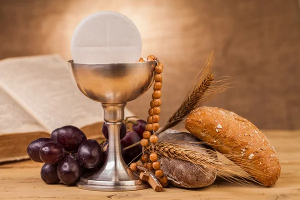
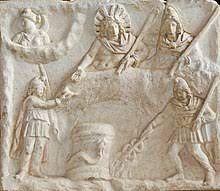
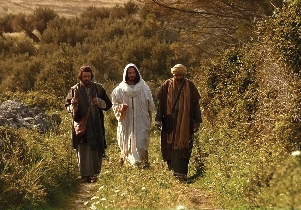





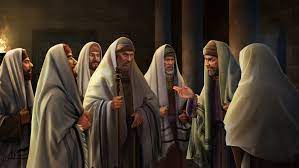


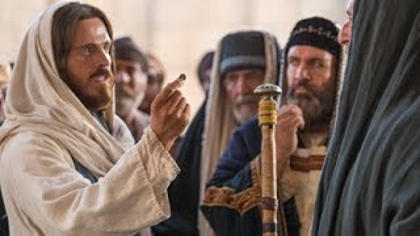




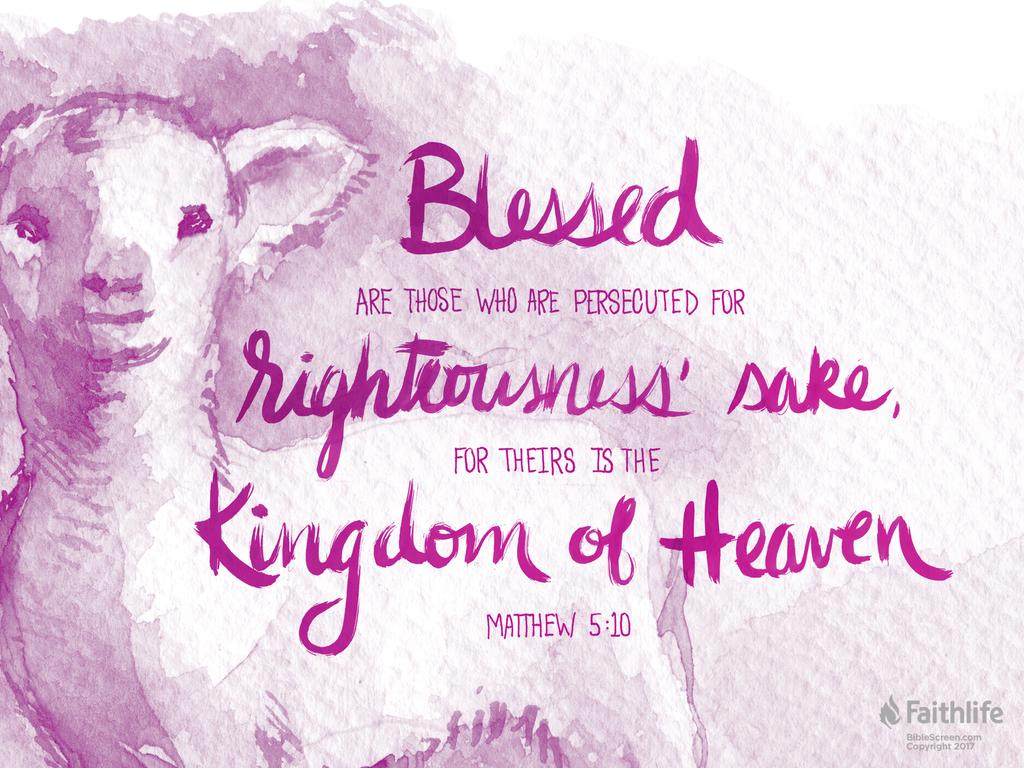
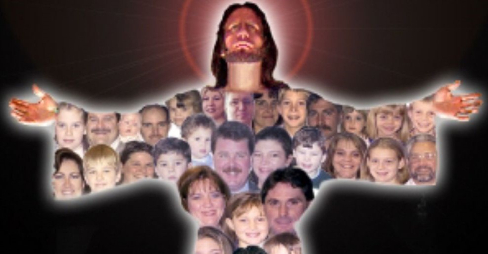

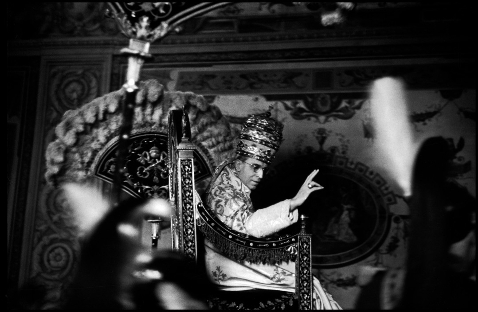


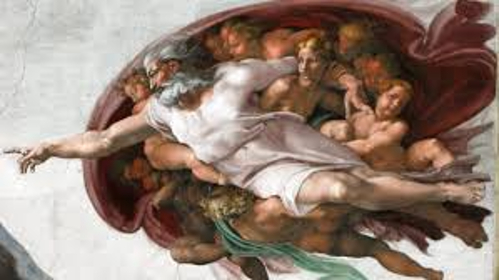

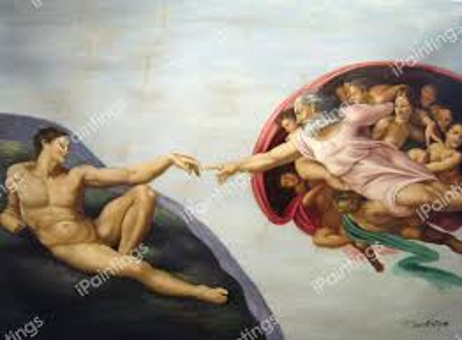









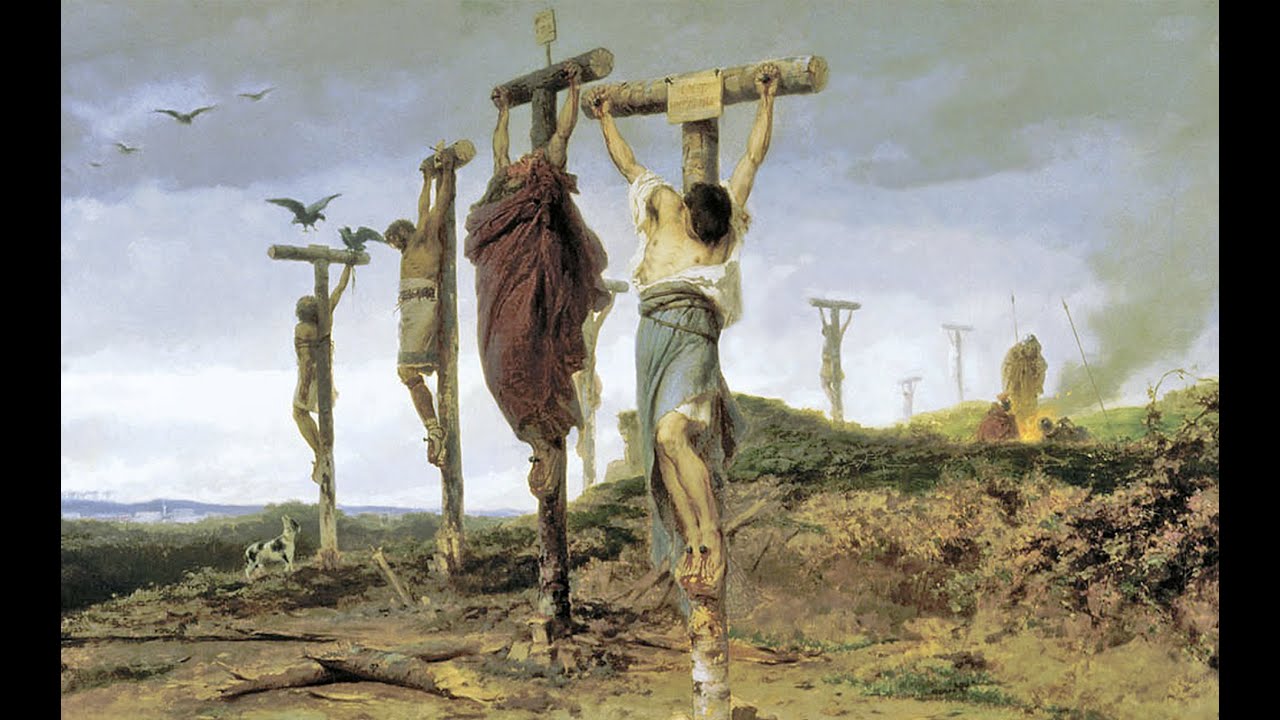
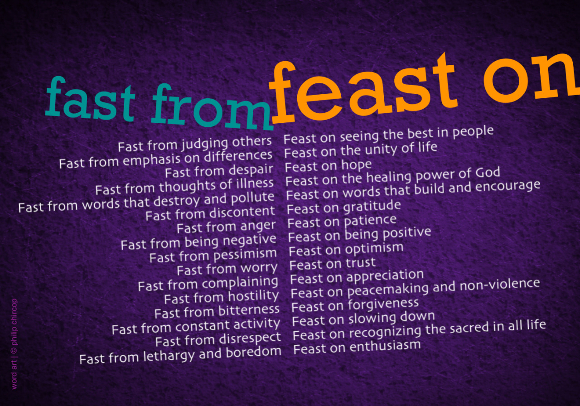



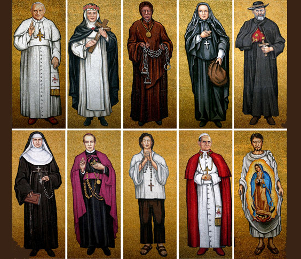



 Faith Seeking Understanding