On May 1, 1933, in the depths of the Great Depression, The Catholic Worker newspaper made its debut with a first issue of twenty-five hundred copies. Dorothy Day and a few others hawked the paper in Union Square for a penny a copy (still the price) to passersby.
Today 187 Catholic Worker communities remain committed to nonviolence, voluntary poverty, prayer, and hospitality for the homeless, exiled, hungry, and forsaken. Catholic Workers continue to protest injustice, war, racism, and violence of all forms.
Explore the life and writings of Dorothy Day and Peter Maurin. Discover what Catholic Worker communities worldwide are doing today to fulfill Dorothy and Peter’s vision. It is a fascinating story.
This collection of Dorothy Day’s writings is for spiritual seekers and committed believers alike. Reading Dorothy Day is an invitation to explore what it means to lead an authentic human and Christian life in our time.
Explore Dorothy Day’s writings on war and peace | justice | pacifism | poverty | faith | nonviolence | conscience | work | the works of mercy | hospitality | community | the mystical body of Christ | the little way | saints | prayer | liturgy | and much more.
This site can be viewed on monitors, tablets, and smart phones. You can download articles in these file formats: PDF, DOCX, HTML, and MD (markdown). https://www.catholicworker.org/dorothyday/
Peter Maurin: Social Visionary
“I want a change, and a radical change. I want a change from an acquisitive society to a functional society, from a society of go-getters to a society of go-givers.”
This section is devoted to the life and thought of Peter Maurin who co-founded The Catholic Worker Movement with Dorothy Day in 1933. https://www.catholicworker.org/petermaurin/
“Many Catholics are unaware of the extensive consequences of the clerical culture in which priests and the hierarchy spend most of their adult lives. From specified educational paths to socialization opportunities, from living conditions to financial remuneration, in working relationships restricted by oaths of obedience and isolation enforced by celibacy, priests typically live aside and apart from the people they should serve—they are culturally and often physically far removed from the realities of the communities that surround them. Almost every profession has its own special culture, of course, and that culture supports and protects its members, provides them with useful information, and presents relevant educational opportunities.”
“As examples, think of the cultures of police, doctors, and unions. These cultures have positive benefits for the members within the culture. However, at the same time, to those outside the culture and those who depend on them for services, these specialized cultures can be opaque and sometimes threatening.”
This paper considers the culture of Roman Catholic diocesan clergy in the United States and how that culture often leads to unhappy consequences within the Catholic Church. Clearly, one of the most disastrous consequences has been the clergy sexual abuse scandal and the cover-up by the hierarchy. But there are other consequences as well, including some that are damaging to the priests isolated within the culture.
What Is Culture?“The term “culture” applies to the interlocking forms of an organization’s life, whether that organization is a family, a corporation, a nation-state, or even a profession or trade. George Mendenhall, a noted scholar of biblical and Near Eastern cultures, describes culture as a “meaningful arrangement of technology, the means by which a people provide for material needs; society, or people’s relationships; and ideology, a people’s way of thinking.”
“This paper will describe some key elements of the clerical culture of diocesan clergy in the Roman Catholic Church in the United States—a culture where the provision of material needs, the relationships with people, and the way of thinking are controlled almost entirely via strict hierarchical structure. All diocesan priests live their lives within this culture. Our focus in the paper is on the possible unhappy consequences of this clerical culture, but we are fully aware that not every priest will succumb to the most compromising elements of the clerical culture. We all know priests who are generous servant leaders in their parishes and communities. It should also be noted that diocesan clerical culture differs from the cultures of the various Religious Orders in the Church—each of which has its own culture depending on its history and mission.”
What is the Clerical Culture? In his book, Clerical Culture: Contradiction and Transformation, Father Michael Papesh describes the clerical culture as “precisely the constellation of relationships and the universe of ideas and material reality in which diocesan priests and bishops exercise their ministry and spend their lives.”…..
Hierarchical Structure and Patriarchy Although most organizations, especially nation-states, have hierarchical structures, most also have a balance of power, thus separating the executive, the legislative, and the judicial powers….
Ontological Change The notion that ordination confers an ontological change on the one ordained did not appear in Roman Catholic theology until the 15th century, and it was not much emphasized until modern times……
Relative Independence Although priests owe obedience to their bishop, in most of their daily activities they are relatively independent……
Clothing and Dress The clerical collar worn by priests establishes them as different from the non-ordained. This can have many positive consequences because people will recognize priests as ones who could assist them with problems they may face, and with spiritual counseling and advice……
Special Privileges Although the normal compensation for diocesan priests is relatively small in comparison to many of their parishioners, priests have many special advantages and privileges that others do not……
References
Donald B. Cozzens, The Changing Face of the Priesthood, (Liturgical Press, 2000.)
Avery A. Dulles, S.J., A Church to Believe in: Discipleship and the Dynamics of Freedom, (Crossroad, 1982.)
Thomas F. O’Meara, Theology of Ministry, (Paulist Press, 1999.)
Michael L. Papesh, Clerical Culture: Contradiction and Transformation, (Liturgical Press, 2004.) Thomas J. Reese, S.J., Archbishop: Inside the Power Structure of the American Catholic Church, (Harper and Row, 1989.)
George B. Wilson, S.J., Clericalism: the Death of Priesthood, (Liturgical Press, 2008.)
It would be helpful if atheists, deists, and theists could agree on just what it is that they are respectively denying or affirming.
As a Catholic Humanist, I am aligned with Kant’s theological doctrine for the most part. I use the commentaries of the authors cited at the end of the post.
“Deism rose as a philosophical form of theism that used reason as its source of knowledge of God. Without revelation to give detail to natural theology, knowledge of God was minimal. Lord Herbert of Cherbury (1583-1648) claimed simply that there is one supreme God, who should be worshiped; virtuous living constitutes worship. The emerging Newtonian universe was one of mechanical precision and predictability, with no room for outside causes. Accordingly, there seemed to be little or no room for divine intervention. Deism, then, held that God caused the universe but did not intervene thereafter. Prayer and miracles were deemed unnecessary because of God’s superior engineering.
The emphasis on God as a perfect designer entailed that waste and suffering were only apparently pointless. The plan and wisdom of God were seen in the grand scheme of the universe, hence God is known best in generality and abstraction.” 1
“In a work published the year he died, Kant analyzes the core of his theological doctrine into three articles of faith: (1) he believes in one God, who is the causal source of all good in the world; (2) he believes in the possibility of harmonizing God’s purposes with our greatest good; and (3) he believes in human immortality as the necessary condition of our continued approach to the highest good possible (Metaphysics, p. 131).
Kant’s Religion within the Limits of Reason Alone of 1793, Kant considers our innate natural predisposition to good (in being animals, humans, and persons) and our equally innate propensity to evil (in our frailty, impurity, and wickedness). Whether we end up being praiseworthy(in “heaven” or blameworthy (in “hell”) depends, not on our sensuous nature or our theoretical reason, but on the use we make of our free will, which is naturally oriented towards both good and evil.
There are two dimensions of what we call “will,” both of which are important in grasping Kant’s view here. On the one hand, there is our capacity for free choice (his word is “Willkür”); on the other hand, there is practical reason as rationally legislating moral choice and action (“Wille”). Thus a “good will” chooses in accordance with the rational demands of the moral law. At any rate, we are born with a propensity to evil; but whether we become evil depends on our own free acts of will. Thus Kant demythologizes the Christian doctrine of original sin. He then distinguishes between the phony religion of mere worship designed to win favor for ourselves and the authentic moral religion of virtuous behavior. Although it is legitimate to hope for God’s grace as helping us to lead morally good lives, it is mere fanaticism to imagine that we can become good by soliciting grace rather than freely choosing virtuous conduct (Religion, pp. 21-26, 30, 32, 35, and 47-49).
In the second book, Jesus of Nazareth is presented as an archetype symbolizing our ability to resist our propensity to evil and to approach the virtuous ideal of moral perfection. What Kant does not say is whether or not, in addition to being a moral model whose example we should try to follow, Jesus is also of divine origin in some unique manner attested to by miracles. Just as he neither denies nor affirms the divinity of Christ, so Kant avoids committing himself regarding belief in miracles, which can lead us into superstition (Religion, pp. 51, 54, 57, 74, 77, and 79-82; for more on the mystery of the Incarnation, see Theology, pp. 264-265).”
“In the third book, Kant expresses his rational hope for the ultimate supremacy of good over evil and the establishment of an ethical commonwealth of persons under a personal God, who is the divine law-giver and moral ruler—the ideal of the invisible church, as opposed to actual realities of visible churches. Whereas statutory religion focuses on obedient external behavior, true religion concerns internal commitment (or good will). Mere worship is a worthless substitute for good choices and virtuous conduct. Here Kant makes a particularly provocative claim, that, ultimately, there is only “one (true) religion,” the religion of morality, while there can be various historical “faiths” promoting it. From this perspective, Judaism, Islam, and the various denominations of Christianity are all legitimate faiths, to be located in Kant’s metaphorical outer circle, including the true religion of morality, his metaphorical inner circle. However, some faiths can be relatively more adequate expressions of the religion of moral reason than others (Religion, pp. 86, 89-92, 95, and 97-98; see also Theology, pp. 262-265).”
In his particularly inflammatory fourth book, Kant probes the distinction between legitimate religious service and the pseudo-service of religious clericalism. From our human perspective, religion—both revealed and natural—should be regarded as “the recognition of all duties as divine commands.” Kant embraces the position of “pure rationalist,” rather than naturalism (which denies divine revelation) or pure supernaturalism (which considers it necessary), in that he accepts the possibility of revelation but does not dogmatically regard it as necessary. He acknowledges scripture scholars’ valuable role in helping to disseminate religious truth so long as they respect “universal human reason as the supremely commanding principle.” Christianity is both a natural and a revealed religion, and Kant shows how the gospel of Matthew expresses Kantian ethics, with Jesus as its wise moral teacher. Following his moral teachings is the means to true religious service, whereas substituting an attachment to external worship allegedly required instead of moral behavior is mere “pseudo-service.”
Superstition and fanaticism are typical aspects of such illusions and substituting superstitious rituals for morally virtuous conduct is mere “fetishism.” Kant denounces clericalism as promoting such misguided pseudo-service. The ideal of genuine godliness comprises a combination of fear of God and love of God, which should converge to help render us persons of morally good will. So what about such religious practices as prayer, church attendance, and participation in sacraments? They can be either good expressions of devotion, if they bind us together in moral community (occupying Kant’s inner circle) or bad expressions of mere pseudo-service, if designed to ingratiate us with God (an accretion to the outer circle not rooted in the inner circle of genuine moral commitment). Mere external shows of piety must never be substituted for authentic inner virtue (Religion, pp. 142-143, 147-153, 156-158, 162, 165, 167-168, 170, and 181-189; cf. Ethics, pp. 78-116).
Kant’s Religion within the Limits of Reason Alone provides a capstone for the revolutionary treatment of religion associated with his critical philosophy.” 2
“So far as morality is based upon the conception of man as a free agent who, just because he is free, binds himself through his reason to unconditioned laws, it stands in need neither of the idea of another Being over him, for him to apprehend his duty, nor of an incentive other than the law itself, for him to do his duty. “
“at least it is man’s own fault if he is subject to such a need; and if he is, this need can be relieved through nothing outside himself: for whatever does not originate in himself and his own freedom in no way compensates for the deficiency of his morality. Hence for its own sake morality does not need religion at all (whether objectively, as regards willing, or subjectively, as regards ability [to act]); by virtue of pure practical reason it is self-sufficient. “ 2
1Brian Morley, Sources of Western Concepts of God, The Internet Encyclopedia of Philosophy, ISSN 2161-0002, https://iep.utm.edu/
2 Wayne P. Pomerleau , Immanuel Kant: Philosophy of Religion, The Internet Encyclopedia of Philosophy, ISSN 2161-0002, https://iep.utm.edu/
The Alpha and the Omega “In my beginning is my end”
Jesus said, “Repent and believe in the Good NewsThat the Kingdom of God has begun!”Mk 1:15
The Greek word used in the Scriptures of Mark and Matthew for “repent” is metanoia and it is commonly understood as “a transformative change of heart and mind. This might be interpreted subjectively requiring discernment and reflection about what the individual believes is necessary to become a better disciple of Jesus or in some cases to become a better Catholic, Methodist, or a better member of any denomination or group calling itself “Christian.”
According to the USCCB (United States Conference of Bishops: “Lent is a 40 day season of prayer, fasting, and almsgiving that begins on Ash Wednesday and ends at sundown on Holy Thursday. It’s a period of preparation to celebrate the Lord’s Resurrection at Easter. During Lent, we seek the Lord in prayer by reading Sacred Scripture; we serve by giving alms; and we practice self-control through fasting. We are called not only to abstain from luxuries during Lent, but to a true inner conversion of heart as we seek to follow Christ’s will more faithfully. We recall the waters of baptism in which we were also baptized into Christ’s death, died to sin and evil, and began new life in Christ.”
The English word Lent is a shortened form of the Old English word lencten, meaning “spring season. Early Christianity records the tradition of fasting before Easter baptisms. The Apostolic Constitutions permit the consumption of “bread, vegetables, salt and water, in Lent” with “flesh and wine being forbidden”. The Canons of Hippolytus authorize only bread and salt to be consumed during Holy Week. The practice of fasting and abstaining from alcohol, meat and lacticinia (any parts of an animal) during Lent thus the tradition of eating only fish, vegetables, oats and the like in some cultures.
Lent, as a liturgical season, was created at the Council of Nicea in 325 due to periods of fasting prior to baptisms which were then celebrated at the Easter celebration.
Lenten practices were expanded as time went on to include those activities mentioned above. The ritual of wearing sackcloth and ashes and putting ashes on the forehead became popular as an indication or notice that the person was repentant and honoring the Lenten fast.
“The liturgical use of ashes originated in the Old Testament times. Ashes symbolized mourning, mortality, and penance.
For instance, in the Book of Esther, Mordecai put on sackcloth and ashes when he heard of the decree of King Ahasuerus (or Xerxes, 485-464 B.C.) of Persia to kill all of the Jewish people in the Persian Empire (Esther 4:1).
Job (whose story was written between the 7th and 5th centuries B.C.) repented in sackcloth and ashes (Job 42:6).
Prophesying the Babylonian captivity of Jerusalem, Daniel (c. 550 B.C.) wrote, “I turned to the Lord God, pleading in earnest prayer, with fasting, sackcloth, and ashes” (Daniel 9:3).
In the 5th century B.C., after Jonah’s preaching of conversion and repentance, the town of Nineveh proclaimed a fast and put on sackcloth, and the king covered himself with sackcloth and sat in the ashes (Jonah 3:5-6).
The emphasis on repentance always seems so negative. “Do without this or that as a penance.” Fast, abstain, and even self imposed mortification or subduing one’s bodily desires.
The positive elements focused on repetition prayer like the rosary, novenas, and the Stations of the Cross. Such prayers and rituals would indicate to ones self and others that one is upright and adheres to the Laws of God and the Church which are required to be a “good Catholic.”
Yet what does Jesus say to the Pharisees and other Jewish leaders who asked:”Why does your Teacher eat with tax collectors and sinners?” In other words, why doesn’t he obey the prescriptions for being a “good Jew”? “On hearing this, Jesus said, “It is not the healthy who need a doctor, but the sick. But go and learn what this means: ‘I desire mercy, not sacrifice.’ For I have not come to call the righteous, but sinners.” Mt 9:12-13 It seems that Jesus wanted positive rather than negative behavior.
Eating with tax collectors and sinners
Jesus was a Jew who knew what the prophets had preached: “For I desire steadfast love and not sacrifice, the knowledge of God rather than burnt offerings.” Hosea 6:6
So when Jesus told his disciples to “repent” he meant more than do without or do some penance! He meant change your heart and mind by changing your attitude toward religion and the Law. “The Sabbath was made for man, not man for the Sabbath.” Mk 2:27
Many denominations of Christianity interpreted metanoia differently.
Lutherans consider metanoia as a change of one’s character or even lifestyle if either are not in keeping with Christian virtue and conduct.
Calvin thought of metanoia as involving denying oneself, turning to God, laying aside the old ways, and putting on Christ.
The Greek Orthodox Church teaches a reorientation of one’s outlook on life, a fundamental transformation of one’s vision of the world, and finding new ways of loving and serving fellow humans.
Some ancient texts like the Shepherd of Hermas implied a “great understanding” of discernment inimportant matters. Some even suggested various activities, devotions, and practices that would increase one’s ability to be a more dedicated disciple of Jesus.
Most would agree that whatever the definition, “metanoia” means changes in the way one understands the Word of God or the world. It may involve a change in the way one treats family andfriends. Metanoia may mean treating the planet with care and concern by refraining from fossil fuels, cleaning up highways or areas polluted by trash and so much more.
Ultimately, it boils down to a change in attitude toward self and others, which may be a way of “Loving God, and your neighbor as yourself.”
One way that Catholics would begin Lent was to purge oneself of such “sins” as the Capital Sins listed in the image at the left.
The intent of such purging was to open oneself to the Grace of God.
The Fruits of the Spirit are usually considered the result of God’s grace or gifts. “the fruit of the Spirit is love, joy, peace, forbearance, kindness, goodness, faithfulness, gentleness and self-control. Against such things there is no law.” (Galatians 5:22-23)
“The Greek word translated “fruit” refers to the natural product of a living thing. Paul used “fruit” to help us understand the product of the Holy Spirit, who lives inside every believer. The fruit of the Spirit is produced by the Spirit, not by the Christian. The Greek word is singular, showing that “fruit” is a unified whole, not independent characteristics. As we grow, all the characteristics of Christ will be manifested in our lives.
Yet, like physical fruit, this “fruit” needs time to grow, the fruit of the Spirit will not ripen in our lives overnight. Like a successful gardener must battle against weeds to enjoy the sweet fruit they desire, we must constantly work to rid our lives of the “weeds” of our old sin natures that want to choke out the work of the Spirit.”
For the Catholic, this means participating in the sacraments of Reconciliation and Eucharist as well as various devotions like novenas, the Stations of the Cross, and the Rosary. Also recommended is spiritual reading, acts of service, and alms giving.
However, what is overlooked by many is the transformation that results from psychological and physicaltherapy which helps one become aware of their personal behaviors that affect the health and well-being of their mind, body, and soul.
That being the case, I offer some practices that can be used to change one’s mental and spiritual understanding about the self and the world. There are many ways to change our attitudes and behavior. Two such ways that can shed light on one’s personality involve the use of personality inventories.
The Enneagram
The Enneagram is a system of personality typing that describes patterns in how people interpret the world and manage their emotions. The Enneagram describes nine personality types and maps each of these types on a nine-pointed diagram which helps to illustrate how the types relate to one another.
Infographic vectors about The Enneagram, complete with directions, traits and names by Riso-Hudson. For more information go to the official website to The Enneagram Institute. All credit for the text goes to them.
“The Spiritual Exercises of St. Ignatius Loyola are a means of opening oneself to the work of God in one’s life. Ignatius, a Basque nobleman of the late 15th and early 16th centuries underwent a powerful spiritual conversion in his late twenties. Recovering from a battle wound over the course of many months, Ignatius spent hours contemplating his life’s purpose and the compelling examples set by saints such as Dominic and Francis. He determined to leave the life of privilege to which he had become accustomed, and commended himself and all of his energies to serving God. Ignatius’ desire was to “help souls” and he engaged in spiritual conversation with almost anyone he met. The experience of his own conversion led Ignatius to share what he learned with others and, eventually, refine his personal prayer journal into what we now call the Spiritual Exercises.
The Benefits of Self Knowledge become the Building Blocks of Self: Your VITALS
“The capital letters in “VITAL Signs” form an acronym for the six building blocks of the self, or VITALS, for short. The letters stand for Values, Interests, Temperament, Around-the-Clock, Life Mission and Goals, and Strengths/Skills.” Psychology Today March 9, 2016 Meg Selig For more go to:
God said, “Let us make mankind in our image, in our likeness..So God created mankind in his own image, in the image of God he created them; male and female he created them. Gen 1: 26-27
What does the image of God look like?
Michaelangelo’s creation scene on the ceiling of the Sistine Chapel of St. Peter’s basilica, in Rome.
In the Hebrew Bible, the word for image is ‘Tzelem’ which has two similar meanings. One is referring to an ‘idol’ as can be seen in the following example from the Second Book of Kings:
“Then all the people of the land went to the house of Baal and tore it down; his altars and his IMAGES they broke in pieces, and they killed Mattan the priest of Baal before the altars. And the priest posted watchmen over the house of the LORD.” (2 Kings 11:18)
The second meaning is a more metaphoric way to describe the tangible item and that is how we received the other meaning of ‘image’ which can be found in the Book of Genesis.
It refers to a pattern or form; it is not the actual thing but bears a resemblance. Tselem is used of sculptures of mice tumors as described by Samuel (1 Sam 6) and false gods (Lev 26:1). It is the word used to describe the statue that King Nebuchadnezzar had set up in the plain of Dura with orders that all were to bow down to it (Dan 3). (It reflected idolatry and is suggested by some to have been a statue made to look like the king himself, accounting for his insanity in chapter 4.)
So in Genesis 1, the idea is clearly that man somehow represents something of or about God, including His presence in the world and His authority. Since we know from other passages that it is not that God has arms, hands, or other bodily parts, the resemblance must be less concrete and more “essential.” None of the other creations of God (whether animal or angel) are in God’s image. We resemble His attributes as much as the material can emulate the perfect Immaterial.
If both males and females are the image of God does that means that God is androgynous? It seems as though the patriarchal religion of Judaism ignored this possibility. Christianity certainly did! Most depictions of God in Christianity have human male characteristics which may have come from the book of Daniel in the bible.
In the book of Daniel, God is referred to as “the Ancient of Days” who “took his seat” on the throne and “His clothing was as white as snow; the hair of his head was white like wool. His throne was flaming with fire, and its wheels were all ablaze”. Dan 9:7 It was the venerable appearance of old age that was uppermost in the writer’s mind.” What Daniel sees is not the eternal God Himself, but an aged man, in whose dignified and impressive form God reveals Himself. We see this depicted in Michaelangelo’s creation scene on the ceiling of the Sistine Chapel of St. Peter’s basilica, in Rome.
Ezekiel claims God is “ high above on the throne” “a figure like that of a man. I saw that from what appeared to be his waist up he looked like glowing metal, as if full of fire, and that from there down he looked like fire; and brilliant light surrounded him. Like the appearance of a rainbow in the clouds on a rainy day, so was the radiance around him.” Ezek 1:26-28
Jesus said, “I and the Father are one.” and used the word “abba” which is Aramaic for father. John 10:30
However, in the Old Testament
In Hosea 11:3-4 God described as a mother
God: “Yet it was I who taught Ephraim to walk, I who took them up in my arms; but they did not know that I healed them. I led them with cords of human kindness, with bands of love. I was to them like those who lift infants to their cheeks. I bent down to them and fed them.”
In Deuteronomy 32:11-12 God described as a mother eagle
“Like the eagle that stirs up its nest, and hovers over its young, God spreads wings to catch you, and carries you on pinions.”
In Deuteronomy 32:18 God who gives birth
“You were unmindful of the Rock that bore you; you forgot the God who gave you birth.”
In Isaiah 66:13 God as a comforting mother
God: “As a mother comforts her child, so I will comfort you; you shall be comforted in Jerusalem.”
In Isaiah 49:15 God compared to a nursing mother
God: “Can a woman forget her nursing child, or show no compassion for the child of her womb? Even these may forget, yet I will not forget you.”
In Isaiah 42:14 God as a woman in labor
God: “For a long time I have held my peace, I have kept myself still and restrained myself; now I will cry out like a woman in labor, I will gasp and pant.”
We must also remember the Commandment:
In Exodus 20:4 we read: “You shall not make for yourself a carved image, or any likeness of anything that is in heaven above, or that is in the earth beneath, or that is in the water under the earth.
This was taken so seriously, that not even the name of God was to be spoken!
So, we also read: “God said to Moses, ‘I AM WHO I AM.’ And He said, ‘Say this to the people of Israel: ‘I AM has sent me to you’” (Exodus 3:14). This eternal nature is conveyed better in Hebrew than in English.
The first time God says I AM (“I AM WHO I AM”), the Hebrew says, “Ehyeh asher Ehyeh”, which translates as “I will be what I will be.” The Tetragrammaton, YHWH, appears over six-thousand times in the Bible, even in modern English translations. The Hebrew scribes were very careful to neither say aloud, nor fully spell out the holy and sacred name of God, Yahweh. Instead they would put it in all capital letters, and say Adonai. They put the vowels of Adonai into the consonants of Yaweh to get YAHOWAH, which English Christians translated into Jehovah. Today, any time a translator wants to acknowledge where YHWH is in the original Hebrew text, they use the word LORD in all capital letters.
Perhaps the most significant use of the name I AM in the Bible comes from Jesus Christ. The religious leaders would often try to catch Jesus in heresy, in a lie, or blaspheming so they could be rid of him. In John 8, the Jewish people challenged his authority, and they brought up Abraham. Jesus tells them how glad Abraham is to see the day of the Lord. When asked by the crowd how He speaks as if He knows Abraham, “Jesus said to them, ‘Truly, truly I say to you, before Abraham was, I am’” (John 8:58).
“I AM WHO I AM” is important for today’s Christians to understand the complexity of who God is. God is all-encompassing and self-sufficient. God is portrayed in the image and likeness of Jesus, the Way, the Truth, and the Life.
So “ in the image and likeness” can mean to live according to the manner of God. We are to be compassionate, merciful, forgiving, loving, indeed just in loving all for as Jesus says, “For he makes his sun rise on the evil and on the good, and sends rain on the just and on the unjust.” Mt 5:45
A more modern theology depicts or describes God more as a presence, power, influence, or energy.
Ilia Delio, writes: “Teilhard de Chardin’s theology of God is scattered throughout his works; yet, the presence of God in creation pervades his works. In his Christianity and Evolutionhe summed up the problem of God in an evolutionary world by saying:
‘In the case of a world which is by nature evolutive. . .God is not conceivable (either structurally or dynamically) except in so far as he coincides with (as a sort of “formal” cause) but without being lost in, the center of convergence of cosmogenesis. . . .Ever since Aristotle there have been almost continual attempts to construct models of God on the lines of an outside Prime Mover, acting a retro. Since the emergence in our consciousness of the ‘sense of evolution’ it has become physically impossible for us to conceive or worship anything but an organic Prime-Mover God, ab ante. Only a God who is functionally and totally ‘Omega’ can satisfy us. Who will at last give evolution its own God?’
In Christianity and Evolution he said that God is a dominant causality among the other causalities, a divine energy which is imperceptible. God acts on the whole body of causes without making itself evident at any point. Every element is an overflow of God who is First Cause so that God makes things to make themselves. God acts from within, at the core of each element, by animating the sphere of being from within. Where God is operating, it is always possible for us to see only the work of nature because God is the formal cause, the intrinsic principle of being, although God is not identical with being itself. As principle of being, God imparts to creation its inner dynamism. Because creation is essentially relatedness and God is love, evolution is the unfolding process of God-related dynamic love.
The key to Teilhard’s understanding of the God-world relationship is creative union. He did not hold to a separate doctrine of creation but saw creative union as the integral core of creation which includes the mysteries of incarnation and redemption. Creative union is the union of God and creation in evolution; hence, creation, incarnation and redemption form creative union. In his “Mon Univers” he wrote:
The theory of creative union is not so much a metaphysical doctrine as a sort of empirical and pragmatic explanation of the universe. This theory came to birth out of my own personal need to reconcile, within the confines of a rigorously structured system, the views of science respecting evolution (which views are accepted here as being definitively established, at least in their essence) with an innate tendency which has driven me to seek out the presence of God, not apart from the physical world, but rather through matter and in a certain sense in union with it.
Teilhard recognized that every act of evolving nature is the self-expression of God, since the very act of nature’s transcendence is the energy of divine love. God unfolds in the details of nature; thus, evolution is not only of God but is God incarnate. In his Phenomenon of Man he describes evolution as an unfolding process of withinness and withoutness. The within is the mental aspect and the without is the physical aspect of the same stuff. Although this relationship between within and without points to the role of consciousness at the heart of matter, I think it also points to the unfolding simultaneity of God and world: God is the withinness of the withoutness of matter in evolution.”
“Jesus had a genuine human freedom and was not a puppet of God as Logos; God did not operate in Jesus independently of his freedom any more than in any other human being. Because the human reality of Jesus is the symbol of the Logos in history, the truly human Jesus is the self-expression of the Logos. From God’s side, God as Word assumes an integral human reality through which it expresses itself or communicates” itself to history.
“Reality itself and humanity in particular are so oriented and open to God that the incarnation fulfills the human. The problem with humanity is not the inability to recognize God,””but the failure to recognize the God-given and guaranteed dignity of the human. “It is forbidden to man to think little of himself because he would then be thinking little of God….”Human nature is precisely that which is able to be united with God. And this union in Jesus, because it is symbolic of the self-communication of God to all human beings by grace, constitutes the very source and the finality of creation itself. The event of Jesus Christ is not only coherent with evolution, the intimate union represented in him but realized in the first appearance of human existence is the goal toward which evolution from the beginning has been moving. The fulfillment of reality is the final union of all history and creation with God in glory.”
Our image of God certainly impacts how we live and how we relate to one another as the world community of the Creator’s children. Haight writes:”Christianity is construed as a sect; it cannot really learn from and communicate with those who are “other.” By contrast, Logos christology predicates of Jesus universal relevance. An apologetic, anthropocentric starting point in christology seeks to discover how Jesus has a bearing on all humankind. Jesus Christ cannot really be savior and reconciler at all unless he is significant for all. Logos christology, therefore, appeals to the utopian dimension of human yearning in all human beings. It seeks to provide the very grounds that forbid totalizing systems that exclude certain persons or groups. It understands Jesus as the historical symbol”
When we refer to “God” in any capacity, we must comprehend and imagine a presence that is more mysterious than a facsimile of a human person let alone a “man”. We must view the universe as the evolving loving energy of the Creator and that means we show respect and concern for all of creation whether on this planet or on any other.
What one priest learned from listening to transgender Catholics
People attend a rally in support of transgender rights in Los Angeles Oct. 20, 2021. (CNS/Reuters/Mario Anzuoni)
James F. Keenan
Jesuit Fr. James F. Keenan is Canisius professor at Boston College, where he is vice provost for global engagement and director of the Jesuit Institute.
by James F. Keenan
After reading the Archdiocese of Milwaukee’s statement, “Catechesis and Policy on Questions Concerning Gender Theory,” and subsequent reports about the reception of the policy, I remembered a phone call I received some 22 years ago from a psychotherapist.
I did not know the caller. He introduced himself saying that he worked with some clients who were struggling to understand what their actual gender was. These were people wondering, and in some instances, coming to terms with the possibility that their gender was different from what they were assigned at birth.
Then he told me why he was calling. A few of his clients were Catholic and several of them said they would like to talk with a priest. He mentioned it was not confession they were seeking; they just wanted to talk with a priest.
Then he added, “I am afraid that a priest could actually set them back a bit, if he decided that they shouldn’t be asking the questions that they are. So, I asked many of my colleagues here in Boston for a recommendation and they each suggested you as a priest who would listen. Could I refer you to my clients who want to meet a priest?”
I answered that I was sure there were plenty of other Boston-area priests who would listen, but that I would.
I will not say anything about the conversations, not because they were confessional, which they were not, but because they were confidential. I will say, however, they were transformative for me. I never heard such narratives. More than anything, I realized how extraordinary their experiences were.
These experiences were truly profound: Imagine what it is like to face the question that their own selves were telling them they had to investigate! They knew the degree of ridicule, rejection and violence that transgender people face. Why were they asking the question, except that something inside themselves kept demanding them to do so? By accepting the question to any degree, they knew that it meant accepting the pervasive judgmentalism and shaming that few others experience in the same way. And yet, their experience was that the question they encountered (How can I accept my gender when my body seems otherwise?) wanted them to find a reconciliation within themselves.
They wanted me to understand what their lives were like.
One issue that never came up in such conversations is gender ideology. The people I met and meet today are not talking about gender ideology, but rather about how frightening and alienating their lives become as they existentially face and answer the question before them. Yet one of the hurtful things that our hierarchy and even our pope do is suggest that these matters ought to be reduced to the simple category of gender ideology. The U.S. bishops’ conference even provides a list of papal and catechetical citations to teach about gender ideology.
This is quite similar to the way racists and white supremacists use “critical race theory” to attack those seeking to recognize the long-standing racist world we live in. A good offense is the best defense, they think; that’s the Catholic tactic! The gender ideology flag belittles the terribly challenging world the transgender community lives in and is little more than a cheap shot at a very precarious group of people.
I suggest the tactic, instead, ought to be listening.
Listening is not just hearing words. To listen is to learn. That’s why these people with whom I spoke wanted me to listen. They wanted me to learn their world.
When I think back on what I heard, I realize how difficult it was for many of them to find that sanctuary, that space to share their narrative of struggle. Significantly, the lives they lived interiorly rarely found the space, the sanctuary, they needed to feel human and accompanied. That’s all I think they wanted of me.
I learned, however, they dreaded a humiliating, pervasive scolding if they tried to share their situation. That’s why the rant of gender ideology is so hurtful. It just a way of saying, “We are NOT going to listen,” which is exactly what the Archdiocese of Milwaukee’s statement communicates.
Fortunately, more people are granting such people a sanctuary by listening. Certainly, mental health professionals are responding by accompaniment, and others are now engaged in the work of science to more professionally understand that the phenomenon of transgender self-understanding is more complex and more experientially common than was recognized in earlier decades.
Similarly, after decades of families learning to listen to family members who encountered the experience of same-sex attraction, now others are learning to listen to those family members whose self-understanding of their gender contradicts their apparent biological status.
Is the church at all interested in listening?
Related: Why Catholics should use preferred gender pronouns and names
Related: Responding responsibly as parents of transgender children
Recently, Cardinal Jean-Claude Hollerich, president of the Commission of the Bishops’ Conferences of the European Union, argued that the episcopacy needs to learn to listen. He added, “The Church has the image of an institution that knows everything better than others.”
Learning to listen means, as Hollerich said, that the episcopacy needs to learn about humility. Maybe we can have a little humility with a person struggling with their gender self-understanding who would like to be heard and accompanied.
Cardinal Joseph Tobin of Newark, New Jersey, recently made similar comments by talking about the significance of the church looking for dialogue through the upcoming synod. He added presciently, “My favorite definition of heresy is a refusal to deal with complexity.”
Church leadership might learn a lesson from science about understanding those dealing with the complexity of gender dysphoria. Scientific American recently published “The Disturbing History of Research into Transgender Identity,” noting how researchers allowed their own misinformed presuppositions to infect their studies. The report makes clear that researchers were not letting their subjects tell their story.
The scientific community is only beginning to learn to listen to the transgender community.
In fact, the process of gathering data on the experience of people facing the question about their bodies and their gender is only now about 10 years old.
The church can learn from the scientific community that if it wants to accompany the people who are facing gender dysphoria, we need to learn first to listen to them.
Indeed, on Jan. 26, Pope Francis told parents of gay children not to condemn them, but to accompany them. That sounds to me like the right message.
But we need the hierarchy to hear that message, too. And that means learning humility and learning to listen, especially to those people who are being terrorized not by the question they are facing but by the moralistic deafness of the church that thinks “it knows everything better than others.”
“When Pope John XXIII announced the council in 1958, there was no real crisis in the church. It was, by many measures, a healthy, if ancient institution.
But today, the Catholic Church is facing a crisis: In many places of the world, mass attendance is down and a growing number of young Catholics are leaving the church.
In addition to these challenges, fewer and fewer men are willing to enter the priesthood. This trend, which began long before the clergy sex abuse scandal, is raising questions around whether the church needs to reconsider its insistence on a male, celibate priesthood.
And, of course, there are many other concerns that the church might want to engage with – for example, whether the 98 percent of practicing Catholics who use “artificial means” of contraception – meaning anything other than the rhythm method – are sinners.”
The Irish Times Catholic Church needs to empower the laity
WIll the Synod actually lead to significant change or will it just give Catholics an opportunity to express their discontent with or support for the current state of the Catholic Church? Currently, there appears to be a rift in the Body of Christ, the People of God, when it comes to certain teachings, the all-male clergy and hierarchy, and even the Pope.
Some of the laity and clergy want significant change while others desire the Church that existed prior to Vatican II. Many see the patriarchal, hierarchical, authoritarian structure of the Church as a problem and an obstacle for Catholicism to become relevant in a changing world while others perceive the traditional Church as the only bulwark against the rampant secularization and moral decline of the Western nations.
Yet others, including this author, claim that the Catholic Church abandoned the core teachings of Jesus and opted for power, fame, and fortune, which has catapulted the Catholic Church to the largest Christian denomination around the world. The Vatican City State, also known simply as the Vatican, became independent from Italy with the Lateran Treaty (1929), and it is a distinct territory under “full ownership, exclusive dominion, and sovereign authority and jurisdiction” of the Holy See.
The notion of abandonment of the Way, Truth, and Life of Jesus is supported by the often opulent, grim, and horrific history of the Catholic Church from the time of the Roman Empire to the present.
No one, conservative or liberal, can set aside the participation of the Catholic Church in the crusades against the Jews and Muslims in the first one thousand years of the Common era, the inquisitions and murder of heretics in the middles ages, the 30 years of war which was one of the longest and most brutal wars in human history, with more than 8 million casualties resulting from military battles as well as from the famine and disease caused by the conflict. Add to this history the recent scandal of the sexual abuse of children by hundreds of clergy around the world and you have the perfect recipe for condemnation and abandonment by millions of Catholics.
Let us not forget the biblical and ecclesial support of slavery and the misogynist attitude that made women subject to males thus excluding women from clerical membership, and contributing to the marginalization of women from the political sphere, often resulting in discriminatory laws, practices, attitudes, and gender stereotypes, low levels of education, lack of access to health care and the disproportionate effect of poverty on women. Much of this is still occurring in the modern world especially in the Middle East, Africa, and South America.
All of the above also plays a part in the growing number of youth and young adults who have abandoned Catholicism and religion in general.
Will the Catholic Church’s Synod address all of the above and lead to significant changes? Will the Synod be the catalyst for structural change that will lead to an enthusiasm for Catholicism among the youth of the modern world? Will it restore religion in the West to its once-dominant role in society?
The answers might lie in the stated Mission of the Synod:
Empowering the People of God to bring their faith into the secular world by:
Listening to the real experiences of the people of God;
Promoting healing and restoration to people and systems;
Recognizing the equality of all members;
Respecting tradition and innovation in responding to the signs of the times;
Respecting the diversity and gifts of other traditions;
Promoting a deeper sacramental/ritual experience.
This author believes that the Mission Statement above can only bring about an awareness of those issues but not necessarily a major change in the Dogmatic teachings and Canonical structure of the Roman Catholic Church. These are extremely hard nuts to crack considering the fact that an all-male clergy will be the decision-makers in reference to any of the above issues or obstacles.
Instead, this author believes that a return to the humble but unwavering Way, Truth, and Life of Jesus, the Christ will be the ultimate saving factor for Christianity’s and Catholicism’s survival beyond the 21st century. We must rekindle much of what Jesus said and taught and how he lived. He called for dramatic changes in his religion.
“And no one pours new wine into old wineskins. Otherwise, the wine will burst the skins, and both the wine and the wineskins will be ruined. No, they pour new wine into new wineskins.”Mk 2: 22
“Jesus said to his disciples, “Truly I tell you, it is hard for someone who is rich to enter the kingdom of heaven.” Mt 19:23
“But when you are invited, go and sit in the last place, so that your host will come and tell you, ‘Friend, move up to a better place.’ Then you will be honored in front of everyone at the table with you. For everyone who exalts himself will be humbled, and the one who humbles himself will be exalted.” Then Jesus said to the man who had invited Him, “When you host a dinner or a banquet, do not invite your friends or brothers or relatives or rich neighbors. Otherwise, they may invite you in return, and you will be repaid. But when you give a banquet, invite the poor, the crippled, the lame, the blind, and you will be blessed. Although they cannot repay you, you will be repaid at the resurrection of the righteous.”Lk 14:10-14
“He instructed them to take nothing but a staff for the journey–no bread, no bag, no money in their belts” Mk 6:8
Matthew 23 also sets the stage for change.
Woe to you, teachers of the law and Pharisees, you hypocrites! You shut the door of the kingdom of heaven in people’s faces. You yourselves do not enter, nor will you let those enter who are trying to.
Some say that you cannot have Jesus without ecclesiasticism but I say you can. One can ask if the Catholic Church has contributed to significant changes in the societies of humans based on the life and teachings of Jesus? History mostly says otherwise.
Jesus never intended to start another religion. He was a Jew steeped in Judaism. The Roman Empire took over “The Way” of Jesus and made it the religion of the Empire. The rest is history.
The following was written by Anthony Massimini, Ph.D.
We experience God within ourselves and in today’s society and culture.Part 1
Within Ourselves: No one experiences God directly, but indirectly. We experience God in terms of ourselves, others, and the world/universe. Concerning ourselves, this means we have to get to know ourselves as deeply and truthfully as we can. Our true self is not our shallow ego that pushes us, e.g., to “look good,” to “be No. 1,” or to be the first to have the latest gadget, etc. We see and find our true self in our ever-evolving journey toward becoming genuinely fulfilled as the person we truly are. It is to evolve daily, together with others and the world, toward wholeness-in-love.
We are everyday mystics. To be a mystic is to see what is hidden. Our faith opens us to look into ourselves, others and the world/universe and to “see” God, Christ within ourselves, others and the world–i.e., to see what is hidden from atheists and agnostics. If we look deeply into ourselves, we will see our gifts, talents, possibilities, and opportunities, and we will feel a desire to fulfill them. Even more deeply, we will feel ourselves being called into the future from the future,, i.e., we are being called to transcend our present self and move forward in our lives. We are being called, invited, to go deeply into ourselves where our core energy is, where God waits for us in the pregnant silence of our of who we are and who we can become. And in the creative, healing and self-and world-transforming love of God, we are being called to grow and evolve into our fullest self–to move more lovingly and effectively toward wholeness-in-love.
It is precisely within our gifts and talents, possibilities and opportunities, and within our deep desire to respond to the call to become our fullest and truest self, that we experience the presence and intentions of God within ourselves. In particular, we experience God’s presence and intentions within ourselves according to:
1. Our Age: For example, children experience God in terms of their parents. Adolescents, in their desire to find their individuality and personality. Young adults, in their search and dreams for a career and life-path. Adults, in their concern for work/profession/civic engagement, and marriage. Seniors, in the wisdom of life experience.
2. Our Gender: Males and females have their unique way of experiencing themselves, the world, and God. Both male and female experiences must be equally respected.
3. Our Race: For example, Hispanics, African-Americans, Whites, Asian-Americans, Native Americans, and all others, experience God in their own way. These culturally colored experiences reflect the different aspects of the one, rich human experience. All must be equally respected.
4. Our Personal History: Every life is a journey. The spiritual journey for each one of us is unique. We respect everyone’s uniqueness as we walk our spiritual journeys together toward wholeness-in-love.
5. Our Personality Type: For example, the extrovert, the introvert, the leader, the follower, the caretaker, etc. express different ways of experiencing and expressing the presence and intentions of God.
6. Our Culture: We experience God e.g., in our family and social life, education, politics, economics, science, arts, entertainment, etc. In the mid-20th century, agnostic philosopher, Martin Heidegger noted that if God exists, he is known by his absence. This sad fact is even more poignant today. Today’s hyper-individualized, fast-moving, changing, noisy, shallow greed corrupted culture can drown out our experience of God. We are daily challenged to find the place of quiet within ourselves, the “still point of the turning world,” (T. S. Eliot) where we can see how to respond to God’s presence and intentions by fulfilling our true selves in today’s society and culture.
Imagine a child as being made of energy, and then imagine that energy as light.
Imagine a child that is made of light. Now imagine that there is an even brighter Light shining within the child, entirely filling the child from head to toe. And finally, imagine that at every point where the greater Light is touching the child, that touch is immaculate. Now we have a picture of a child in whom God is present. The Light that is filling the child is the Light of Infinite, Eternal Love.
To complete the picture, imagine the entire world made of light, within which a brighter Light of Love is shining. Stretch your imagination to include the entire universe. And then stretch to see that the Light that is God not only fills the entire universe but extends infinitely beyond the universe. Let yourself feel some awe and wonder at God’s intimate, loving presence within every person and even the smallest thing that exists, along with God’s intimate presence within the stars and galaxies and all that exists. As we live in our finite world, with its limitations and temptations, the light that we are can dim somewhat, but it never goes out. And it can always be restored to brightness. God never abandons us and we never become totally corrupt. The light within us is always there to illuminate our way and call us back.
This is one way of seeing what our faith gives us. This way of seeing is the basis for our sense of the faith. It is the start of our ability to “see” God, and to know, understand, interpret and apply God’s revelation and intentions for us, in our everyday lives.
Now let’s get back to the child. Let’s consider ourselves as adults who are responsible to form and nourish the child. As adults, we already know ways to form and nourish children. As people of faith, we will check to see that the ways we form and nourish the child are in full accord with the intentions of God who is dwelling within the child. God’s presence within the child is not some “nice thing” that the child can do without. It is not the “icing on the cake” that we can remove and still have the cake. God’s presence is the essential and necessary basis for the child’s very existence and the child’s life, growth and fulfillment.
Shining within the child, the Light that is God is calling the child to his/her greatest and richest fulfillment, as an image of Eternal, Infinite Love. In today’s evolutionary world, we say that God, who is in eternity, i.e., not/space-not/time, is present within the child now, and is also calling the child from within the child’s future. As adults, we are able to “hear” God’s call to the child and ensure that the child responds as fully as possible, and thereby becomes as fully as possible who God has called the child to become.
Through knowledge and experience we know a great deal about how to raise a child. Our sense of the faith, which is our intuitive instinct concerning God’s existence, presence, truth and intentions, enlightens and strengthens our knowledge and experience, so we can raise the child as successfully as possible. We will, for example, see that the child is properly nourished and cared for; that he/she goes to school and studies well. In general, we will see to it that the child lives in an environment that is ordered, peaceful, just, safe,hopeful, joyful, and loving. We will take special care to nourish the child’s sense of awe and wonder, because these are beautiful emotions to feel toward the world and indeed, the entire universe, and they are the basic emotions that we feel toward God. Every individual decision we make for the child will be the best decision we can make in line with our faith enlightened knowledge and experience.
Now we can switch the example to ourselves and become that child. . Let’s pay attention for a moment to the way many of us were raised in the faith. If you’re old enough and lived in a big city, you will remember growing up on a “Catholic island.” For younger readers, please put up with us for a moment.
Just about everybody on the “island” was of the same ethnic background. Discipline and compliance were in the very air we breathed. Adults were watching everywhere, so if we got into trouble, our mothers knew about it before we got home. The church took care of almost all our needs: Catholic school, Mass and the other sacraments, sports activities, dances and other social events, dating the boy or girl down the street, etc. Adults left the “island” to go to work, and then came back in the evening.
After World War II, many veterans took advantage of the GI Bill, went to college and started on upwardly mobile careers. Catholics began moving off the island and into the greater population. The social bonds that kept much of the faith alive disappeared as Catholics now lived among people of various ethnic backgrounds and religions–and of no religion–neighbors whom they liked and respected.
Their sense of the faith moved into a “dark night.” Old spiritual customs and consolations died. The new experiences should have been the raw material for a new, more individualized sense of the faith that necessitated a deeper understanding of what it meant to be part of a spiritual community that was not socially/physically present on an everyday basis. Now or faith presented itself in a different, less established way, e.g., in our work, our politics, our schools, our regard for women’s rights, for world peace, etc. And many of us began getting spiritually lost in this new world.
The Male-Dominant Problem in Experiencing God The subjugation of women in society and in the church, along with predominantly male images of God, have weighed heavily on women’s experience of God and their sense of faith. It all started when the male dominant Hebrews imaged a male God as creating the universe. A female-imaged God, e.g., would have birthed forth the universe from her womb. The male God created the dominate Adam, and then took the dependent Eve from Adam’s rib. In the Garden of Eden, Eve seduced Adam into eating a piece of fruit. Eve, the woman, and all women after her, are blamed for the Fall. In the male-dominant, patriarchal culture, blaming the man was unthinkable. Eve became the seducing sinner, and gave that image to all women. (See the page, An Evolution Story, for a contemporary look at the “Fall.”)
To make matters worse, St. Augustine, troubled by having begotten an illegitimate son, later added that original sin was sexual. So Eve, the seducing woman, became the seducing, sexual sinner, giving that image to all women. Eve was offset by the Virgin Mary, the ideal woman. Women then took on both aspects and developed a self-conflicted, Madonna-Whore image, elevated to the highest expectancy by men, while at the same time disrespected by men.
Now, given the evolution of our understanding of humans and human nature, and given the teaching of Vatican II, let’s be clear: women enjoy equal human and baptismal dignity with men. Women are images of God, in their own way, as clearly and fully as men are in their own way. The truth from God is that there is neither Jew or Greek, there is no longer slave or free; there is not male and female; for you are all one in Christ Jesus. (Gal. 3:28).
Christianity’s loss because of the curse of sexism has been immense. For example, Professor Karen L. King of Harvard Divinity School lists a series of views that were put forth by early Christian women. How different would women’s experience of God and sense of faith be today, and how different would the church be if these views had been taken to heart: –Jesus was seen primarily as a teacher and mediator, rather than a ruler and judge –People can have direct access to God through receiving the Holy Spirit –Those who are spiritually advanced freely give their gifts to all, without claim to a fixed, hierarchical ordering of power –An ethics of freedom and spiritual development is emphasized over an ethics of order and control –Both women and men could exercise leadership on the basis of spiritual achievement apart from gender status and without conformity to established social gender roles –Overcoming social injustice and human suffering are seen to be integral to spiritual life.
Diversity Diverse Ethnic Ethnicity Unity Variation Concept
Race and Our Sense of our Faith
The outline above states that we understand, interpret and apply our sense of the faith, in part at least, according to our race. An outstanding example of this was the Civil Rights movement led by Rev. Martin Luther King, Jr., in the 1960’s. This movement expressed the faith of African Americans as applied to the American experience, and also went beyond the particular needs of African-Americans–as immense as they were!–to include and embrace the needs of every American for freedom, fairness, brother-and-sisterhood, and good will. Today’s expression of African-American Liberation Theology carries on the work of freedom from racism. One mark of our faith is that, while it pertains to every individual person and race, it is always universally applicable.
Hispanic-Americans are expressing their sense of the faith in their own way. Elizabeth Johnson, in her outstanding book, Quest for the Living God, mentions the Hispanic-inspired God of the Fiesta, i.e., of the beauty and celebration of our experience of God’s presence in today’s world; and of la lucha, the Hispanics’ struggle to engage in today’s society. She also mentions the Hispanic devotion to Our Lady of Guadalupe, who is an expression not only of Mary, but of the Holy Spirit.
Many white Americans are struggling to clarify their sense of the faith today. Sadly, for all too many, fear, prejudice and even hatred are resulting from the rising numbers of non-whites in our society. Also, white Catholics are having trouble discerning the aspects of our faith that are being continually hidden or drowned out by the noise, shallowness, super-competitiveness, etc., that mark today’s culture. This blog is my way of showing that much of this did not have to happen. If Vatican II had been fully implemented, Catholics of all races would have clear and effective ways to sense, understand, interpret and apply our faith in today’s society. We understand, interpret and apply our faith in accord withour personal life history. Every life is a journey, and every journey is unique. This is one important reason why the church should be an open, collaborative church in which every member contributes his or her own life experience. Our individuality should be respected, and when we make our own individual decisions and act in our own way in particular situations, we should be able to have access to personal guidance and encouragement, along with general rules.
At present, the church is not set up to provide this kind of interaction among us. In fact, the horrifically bad treatment of the sex abuse victims shows that the bishops’ had a callous disregard for people’s personal experience. And the present conflict between the Vatican and American nuns shows how badly church authorities do not know, understand or appreciate, and therefore are prejudging, the individual discernment and actions of some of our most discerning and prophetic Catholics.
Guidance and Counsel is one the the Spiritual Disciplines. We should all have someone with whom we can discuss our personal, spiritual journey. Ideally, that person would be a person of deep spiritual experience and knowledge, but all of us could use our personal sense of the faith and common sense to engage in richly rewarding conversation.
It would be ideal if parishes were set up to provide spiritually mature and knowledgeable people who can guide others in their journeys, and help them become guides themselves. More generally, for example, parents could discuss, in person and/or through email groups, the sacred meaning of raising children; teachers could discuss how to apply their faith in the classroom without imposing their religion on their students; business people could discuss their views of business ethics, etc.
In the absence of an open, collaborative church, we can look to help one another on our spiritual journeys. God does not reveal doctrines and theological formulas to us. God reveals him/herself to us–his/her life and love. We in turn assent to God’s self-revelation by believing in God and returning our life and love to God.
To reverse an old aphorism: We must pray as if it all depends on us, and work as if it all depends on God (yes, you read that correctly)! God is humble and never comes if not first invited, but God will find some clever way to get invited.
One clever way God invites us is through the thoughts, opinions, and research of others. I have loved reading ever since I got my first library card back in 1955. “Books and doors are the same, said Jeannette Winterson, open them and you go through to another world.”
They also give you another perspective from a different time and place. Most of Catholicism’s teachings have been based on the interpretations of Scripture by the “Fathers of the Church” and then by the male theologians and saints who are called “doctors” of the church. There are 36 such “doctors” but only four of them are women!
The major influences in Catholic theology and teaching has come from popes, cardinals, bishops and male clerics who were the founders or members of religious orders like the Benedictines, Dominicans, and the Franciscans. Their female counterparts were usually relegated to insights about prayer and spirituality and not too influential regarding doctrines, dogmas, and teachings. Most of the latter has come from popes and theologians who were male. Patriarchy is a systemic problem in the Catholic Church and indeed in Christianity! It gives a very limited perspective.
Check this post often as I will add to it the book titles and names of authors whom I believe are making the most contribution to “thinking outside the box” for Catholicism.
By Category
Some of my favorite books
Church
Clericalism: The Death of Priesthood George Wilson, S.J.
The Other Side of the Altar: One Man’s Life in the Catholic Priesthood Paul E. Dinter
The Liberation of the Laity Paul Lakeland
Empire Baptized: How the Church Embraced What Jesus Rejected Wes Howard-Brook
A Pilgrimage to Eternity Timothy Egan
The Truth At The Heart of the Lie James Carroll
For the Love of God: How the Church is Better and Worse Than Ever Natasha Moore
What Jesus Meant Gary Wills
Christ in Crisis Jim Wallace
In the Closet of the Vatican Frederic Martel
The Kingdom of God is Within You Leo Tolstoy
Whose Church? Daniel C. Maguire
Bad Shepherds: The Dark Years in Which the Faithful Thrived While the Bishops Dod the Devil’s Work Rod Bennett
A People Adrift Peter Steinfels
Head and Heart By Gary Wills
The Other Side of the Altar Paul Dinter
For the Love of God: How the Church id Better and Worse Than You Ever Imagined Natsha Moore
Catholic Church History
Dark History of the Catholic Church…. Michael Kerrigan
Christianity
Saving Paradise Rita Nakashima Brock, Rebecca Ann Parker
WhyChristianity Must Change or Die John Shelby Spong
After Jesus Before Christianity Erin Vearncombe
The Triumph of Christianity How a Forbidden Religion Swept the World Bart Erhman
Head and Heart: A History of Christianity in America Gary Wills
A Pilgrimage to Eternity Timothy Egan
Discipleship J. Henrich Arnold
Why Christianity Must Change or Die John Shelby Spong
After Jesus Before Christianity Erin Vearncomb
When Christians Were Jews Paula Fredriksen
The Kingdom of God is Within You Leo Tolstoy
‘Come Out, My People” God’s Call Out of Empire in the Bible and Beyond Wes Howard-Brook
Empire Baptized: How the Church Embraced What Jesus Rejected Wes Howard-Brook
Christology
Christ in Evolution Ilia Delio
Jesus Symbol of God Roger Haight
Excavating Jesus John Dominic Crossan
Jesus John Dominic Crossan
The New Dance of Christ Anthony Massimini
Misquoting Jesus Bart D. Ehrman
Jesus and Buddha edited by Marcus Borg
Meeting Jesus Againfor the First Time Marcus Borg
Jesus Bart Ehrman
Rabbi Jesus: An Intimate Biography Bruce Chilton
Christ in Crisis Jum Wallis
Jesus: A Revolutionary Biography John Dominic Crossan
God and Empire: Jesus Against Rome, Then and Now John Dominic Crossan
Jesus Before the Gospels Bart Erhman
Scripture
Mary Magdalen: Myth and Metaphor Susan Haskins
Woman First Among the Faithful Francis J. Maloney, SDB
The Women Around Jesus Elizabeth Moltmann-WEndel
Women in the New Testament Mary Ann Getty-Sullivan
Psalms Now Leslie F. Brandt & Corita Kent
A Short Dictionary of the Psalms Jean-Pierre Prevost
The Spirituality of the Psalms Carroll Stuhmueller
The Fourth Gospel: Tales of a Jewish Mystic John Shelby Spong
Jesus Before the Gospels Bart Ehrman
Jesus Symbol of God Rodger Haight
Religion
Back Pocket God Denton and Flory
The Varieties of Religious Experience William James
A Religion of One’s Own Thomas Moore
Anatomy of the Sacred James C. Livingston
The Sacred Quest Cunningham, Kelsay, et al.
Beyond Religion David Elkins
Studying Religion Gary E. Kessler
Introduction to the Study of Religion Ring, Nash, et al.
The Elementary Forms of Religious Life Emile Durkheim
The Range of Religion Denise and John Carmody
Religion in Human Evolution Robert Bellah
The Great Transformation Karen Armstrong
Caesar’s Coin: Religion and Politics Richard P. McBrien
What is Religion? John F. Haught
Religion in Exile Diarmuid O’Murchu
Why Religion Matters Huston Smith
Theories of Primitive Religion E.E.Evans-Pritchard
A History of Religious Ideas Mircea Eliade
At the Altar of Wall Street Scott W. Gustafson
Anthropology and Religion Robert L. Winzeler
The Immortality Key Brian C. Muraresku
Faith/Belief
Atheism in Our Time Ignace Lepp
Spirituality
The Spirit of One Earth Ursula King
The Gift of Years Joan Chittister
The Spiritual Life Evelyn Underhill
Care of the Soul Thomas Moore
Ageless Soul Thomas Moore
Prayer: Our Deepest Longing Ronald Rolheiser
Wrestling With God Ronald Rolheiser
Divine Essence John Roger
Beyond Religion David Elkins
Through the Narrow Gate Karen Armstrong
Prayer
This Little Light Michael O’Neil McGrath
Daily Reflections
Fragments of Your Ancient Name Joyce Rupp
Bread for the Journey Henri Nouwen
God
The Battle for God Karen Armstrong
The Case for God Karen Armstrong
A History of God Karen Armstrong
The God Gene Dean Hammer
The Question of God: C.S. Lewis and Sigmund Freud Armand Nicholl, Jr.
Engagement with God Hans Urs von Balthasar
The Mind of God Jay Lombard
The God Who Won’t Let Go Peter van Breemen, S.J.
No God but God Reza Aslan
An Unsettling God Walter Brueggmann
The Tripersonal God Gerald O’ Collins, S.J.
The Three Persons in One God Gerald S. Sloyan
God, Galileo, and Geering Robert Jones
The Tears of God Wilfred Harrington
Autobiography
The Long Loneliness Dorthy Day
Through the Narrow Gate Karen Armstrong
Hagiography
The Lives of the Virgin Saints Giselle Potter
Saint John XXIII
An Artist and the Pope Giacomo Manzu
Pope John XXIII A Spiritual Biography Christian Feldman
Books written by Catholic Saints
The Spiritual Directory Francis de Sales
Devotions, Prayers, Living Wisdom Teresa of Avila
Confessions Augustine of Hippo
City of God Augustine of Hippo
On Grace and Free Will Augustine of Hippo
Fiction
The Two Popes Anthony McCarten
Papal
Statements, Reflections, Encyclicals,Misc.
Happiness in This Life, Pope Francis
Laudato Si, Pope Francis
Theology
Eternal Life John Shelby Spong
Theology and Sanity F.J. Sheed
Journeys to Heaven and Hell Bart Ehrman
Philosophy
Psychology
Glimpses of the Devil: A Psychologist’s Personal Accounts of Possession, Exorcism, and Redemption M. Scott Peck
Christ’s Mass or Mission was feeding those hungry for God.
We all know the traditional biblical stories of the birth of Jesus. Wise men come following a star and shepherds come with their sheep. It was a busy time since Caesar Augustus called for a census and people were going to towns or regions of their birth. The hustle and bustle caused the available rooms for rent to be taken. Most likely many people stayed in barns or stables overnight until they could be counted in the census.
Joseph, the carpenter, and Mary, his pregnant wife, found a stable outside the town and it was there that she gave birth to a baby boy, Yeshua, which in Hebrew means to rescue or deliver.
I’m focusing on the fact that Luke says that there was no room for the couple in the town’s Inn and that Jesus was laid in a manger- a long open box or trough from which horses or cattle eat.
This poem might shed some light on Luke’s intention.
“He who has come to men dwells where we cannot tell
nor sight reveal him until the hour has struck
when the small heart does break with a hunger for him;
those who do merit least, those whom no tongue does praise
the first to know him, and on the face of the earth
the poorest village street blossoming for him.” Julia Marks
The Jews were an oppressed people from day one and were “hungering”, longing, indeed expecting a messiah, a savior to deliver them from bondage. Most of us don’t know what that is like unless we are vulnerable due to illness, addiction, abuse, or some other victimization like the racism that results from brown or black skin.
The following reflection might explain another thought.
“Into this world, this demented inn, in which there is absolutely no room for him at all, Christ comes uninvited. But because he cannot be at home in it, because he is out of place in it, and yet he must be in it, his place is with those others for whom there is no room. His place is with those who do not belong, who are rejected by power because they are regarded as weak, those who are discredited, who are denied the status of persons, tortured, exterminated. With those for whom there is no room, Christ is present in this world. He is mysteriously present in those for whom there seems to be nothing but the world at its worst.” Thomas Merton
After a while Christmas loses its real significance as we get caught up in the frenetic activity of decorating, entertaining, giving, and receiving.
Carpe diem! Seize the day, the opportunity to go deeper into the Christmas story.
Is there room for Jesus in our lives?
I don’t mean the usual prayer, reflections, and worship, rather actual room for Jesus to enter our daily life.
What if we imagine Jesus accompanying us throughout these next few weeks as we prepare for Christmas. Jesus is with us as we decide what to do to celebrate his birthday- after all, it is his birthday, not just another holiday! Ok, so what do we imagine he wants for his birthday?
We’ve heard the gospels, the exhortations, the sermons, the stories of healing, forgiveness, mercy, serving, sharing, loving.
Ah, there it is, the list!
“Love your enemies, do good to those who hate you.”;
If anyone strikes you on the cheek, offer the other also”;
“Do not judge, and you will not be judged”
“But when you give a banquet, invite the poor.”
“For whoever exalts himself will be humbled, and he who humbles himself will be exalted.”
“Blessed are those who hunger and thirst for righteousness, for they shall be filled”
Then there is the mention of Jesus being laid in a manger or trough. Kind of weird since there were animals in the stable. Most likely, Joseph, being a carpenter, would have gathered some wood for a small cradle.
However, Luke makes it a point to say, “laid him in a manger” because he writes many decades after the death and resurrection of Jesus and wants to stress that Jesus is the “gift that keeps on giving” and ultimately is what we are hungering for.
Yes, Jesus, not his body and blood per se, rather his Way, his Truth, his Life.
Our world has always been hungry for peace, justice, freedom, equality and its people have always hungered for love, compassion, empathy, forgiveness, mercy as well. Especially in these last years of so much conflict.
Jesus nourishes us with all the above if we take the time to listen to his words and implement his message into our lives.
Perhaps this Christmas, coming as it does in the midst of more concern about the Covid virus, we could unwrap the gift that Jesus is and share him and his message with our family and friends and those in need all around our communities and the world.
Let our unwrapping of his gift be the reading each day, of a small portion of either the gospel of Matthew or the gospel of Luke from the beginning to the end. At the conclusion, we can decide which of the many passages that speak to us can be a gift to us or someone else at this time in our world.


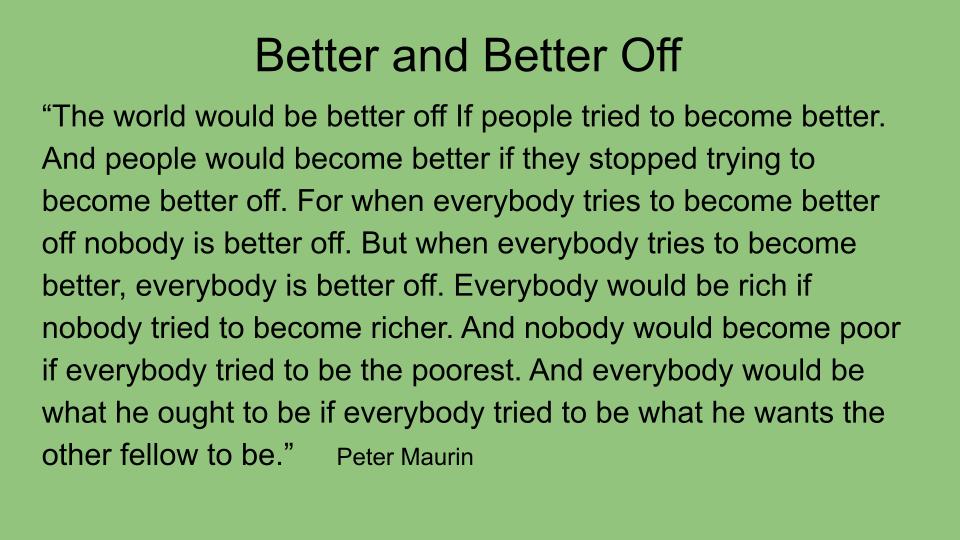


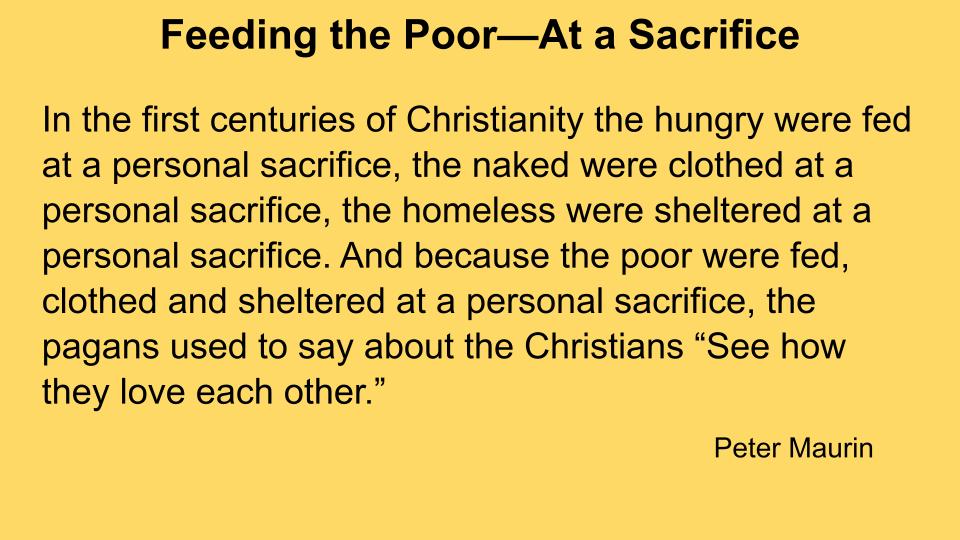

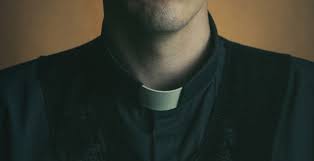
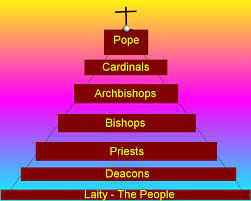







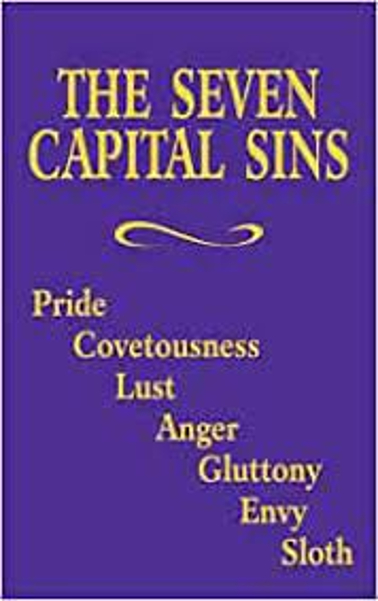


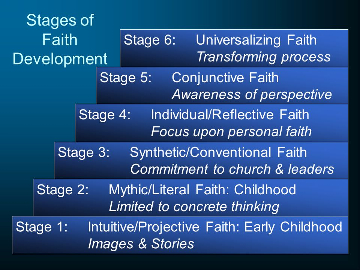

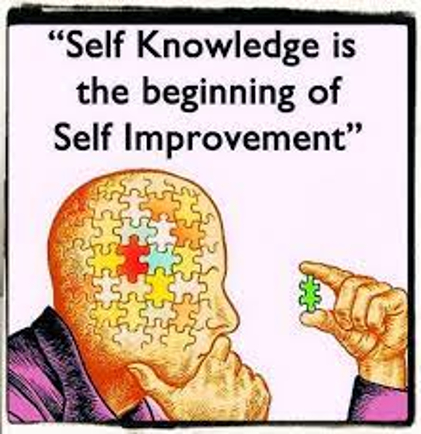






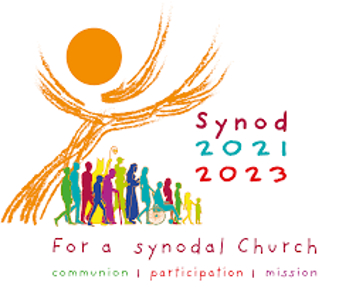

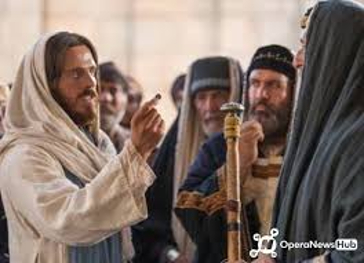
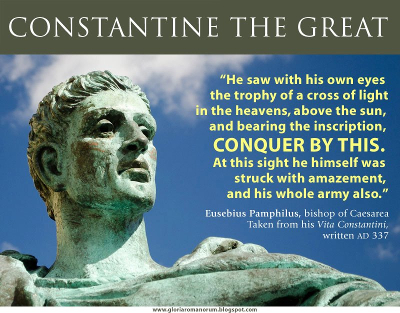





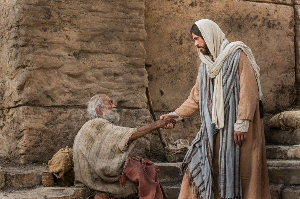


 Faith Seeking Understanding
A Library to Nurture the Whole Person
To reverse an old aphorism: We must pray as if it all depends on us, and work as if it all depends on God (yes, you read that correctly)! God is humble and never comes if not first invited, but God will find some clever way to get invited.
One clever way God invites us is through the thoughts, opinions, and research of others. I have loved reading ever since I got my first library card back in 1955. “Books and doors are the same, said Jeannette Winterson, open them and you go through to another world.”
They also give you another perspective from a different time and place. Most of Catholicism’s teachings have been based on the interpretations of Scripture by the “Fathers of the Church” and then by the male theologians and saints who are called “doctors” of the church. There are 36 such “doctors” but only four of them are women!
The major influences in Catholic theology and teaching has come from popes, cardinals, bishops and male clerics who were the founders or members of religious orders like the Benedictines, Dominicans, and the Franciscans. Their female counterparts were usually relegated to insights about prayer and spirituality and not too influential regarding doctrines, dogmas, and teachings. Most of the latter has come from popes and theologians who were male. Patriarchy is a systemic problem in the Catholic Church and indeed in Christianity! It gives a very limited perspective.
Check this post often as I will add to it the book titles and names of authors whom I believe are making the most contribution to “thinking outside the box” for Catholicism.
Some of my favorite books
Church
Clericalism: The Death of Priesthood George Wilson, S.J.
The Other Side of the Altar: One Man’s Life in the Catholic Priesthood Paul E. Dinter
The Liberation of the Laity Paul Lakeland
Empire Baptized: How the Church Embraced What Jesus Rejected Wes Howard-Brook
A Pilgrimage to Eternity Timothy Egan
The Truth At The Heart of the Lie James Carroll
For the Love of God: How the Church is Better and Worse Than Ever Natasha Moore
What Jesus Meant Gary Wills
Christ in Crisis Jim Wallace
In the Closet of the Vatican Frederic Martel
The Kingdom of God is Within You Leo Tolstoy
Whose Church? Daniel C. Maguire
Bad Shepherds: The Dark Years in Which the Faithful Thrived While the Bishops Dod the Devil’s Work Rod Bennett
A People Adrift Peter Steinfels
Head and Heart By Gary Wills
The Other Side of the Altar Paul Dinter
For the Love of God: How the Church id Better and Worse Than You Ever Imagined Natsha Moore
Catholic Church History
Dark History of the Catholic Church…. Michael Kerrigan
Christianity
Saving Paradise Rita Nakashima Brock, Rebecca Ann Parker
Why Christianity Must Change or Die John Shelby Spong
After Jesus Before Christianity Erin Vearncombe
The Triumph of Christianity How a Forbidden Religion Swept the World Bart Erhman
Head and Heart: A History of Christianity in America Gary Wills
A Pilgrimage to Eternity Timothy Egan
Discipleship J. Henrich Arnold
Why Christianity Must Change or Die John Shelby Spong
After Jesus Before Christianity Erin Vearncomb
When Christians Were Jews Paula Fredriksen
The Kingdom of God is Within You Leo Tolstoy
‘Come Out, My People” God’s Call Out of Empire in the Bible and Beyond Wes Howard-Brook
Empire Baptized: How the Church Embraced What Jesus Rejected Wes Howard-Brook
Christology
Christ in Evolution Ilia Delio
Jesus Symbol of God Roger Haight
Excavating Jesus John Dominic Crossan
Jesus John Dominic Crossan
The New Dance of Christ Anthony Massimini
Misquoting Jesus Bart D. Ehrman
Jesus and Buddha edited by Marcus Borg
Meeting Jesus Again for the First Time Marcus Borg
Jesus Bart Ehrman
Rabbi Jesus: An Intimate Biography Bruce Chilton
Christ in Crisis Jum Wallis
Jesus: A Revolutionary Biography John Dominic Crossan
God and Empire: Jesus Against Rome, Then and Now John Dominic Crossan
Jesus Before the Gospels Bart Erhman
Scripture
Mary Magdalen: Myth and Metaphor Susan Haskins
Woman First Among the Faithful Francis J. Maloney, SDB
The Women Around Jesus Elizabeth Moltmann-WEndel
Women in the New Testament Mary Ann Getty-Sullivan
Psalms Now Leslie F. Brandt & Corita Kent
A Short Dictionary of the Psalms Jean-Pierre Prevost
The Spirituality of the Psalms Carroll Stuhmueller
The Fourth Gospel: Tales of a Jewish Mystic John Shelby Spong
Jesus Before the Gospels Bart Ehrman
Jesus Symbol of God Rodger Haight
Religion
Back Pocket God Denton and Flory
The Varieties of Religious Experience William James
A Religion of One’s Own Thomas Moore
Anatomy of the Sacred James C. Livingston
The Sacred Quest Cunningham, Kelsay, et al.
Beyond Religion David Elkins
Studying Religion Gary E. Kessler
Introduction to the Study of Religion Ring, Nash, et al.
The Elementary Forms of Religious Life Emile Durkheim
The Range of Religion Denise and John Carmody
Religion in Human Evolution Robert Bellah
The Great Transformation Karen Armstrong
Caesar’s Coin: Religion and Politics Richard P. McBrien
What is Religion? John F. Haught
Religion in Exile Diarmuid O’Murchu
Why Religion Matters Huston Smith
Theories of Primitive Religion E.E.Evans-Pritchard
A History of Religious Ideas Mircea Eliade
At the Altar of Wall Street Scott W. Gustafson
Anthropology and Religion Robert L. Winzeler
The Immortality Key Brian C. Muraresku
Faith/Belief
Atheism in Our Time Ignace Lepp
Spirituality
The Spirit of One Earth Ursula King
The Gift of Years Joan Chittister
The Spiritual Life Evelyn Underhill
Care of the Soul Thomas Moore
Ageless Soul Thomas Moore
Prayer: Our Deepest Longing Ronald Rolheiser
Wrestling With God Ronald Rolheiser
Divine Essence John Roger
Beyond Religion David Elkins
Through the Narrow Gate Karen Armstrong
Prayer
This Little Light Michael O’Neil McGrath
Daily Reflections
Fragments of Your Ancient Name Joyce Rupp
Bread for the Journey Henri Nouwen
God
The Battle for God Karen Armstrong
The Case for God Karen Armstrong
A History of God Karen Armstrong
The God Gene Dean Hammer
The Question of God: C.S. Lewis and Sigmund Freud Armand Nicholl, Jr.
Engagement with God Hans Urs von Balthasar
The Mind of God Jay Lombard
The God Who Won’t Let Go Peter van Breemen, S.J.
No God but God Reza Aslan
An Unsettling God Walter Brueggmann
The Tripersonal God Gerald O’ Collins, S.J.
The Three Persons in One God Gerald S. Sloyan
God, Galileo, and Geering Robert Jones
The Tears of God Wilfred Harrington
Autobiography
The Long Loneliness Dorthy Day
Through the Narrow Gate Karen Armstrong
Hagiography
The Lives of the Virgin Saints Giselle Potter
Saint John XXIII
An Artist and the Pope Giacomo Manzu
Pope John XXIII A Spiritual Biography Christian Feldman
Books written by Catholic Saints
The Spiritual Directory Francis de Sales
Devotions, Prayers, Living Wisdom Teresa of Avila
Confessions Augustine of Hippo
City of God Augustine of Hippo
On Grace and Free Will Augustine of Hippo
Fiction
The Two Popes Anthony McCarten
Papal
Statements, Reflections, Encyclicals, Misc.
Happiness in This Life, Pope Francis
Laudato Si, Pope Francis
Theology
Eternal Life John Shelby Spong
Theology and Sanity F.J. Sheed
Journeys to Heaven and Hell Bart Ehrman
Philosophy
Psychology
Glimpses of the Devil: A Psychologist’s Personal Accounts of Possession, Exorcism, and Redemption M. Scott Peck
Christian Art Books
Angels Marco Bussagli
Christian Music Books