
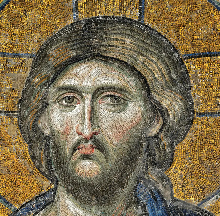
Christology, (Greek Χριστός, Khristós and -λογία,), is a branch of theology that concerns Jesus. The debate about “who” Jesus was and is has been and is one of the most controversial conundrums since his birth.
“When Jesus came to the region of Caesarea Philippi, He questioned His disciples: “Who do people say the Son of Man is?” They replied, “Some say John the Baptist; others say Elijah; and still others, Jeremiah or one of the prophets.”…“But what about you?” he asked. “Who do you say I am?” ” Matthew 16: 13-15
Since the time of Peter’s response, Jesus’ fellow Jews and those following him, before and after his death, have been trying to answer that question ever since. Aside from the gospels and letters by Paul and other apostles, as well as other non-canonical scriptures, early Christian leaders like Tertulian, Ignatius, Polycarp, Justin Martyr, Irenaeus, Clement of Alexandria, Origen, and Hippolytus wrote extensive responses to that question about Jesus’ identity. Most of their responses were, in fact, attempts to rebuke the writings and beliefs of others whose opinions and beliefs were actualized as movements or Christian communities. For more about these men, go to: https://www.bethinking.org/jesus/the-early-church-fathers-on-jesus
The concept of Jesus’s divinity, or that Jesus is God, is a core belief within Christianity. This belief is rooted in biblical passages, teachings, and theological interpretations that portray Jesus as possessing divine attributes and performing divine works. Central to this understanding is the belief that Jesus is the second person of the Trinity, co-equal and co-eternal with God the Father and God the Holy Spirit.
Key Aspects of Jesus’s Divinity:
- Divine Attributes:.Opens in new tabThe Bible attributes divine characteristics to Jesus, such as being eternal, omnipresent, omniscient, omnipotent, and immutable.
- Divine Works:.Opens in new tabJesus is depicted as performing miracles, raising the dead, and ultimately, atoning for the sins of humanity through his death and resurrection.
- Incarnation:.Opens in new tabThe concept of Jesus’s divinity is closely linked to the idea of incarnation, where God became human in the form of Jesus.
- Divine Authority:.Opens in new tabJesus is portrayed as having authority over all creation and holding the keys to eternal life.
- Worship:.Opens in new tabIn various Christian traditions, Jesus is worshipped and prayed to, indicating his divine status.
Biblical Evidence:
- John 1:.Opens in new tabThis chapter in the Gospel of John emphasizes Jesus as the “Word” who was with God and who was God, later becoming flesh.
- John 5:18:.Opens in new tabThis verse recounts how Jesus’s opponents sought to kill him because he “made himself equal with God”.
- Colossians 1:15-20:.Opens in new tabThis passage highlights Jesus’s pre-eminence and role in creation and redemption.
- Hebrews 1:3:.Opens in new tabThis verse describes Jesus as “the radiance of God’s glory and the exact representation of his being”.
- Matthew 1:23:.Opens in new tabThis verse refers to Jesus as “Emmanuel,” which means “God with us”.
Different Perspectives:
While the divinity of Jesus is central to most Christian denominations, some interpretations differ. For example, some groups may acknowledge Jesus as the Son of God but not as fully divine in the same way as the Father. Additionally, other religions, such as Judaism and Islam, have different understandings of Jesus’s nature and role.
The historical christological doctrines which gained broad support were many and a few were definitively labelled as “heretical”: Docetism, Arianism, Nestorianism, and Monothelitiam. Go to this link for more information about these heresies: https://en.wikipedia.org/wiki/Christology
The following three lectures are examples of some current debates about the divinity of Jesus.
For more information about the divinity of Jesus go to:
Catechism of the Catholic Church
Chapter Two: I Believe in Jesus Christ, the Only Son of God
“And In Jesus Christ, His Only Son, Our Lord”
“Jesus Christ Was Conceived by the Power of the Holy Spirit, and Was Born of the Virgin Mary”
“Jesus Christ Suffered Under Pontius Pilate, Was Crucified, Died, and Was Buried”
“Jesus Christ Descended into Hell; On the Third Day He Rose Again from the Dead”
“Jesus Ascended into Heaven and Is Seated at the Right Hand of God the Father Almighty”
“From Thence He Shall Come to Judge the Living and the Dead”
Christology
 Faith Seeking Understanding